If you’ve ever Googled "best probiotics" or "how to improve gut health," almost every recommendation you found was based on research done in the US, Europe, or Australia. The probiotic strains, the dietary advice, the reference ranges for what a "healthy" microbiome looks like, all of it comes from studying Western populations eating Western diets in Western environments.
This is a problem, because the Indian gut microbiome differs from the Western one in structure, composition, and function, not in small ways. And interventions designed for one may not work, or may actively backfire, in the other.
The composition gap

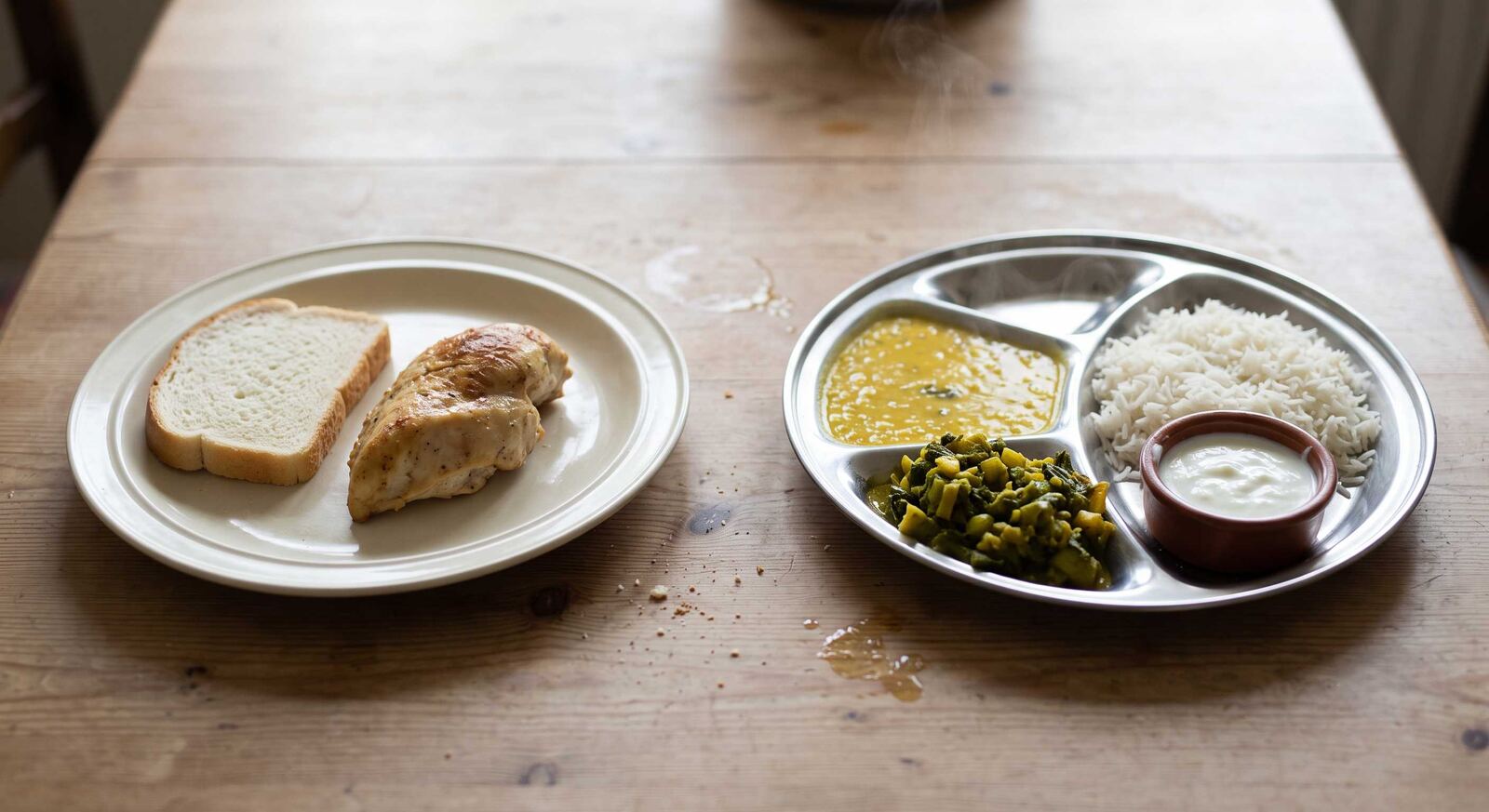
The most well-documented difference is in the dominant bacterial genera. Western gut microbiomes are typically dominated by Bacteroides, bacteria that thrive on animal protein and fat-rich diets. Indian gut microbiomes, particularly in populations eating traditional diets, are dominated by Prevotella, bacteria adapted to fermenting complex plant carbohydrates, legume fibres, and resistant starches.
This isn’t a subtle difference. Prevotella and Bacteroides represent fundamentally different metabolic strategies. Prevotella-dominant guts are optimised for extracting energy and nutrients from plant-based, fibre-heavy diets. Bacteroides-dominant guts are better at processing animal fats and proteins. When researchers in Copenhagen proposed the concept of "enterotypes" (broad categories of gut microbiome composition) the Prevotella-dominant pattern was identified as one of the three major types, and it maps heavily onto populations with plant-rich traditional diets, including India.
Studies specifically profiling Indian gut microbiomes have found other distinctive features. Higher abundance of Megasphaera, a genus that produces both propionate and butyrate and is relatively rare in Western guts. Higher levels of Ruminococcus species adapted to cellulose and hemicellulose degradation. Different distributions of Faecalibacterium, Roseburia, and Bifidobacterium sub-species. The Indian gut has its own signature, shaped by centuries of dietary tradition, environmental exposure, and genetic co-evolution.
The reference database problem
This is where the science stops being academic. When a Western lab analyses a gut microbiome sample, it compares the results to reference databases, large collections of sequenced microbiomes used to define what’s "normal." The two most widely used databases are the Human Microbiome Project (HMP), which is almost entirely based on American participants, and MetaHIT, which is primarily European.
If you’re an Indian person who gets a microbiome test from a company using these references, your results are being compared to a population that eats differently, lives differently, and carries different bacteria. A Prevotella-dominant profile might be flagged as unusual simply because it’s uncommon in the American reference population, even though it’s perfectly normal and potentially healthy for someone eating a traditional Indian diet.
This creates a real risk of misinterpretation. A genuinely healthy Indian gut might look "abnormal" by Western standards, leading to unnecessary interventions. Or a problem specific to an Indian microbiome context might be missed because the Western reference doesn’t include relevant species.
Some recent projects, including the Indian Human Gut Microbiome (IHGM) initiative and studies from institutions like NCBS Bangalore and IISc, are building India-specific reference datasets. But this work is still in early stages and hasn’t yet translated into the commercial products most Indians can access.
This is where the science stops being academic.
Why Western probiotic strains might not work for you
The probiotic industry is built on strains isolated from Western populations and tested in Western clinical trials. Lactobacillus rhamnosus GG (the world’s most studied probiotic strain) was isolated from a healthy American adult in the 1980s. Bifidobacterium animalis BB-12 was isolated in Denmark. Saccharomyces boulardii was first identified in lychee fruit in Indochina, but all its major clinical trials have been done in European and American populations.
When you take one of these strains as a supplement, you’re introducing an organism that was characterised in a Bacteroides-dominant gut environment into your Prevotella-dominant gut environment. The ecological context is different. The competing species are different. The available substrates are different. The pH, bile acid composition, and mucosal immune responses are different.
The strain may survive. It probably won’t colonise for long, since most probiotic strains don’t colonise regardless of who takes them. And whether it produces the same effects seen in clinical trials on Western participants is the question nobody is adequately answering.
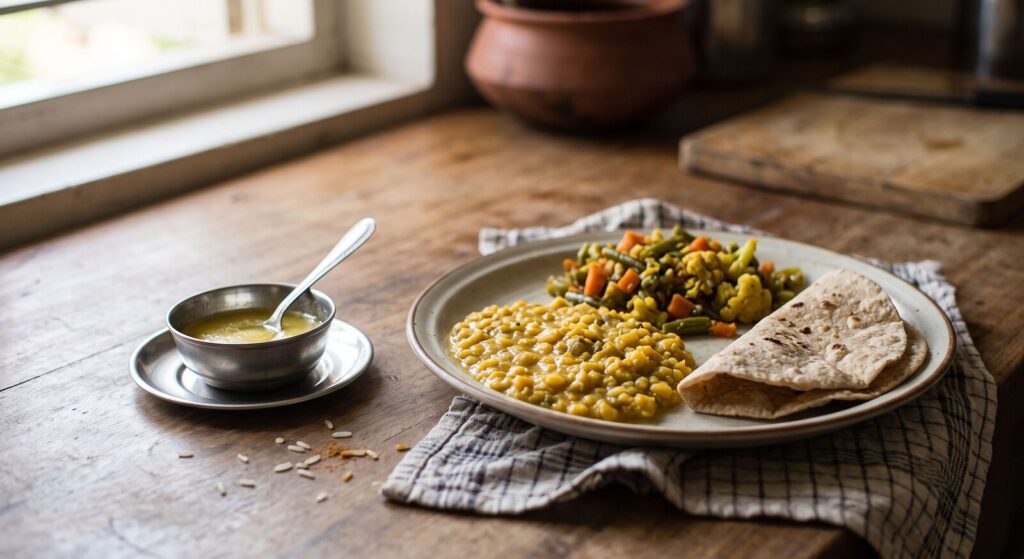
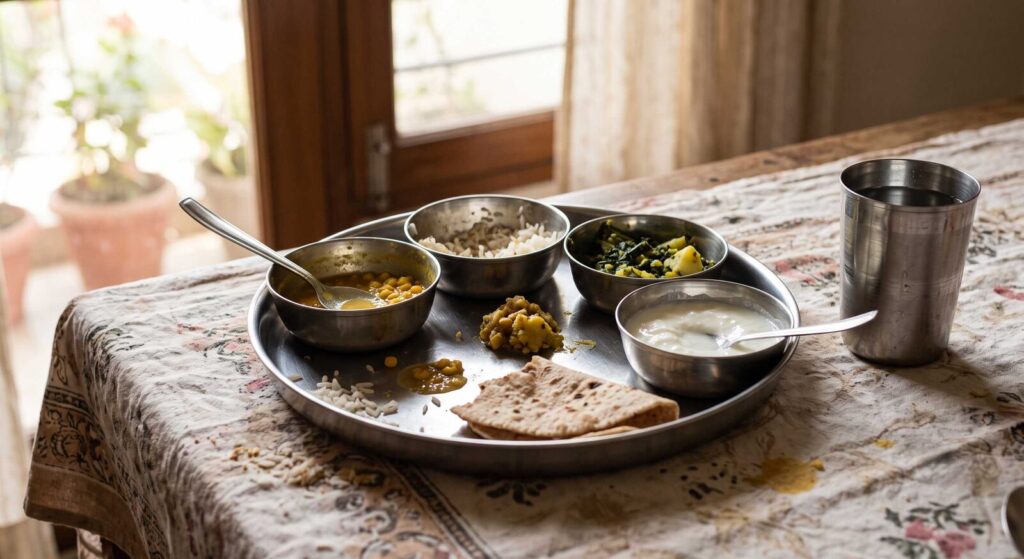
A strain that reduces bloating in an American eating a high-fat, low-fibre diet might have no effect (or a different effect) in an Indian eating dal-chawal with dahi. A strain that improves stool consistency in a European trial might not do the same in someone whose baseline gut flora processes food through entirely different fermentation pathways.
This isn’t hypothetical. A 2019 study published in Cell by researchers at the Weizmann Institute showed that the same probiotic supplement produced vastly different responses in different individuals, and that the response was predicted by the person’s baseline microbiome composition. If individual variation within one population matters this much, imagine the variation between populations with structurally different microbiomes.
Want to know what your own gut actually needs? Take the BioMeBar gut assessment →
Diet, environment, and early-life exposures
The differences between Indian and Western gut microbiomes aren’t just about what adults eat today. They reflect accumulated differences across the lifespan.
Indian children are more likely to be born via vaginal delivery (though C-section rates are rising fast in urban India), more likely to be breastfed for longer durations, and introduced to solid foods that are fundamentally different from Western weaning diets, khichdi, dal water, mashed banana, ragi porridge rather than pureed chicken or processed baby cereal.
Environmental exposures differ too. Indian populations have higher rates of exposure to diverse environmental microbes, from soil, from water, from less sanitised living conditions. This isn’t romanticising poverty or poor sanitation. But there’s strong evidence that environmental microbial exposure in early life shapes the developing immune system and gut microbiome in ways that persist into adulthood. The "hygiene hypothesis" (now more accurately called the "old friends hypothesis") suggests that some of the microbiome depletion seen in Western populations is itself a consequence of over-sanitised environments.
Antibiotic usage patterns also differ. India has high rates of antibiotic use, often without prescription, which depletes certain bacterial populations. But the types of antibiotics commonly used, the duration of courses, and the dietary context during recovery are all different from Western patterns, meaning the microbiome consequences are different too.
The differences between Indian and Western gut microbiomes aren’t just about what adults eat today.
What this means practically
All of this points in one direction: the Indian gut needs Indian solutions.
Generic probiotic supplements formulated for Western guts aren’t necessarily harmful, but there’s no strong reason to believe they’ll work the same way in an Indian microbiome context. Dietary advice based on Western microbiome studies, "eat more fermented foods like sauerkraut and kefir," "take this specific Lactobacillus strain", may be irrelevant when you already eat dahi and kanji and your gut is adapted to a completely different fermentation ecology.
“But do I really need to test my gut?”
Not everyone does. But if you have been chasing the same symptoms for months — bloating, low energy, mood dips, stubborn weight — guessing gets expensive and slow. Seeing your actual microbiome composition turns trial-and-error into a targeted plan.
Stop guessing. See what is actually in your gut.
BioMeBar profiles your unique microbiome and personalises recommendations to what is genuinely there, because with trillions of organisms running your biology, one-size-fits-all does not make sense.