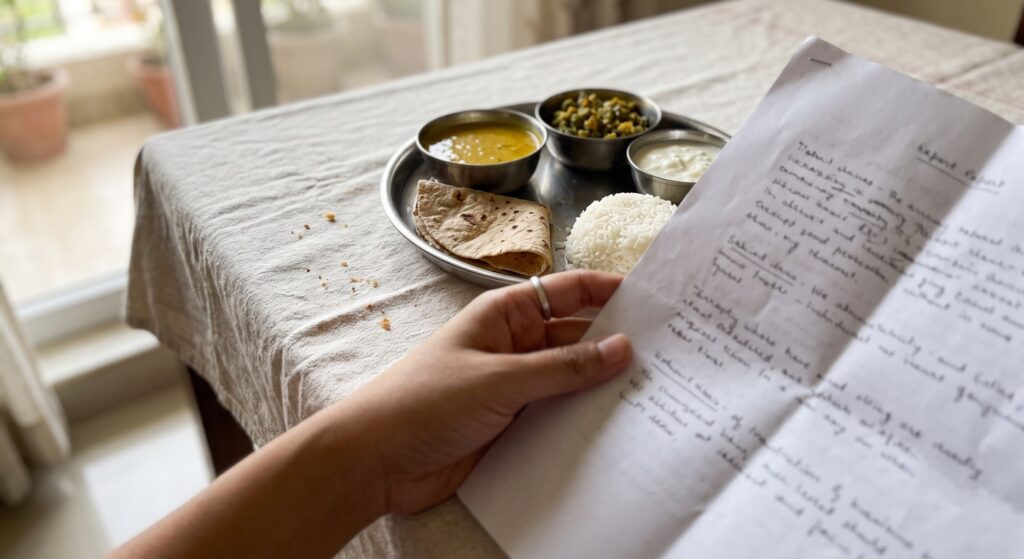


You have been bloated for the better part of a year. You cut foods, tried probiotics, drank jeera water at dawn. Nothing stuck. So you went to a doctor, who ordered blood work, an ultrasound, and eventually an endoscopy. Every single report came back “normal.” And yet your stomach still feels like a balloon every afternoon.
This is one of the most frustrating experiences in Indian healthcare, and it is also a category error. The tests you were given are structural tests. They look for ulcers, gallstones, polyps, strictures and tumours. They are excellent at finding structural problems and almost silent about functional ones, the kind driven by how your gut ecosystem actually behaves. That is where gut testing, done properly, can keep you from feeling stuck. The catch is that most of the testing sold online adds nothing at all.
What gut testing actually is
There are two different layers of testing, and confusing them is where the money goes. We go deeper on this split in our guide to structural versus functional gut testing.
Structural tests look at the plumbing. Ultrasound, endoscopy and colonoscopy inspect the anatomy of your digestive tract for ulcers, polyps, growths and blockages. They ask a precise question: is there something anatomically wrong? When they come back clear, a doctor says “normal,” and you are often sent home. But most chronic gut complaints are not plumbing problems.
Functional tests look at how the gut works. They ask whether the ecosystem inside is behaving properly: is there hidden inflammation, is the pancreas producing what it needs, has bacteria migrated to the wrong part of the intestine, are the microbes balanced? These questions are invisible to a camera. They are the questions that, when you keep bloating, actually need answering.
Where the evidence is real
Irritable bowel syndrome shows up on no structural test. It is a disorder of gut-brain signalling, motility and the microbial environment, and it is common: community studies in India put IBS somewhere in the range of 4 to 7%, depending on the criteria and region (Rahman, Mahadeva & Ghoshal, World Journal of Gastroenterology, 2017). A person with IBS can have perfect ultrasounds and still be unwell. The test was aimed at a layer that is not the layer that is ill. We cover the shared root causes of bloating, acidity and IBS in our guide to the evening bloat.
Faecal calprotectin is a real and useful marker of gut inflammation. A meta-analysis in adults found calprotectin identified inflammatory bowel disease with a pooled sensitivity of 93% and specificity of 96%, and using it reduced the number of endoscopies by roughly two-thirds (van Rheenen, BMJ, 2010). Its value: it tells a doctor whether a referral for an invasive test is warranted. A normal value is reassuring; a high one is a prompt to investigate. Doctors also note the result needs interpretation, because infection or medications like NSAIDs can raise it, and it is not a good fit above age 60 (Deputy, BMJ, 2023). For a plain-English tour of gut biomarkers like calprotectin, see our guide to gut biomarkers.
Hydrogen and methane breath testing for small-intestinal bacterial overgrowth is contested. SIBO is a real situation where colon-type bacteria have moved up into the small intestine and ferment your food, producing gas and bloating. Breath testing looks for the by-products, and a North American consensus has proposed thresholds for a positive result (Rezaie, American Journal of Gastroenterology, 2017). But the picture is not as tidy as marketing suggests. In 2024, the European and North American motility societies (ESNM and ANMS) published a clinical update stating that breath tests are widely used despite being “unreliable and unvalidated” for this purpose (Kashyap, Neurogastroenterology and Motility, 2024), and the British Society of Gastroenterology advises that there is no role for hydrogen breath testing to exclude SIBO in typical IBS (Vasant, Gut, 2021). In other words: a doctor may still order one in specific clinical situations, but it is not the reliable, first-line test the at-home claims suggest.
Faecal elastase is a test for pancreatic enzyme output, not a general bloating test. A 2025 meta-analysis found it highly sensitive for exocrine pancreatic insufficiency, with the honest caveat that it is only moderately specific at the standard cut-off, meaning it rules the condition out well but a low level needs clinical follow-up (de la Iglesia, United European Gastroenterology Journal, 2025), consistent with earlier reviews of the test (Vanga, Clinical Gastroenterology and Hepatology, 2018). The catch: it answers one specific, treatable question, about pancreatic insufficiency, and guidelines do not recommend it as a routine screen for ordinary bloating. It has a place when a doctor has a specific reason to suspect the pancreas, such as greasy bulky stools, weight loss, prior pancreatitis or diabetes, not as an automatic add-on for persistent bloating.
These markers are the pattern to recognise: the strongest tests ask a defined, clinical, treatment-changing question. Calprotectin is the one with the most solid evidence base. Elastase and breath testing are real clinical tools, but they are ordered on specific suspicion, not as a routine screen for bloating. None of them is a vague “gut score.”
Where the popular claims fail

“Your diversity score tells you if your gut is good.” A diversity score is a research construct, fine for comparing populations in studies. There is no clinically established normal range that predicts illness in one individual. Healthy people vary enormously. A colourful score with no reference standard is a number, not a diagnosis.
“The food intolerance IgG panel shows your sensitivities.” This remains popular despite repeated warnings from immunologists. IgG tests are not validated for diagnosing food intolerance, and they routinely flag foods you simply eat regularly. They are a poor guide; true sensitivities are best worked out by a clinician-supervised elimination and reintroduction, not a blood panel.
“This kit measures your ‘leaky gut.'” Intestinal permeability is biologically real, but measuring it reliably from a single commercial test is technically difficult, and results have been inconsistent. The clinical meaning of a score is still debated. The idea is interesting; the at-home test is not settled science.
“A panel reveals your gut toxins.” The body’s waste processing happens in the liver and kidneys, not in something a stool test can rank. A “toxin score” is scare marketing.
A simple rule separates them: the tests with clinical meaning, calprotectin above all, measure specific markers that a doctor can act on when there is a reason to order them. The marketing tests print a coloured rank. If a report ends with a scored ranking, treat it as a number nobody can use.
Common signs a gut test is a waste of your money
- The result is a score or a rank, not a clear answer. “Low diversity” and “moderate inflammation” are not directions. A useful test gives you or your doctor an answer attached.
- No clinician will interpret it for you. If the report is designed to be read by you alone, with no medical input, the number is designed to sell more report.
- It claims a named condition from a single sample. Any test that diagnoses a food sensitivity or a personal condition from one sample is overreaching.
- It hands you a long list of foods to avoid. A long elimination list is a symptom of a poor test, not a finding.
- You bought it before confirming the doctor’s basics. The validated tests like calprotectin or a breath test are ordered in a clinic, not from a website.
The Indian angle: reading your gut against Indian diets
There is a distinctly Indian problem hiding inside the home-test industry. The reference populations many of these kits compare you against are Western, fed heavily on meat, dairy and processed diets. Indian communities live heavily on legumes, grains, regional ferments and vegetables. The sequencing evidence we have on Indian gut bacteria is still thin and skews toward specific groups, including tribal populations whose traditional plant-heavy diets produce profiles, like a strong Prevotella-type community, that look “unusual” against a West-derived reference while being ordinary for people eating that way (Dehingia, Scientific Reports, 2015). The honest caveat: that study is tribal, not urban, so it is evidence that Indian gut profiles can differ from Western references, not proof of what any given urban dal-rice-dahi eater’s profile means.
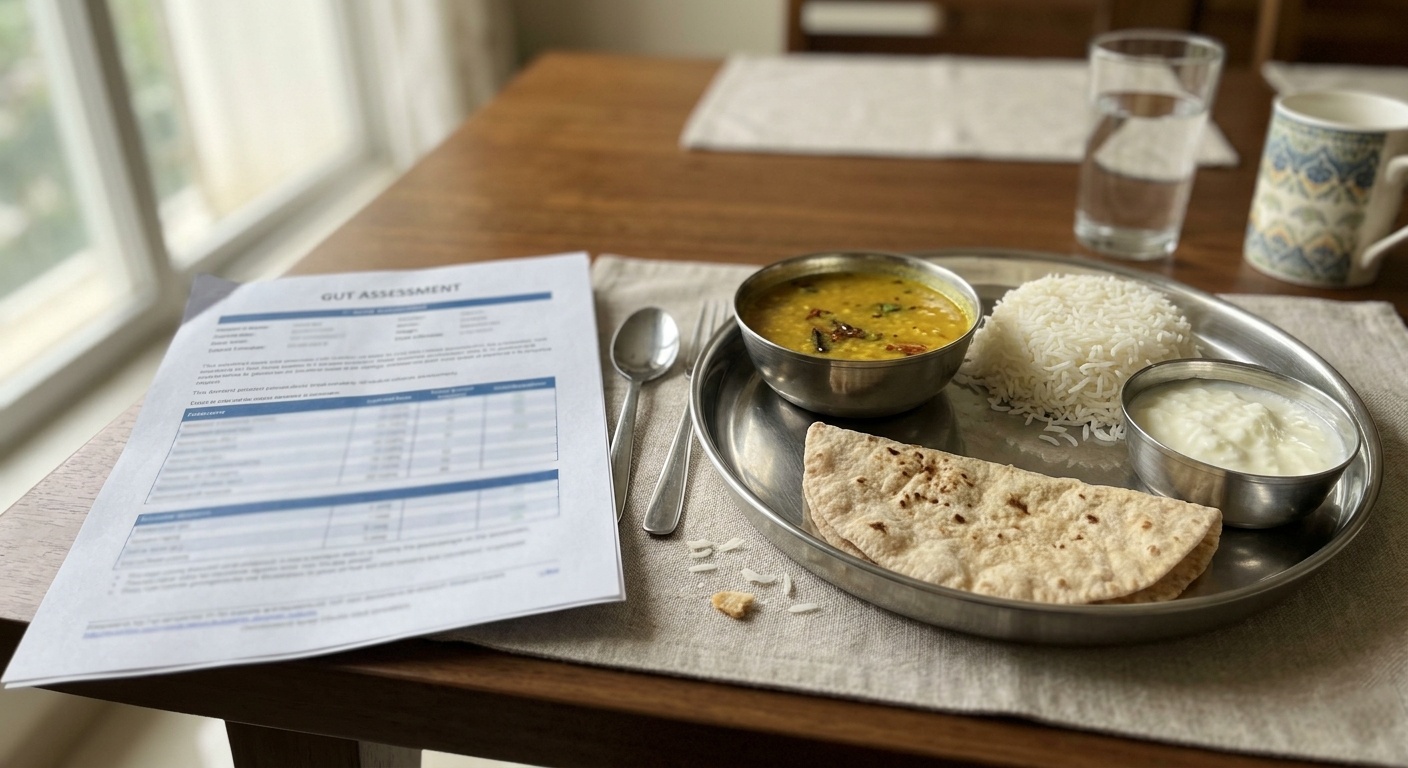
Read without that context, a gut profile from an Indian diet can generate a long list of false alarms, or false reassurance. The same test that says “low diversity” for a plate full of dal, roti and seasonal vegetables might simply be measuring that diet’s healthy baseline. The cost is not just the several thousand rupees on the kit. It is the anxiety, and the wrong eating choices, cutting the dal, the roti or the dahi, that the misread report triggers.
How the options compare
| What it is | What it does | Evidence | Cost | Bottom line |
|---|---|---|---|---|
| Structural tests (blood, ultrasound, endoscopy) | Find ulcers, stones, tumours | Excellent for structural problems | Clinic based | Necessary first step, silent on functional |
| Functional tests a doctor orders (calprotectin; elastase and breath testing on specific suspicion) | Answer a defined, treatable question | Calprotectin well supported; elastase and breath testing have real limitations | Moderate; clinic ordered | The useful ones, when there is a clinical reason to order them |
| Direct-to-consumer gut score kits | Print diversity / leaky / “toxin” scores | Not validated; no normal range | Rs 5,000–20,000 | A number nobody can act on |
| BioMeBar gut assessment | Describes your microbiome and reads it against your own history and Indian diet | Descriptive and exploratory, not a diagnosis; interpretation varies | One-time assessment | A starting point to discuss with your doctor, not a verdict |
What actually helps
- Do the doctor’s basics first. The reliable first step for a chronic gut is simple, validated testing: blood counts, thyroid, screening for anaemia and inflammation, and stool checks for infection. These are the tests that change how you are treated, and they are done in clinics, not on websites.
- Watch for red-flag symptoms. Blood in stool, unexplained weight loss, fever, pain that wakes you at night, iron deficiency anaemia, or a family history of colorectal cancer all need a doctor before any home testing , and age matters: UK guidance flags weight loss with abdominal pain from age 40, rectal bleeding from 50, and anaemia or a change in bowel habit from 60.
- Then, with a clinician, do targeted functional testing. If the basic and structural tests are clear and symptoms persist, calprotectin is the functional marker with the strongest evidence, and it is worth discussing with your doctor. Elastase and breath testing should only be added if your doctor has a specific reason to suspect the pancreas or bacterial overgrowth, not as an automatic bundle for bloating.
- Be sceptical of anything that prints a score. The coloured number is where most of the wasted money lives.
- Match the reference to your plate. If a test interprets you against a population that does not eat like you, ask for a reading that accounts for an Indian diet, or do not trust the result.
BioMeBar: from guessing to knowing
The right test asks the right question, and the useful ones have answers attached. No stool test diagnoses IBS, SIBO, coeliac disease or IBD, and a microbiome profile is not a replacement for the clinical tests a doctor orders on suspicion. What BioMeBar does is describe your microbial community and read it against your own history and your Indian diet, instead of running you against a reference population that was never built for a plate full of dal, rice and dahi. That gives you a starting picture to discuss with your doctor, so the frustrating loop of normal reports and persisting symptoms becomes a conversation grounded in your biology. It is a starting point, not a verdict.
Is a food intolerance IgG test worth it?
Most immunologists advise against it. IgG tests are not validated for diagnosing food intolerance, and they frequently flag foods you simply eat often. A supervised elimination and reintroduction is the reliable approach.
What does a calprotectin test show?
Calprotectin is a stool marker of gut inflammation. A meta-analysis in adults found it identified inflammatory bowel disease with about 93% sensitivity and 96% specificity, and lowered the number of endoscopies needed by roughly two-thirds (van Rheenen, BMJ, 2010). It is one of the few markers with genuine clinical meaning, but it should be interpreted by a doctor.
When should I see a doctor for my gut?
Persistent symptoms that disrupt your daily life, blood in stool, or unexplained weight loss all warrant medical review. Red-flag symptoms always need professional assessment, whatever an at-home kit says.
References
- Rahman MM, Mahadeva S, Ghoshal UC. Epidemiological and clinical perspectives on irritable bowel syndrome in India, Bangladesh and Malaysia: a review. World Journal of Gastroenterology, 2017.
- Dehingia M, et al. Gut bacterial diversity of the tribes of India and comparison with worldwide data. Scientific Reports, 2015.
- van Rheenen PF, et al. Faecal calprotectin for screening of patients with suspected inflammatory bowel disease: diagnostic meta-analysis. BMJ, 2010.
- Deputy M, Devanaboina R, Al Bakir I, et al. The role of faecal calprotectin in the diagnosis of inflammatory bowel disease. BMJ, 2023.
- de la Iglesia D, et al. Diagnostic accuracy of fecal elastase-1 test for pancreatic exocrine insufficiency: systematic review and meta-analysis. United European Gastroenterology Journal, 2025.
- Rezaie A, et al. Hydrogen and methane-based breath testing in gastrointestinal disorders: the North American consensus. American Journal of Gastroenterology, 2017.
- Vanga RR, et al. Diagnostic performance of measurement of fecal elastase-1 in detection of exocrine pancreatic insufficiency: systematic review and meta-analysis. Clinical Gastroenterology and Hepatology, 2018.
- Kashyap P, Moayyedi P, Quigley EMM, Simrén M, Vanner S. Critical appraisal of the SIBO hypothesis and breath testing: a clinical practice update endorsed by ESNM and ANMS. Neurogastroenterology and Motility, 2024.
- Vasant DH, Paine PA, Black CJ, et al. British Society of Gastroenterology guidelines on the management of irritable bowel syndrome. Gut, 2021.
- Anwar S, et al. DNA reference reagents isolate biases in microbiome profiling: a global multi-lab study. mSystems, 2025.