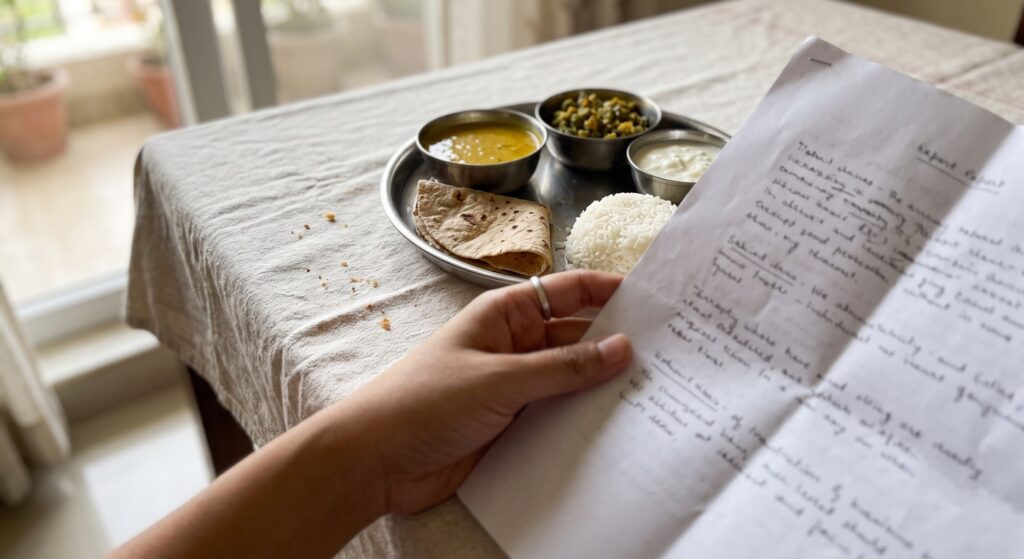

Your stool test came back and the lab says your microbial diversity looks normal. So why are you still bloated by six in the evening, tired after lunch, and reaching for jeera water before every meal?
A report that finds “nothing wrong” while you feel genuinely unwell usually means the test was looking in one place while your symptoms are coming from several. The gut behaves like a busy, changing system rather than a single dial you read once and calibrate forever, and functional gut health means treating it that way.
What a stool test can actually show
A stool test attempts a census. It lists which bacteria are present in your intestines and in what rough proportions, using DNA sequencing of a sample you collect at home. How complete and how repeatable that census is depends heavily on which lab and which method you use — when identical samples were sent to seven different commercial services, the results varied as much between providers as between different people’s microbiomes (Servetas, Communications Biology, 2026). Diversity is a useful research measure for comparing groups, but there is no established cut-off that tells an individual they are ill, so treat a low diversity score as a prompt for questions rather than a finding.
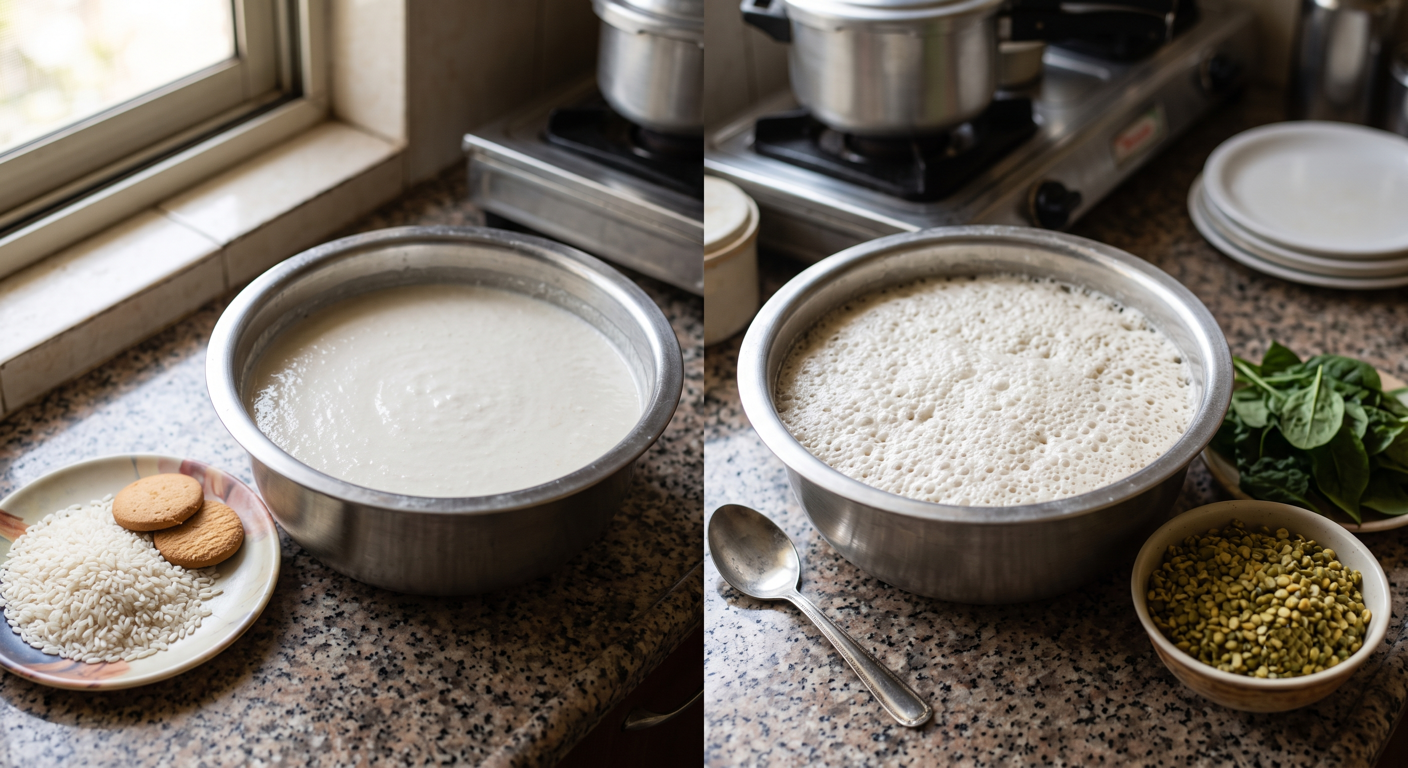
But a census tells you who lives in a colony, not what they are doing on a Tuesday. In principle the same bacteria can be more or less active depending on what they are fed. One person feeds them a steady stream of dal, seasonal sabzi, and whole grains, so those bacteria are active and producing useful compounds. Another has the same species sitting in a gut fed mostly on white bread, packaged snacks, and sweet chai, so the bacteria are present but essentially dormant. Same lab result, possibly very different digestive reality , though measuring that activity in a person is harder than it sounds: faecal metabolite levels reflect what is left over after absorption, not what was produced.
This is why a growing number of researchers describe the microbiome as only part of the story. The bacteria matter, but so does what your body does with them, which depends on your diet, your stress, your sleep, and your medicines on any given day. Structural tests look at anatomy; functional tests look at what the gut is doing , and the same complaint can be invisible to one and obvious to the other.
What “functional” means here
Functional gut health is the practice of reading several streams of information together instead of trusting one number. Four separate questions need answering before you can understand what your gut is doing.
What do you actually feel? Bloating, constipation, loose stools, reflux, a skin flare after a certain meal, worse symptoms in stressful weeks and better ones on holiday. Symptom patterns are data. They often reveal triggers that no lab test will pick up.
What does the lab say? Composition and diversity, and where offered under medical supervision, markers such as inflammation, digestive enzyme output, and the gut barrier. In India these are regulated in-vitro diagnostics and should be ordered and interpreted with a clinician, not treated as a shopping aid. These give you the biological facts, but facts without context are just numbers on a sheet.
What do you really eat? Not the “ideal week” you would tell a nutritionist, but the honest week. How much fibre and how many different kinds? Fermented foods? Processed food and sugar? Diet is the single biggest lever you have on your microbiome, and without knowing it, the lab results explain only half the picture.
How do you live? Sleep, stress, activity, medications such as antibiotics, antacids, and painkillers, even travel and the water you drink. All of these change how your bacteria behave in ways a stool sample cannot capture.
The gut-brain axis ties several of these threads together. The digestive tract and the brain exchange signals constantly through several routes at once , nerve pathways including the vagus, immune signalling, hormones, and compounds made by gut bacteria , which is why a stressful month shows up as indigestion and a bad gut makes a bad mood worse (Cryan, Physiological Reviews, 2019). Stress does not merely affect what you eat. It changes gut motility, the gut barrier, and, in turn, the environment your bacteria live in.
How the streams fit together: one person’s story
Consider Deepika, 31, who runs a boutique in Kochi. For about two years she has had constipation that alternates with loose stools. She has tried a pharmacy probiotic, switched to brown rice, even cut dairy for a month. Nothing stuck.
Before any plan, Deepika’s first stop would be a doctor. Two years of alternating bowel habit, plus near-daily ibuprofen for tension headaches, is exactly the kind of presentation where gastroenterology guidance says to run blood tests including coeliac serology and, where diarrhoea is present, a faecal calprotectin before labelling anything “functional” , because coeliac disease and inflammatory bowel disease can present exactly like this, and daily NSAIDs carry their own risk of gut irritation and bleeding. A stool test alone does not replace that assessment. If a pattern like this has gone on for months, see a clinician first, always.
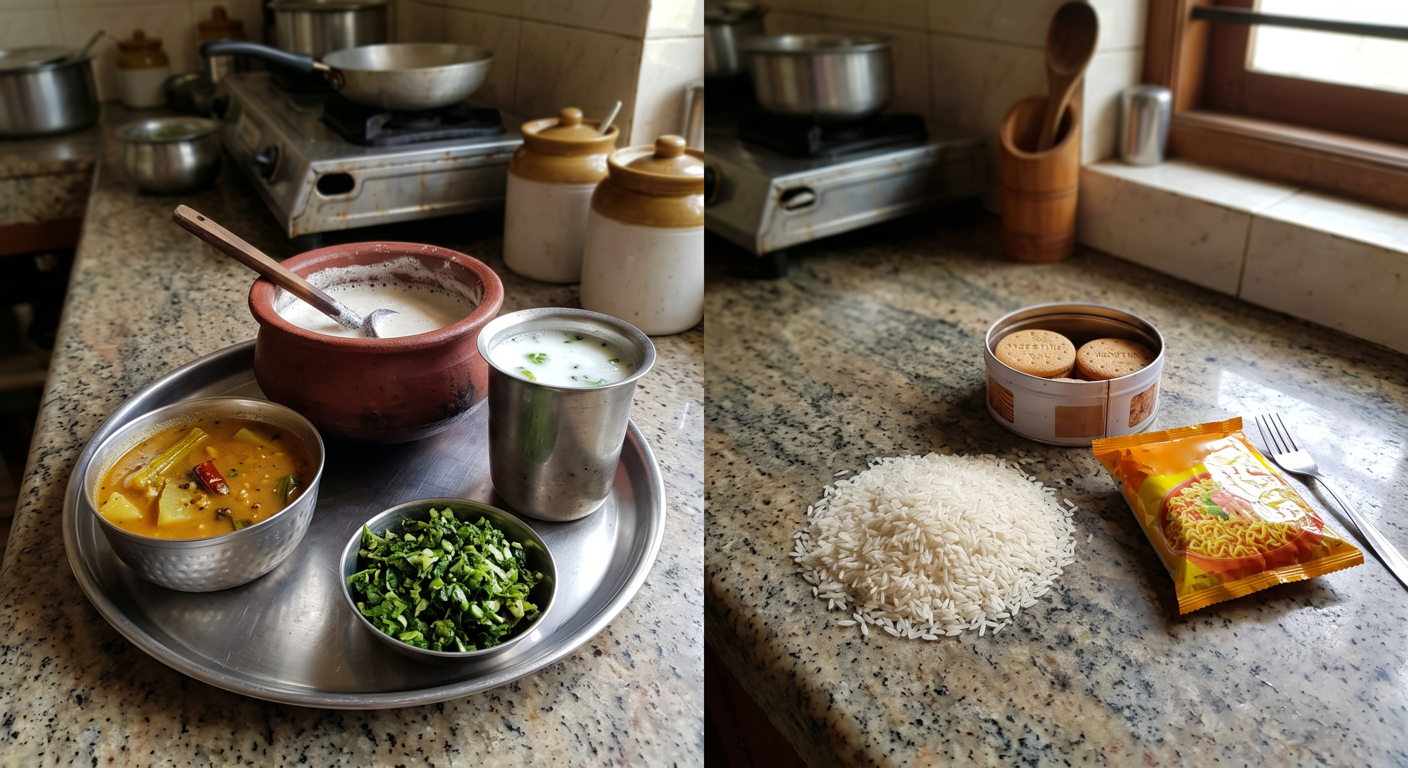
If that evaluation comes back clear, the functional reading becomes useful. A stool test may report reduced diversity and low Akkermansia muciniphila. Akkermansia is studied for its role in the gut mucus layer, but there is no agreed normal range, so a “low” label is a research observation rather than a finding about her. Read her through all four streams and the picture changes. Her symptoms flare in the weeks before her wholesale market trips and ease on holidays. Her diet is mostly home-cooked Malayali food, but the fibre is narrow: white rice at most meals, little raw or lightly cooked plant matter, and few whole grains or pulses beyond what ends up in sambar. She sleeps five and a half hours a night during the week, takes ibuprofen most evenings for tension headaches, and drinks three cups of sweet chai daily.
Now the drivers are visible. The ibuprofen needs a medical conversation, not a diet tweak. Short sleep and chronic stress are associated with changes in gut function, though most of this evidence is observational and cannot tell us they caused her symptoms. The narrow fibre gives her bacteria little to ferment. And the stress-symptom link points straight at the gut-brain axis. A plan for Deepika is not “take a random probiotic.” With a clinician on the team, it is addressing the painkiller habit, widening fibre variety, protecting sleep, and only then, if needed, a targeted probiotic matched to her actual results , the kind of marker-by-marker reading that has to stay honest about what each number can and cannot say.
That is what a functional read changes: the report stops being a summary of what was measured and becomes a list of what to actually do.
Why guesswork fails
Much of the gut advice circulating in India is generic advice wearing a lab coat. “Eat more dahi.” “Take this probiotic.” “Avoid maida.” “Drink warm water in the morning.” None of this is harmful, and some of it is sensible for most people. None of it is based on your particular situation.
The real cost of guesswork shows up when people conclude their bodies are uniquely broken after remedy after remedy produces nothing. The gut gets labelled a lost cause when in fact nobody ever worked out the actual drivers , sometimes because the real driver was a condition that a symptom-only reading never tested for. Functional gut health exists to close that loop: gather the symptoms, the biomarkers, the diet, and the lifestyle, find the pattern, and act on the pattern.

What you can do starting this week
- See a doctor first if any red flags are present. Rectal bleeding, unexplained weight loss, iron-deficiency anaemia, fever, symptoms that wake you at night, or a family history of inflammatory bowel disease or coeliac disease all need medical evaluation before any self-help plan.
- Widen your fibre, do not just add more. Rotating through several dals, different seasonal sabzis, whole grains, and fruit across the week feeds a broader range of bacteria than eating a lot of one thing.
- Keep regional fermented foods in rotation. Homemade dahi and chaas in the North, idli-dosa batter and moru in the South, kanji: cheap, local, and already part of most kitchens.
- Give your gut an overnight break. A longer gap between dinner and breakfast lets the digestive tract run its natural cleaning cycles and often eases morning bloating.
- Question painkillers and antacids you use routinely. They change the gut environment; if you take them daily, talk to a doctor about safer alternatives.
- Before buying anything, check the basics with a clinician. Stop buying random probiotics , if you want targeted help, start by ruling out real conditions and understanding your own gut.
BioMeBar: from guessing to knowing
BioMeBar profiles your unique microbiome and personalises recommendations to what is genuinely there, because with trillions of organisms running your biology, one-size-fits-all does not make sense.
The point of better information is better decisions. Functional gut intelligence gives you a more informed starting point for which synbiotic and which dietary shifts to try first, and which lifestyle factors to tackle. Whether any profile can predict who responds to what has not yet been tested in randomised trials, so treat that as a hypothesis to test with a clinician, not a delivered certainty. It turns “I have gut problems” into “Here is what is happening, here is why, and here is what to do next.” That is the difference between treating a lab result and treating a person.
Take the BioMeBar gut assessment →
Limitations and honest caveats
Much of the evidence linking stress, sleep, and gut function relies on self-report and observational designs, and individual responses vary. The case illustration is a composite, not a claim about a single study , and in reality its first step would be a medical assessment: blood tests including coeliac serology, a faecal calprotectin where diarrhoea is present, and a review of daily NSAID use, because coeliac disease and inflammatory bowel disease can present with exactly these symptoms. A stool test is not a substitute for that. In India, diagnostic markers are regulated in-vitro diagnostics and should be ordered and interpreted with a clinician. Functional gut health is a framework for interpretation, not a substitute for medical diagnosis. If you have persistent symptoms or any red flag , rectal bleeding, weight loss, iron-deficiency anaemia, nocturnal symptoms, or relevant family history , see a doctor before following any plan.
Frequently asked questions
How is functional gut health different from a regular stool test?
A regular stool test reports which bacteria are present. Functional gut health reads that data together with your symptoms, diet, and lifestyle, so the numbers are interpreted in context and turned into an action plan rather than left as a raw list.
Why did my probiotic not work even though my test looked fine?
A normal test result and daily reality are different things. If your beneficial bacteria are present but underfed, or if stress, poor sleep, or a routine medicine is disrupting your gut, no generic probiotic can fix the underlying cause.
Can diet changes shift my gut bacteria quickly?
Yes. Dietary changes can alter the gut microbiome within days, as shown in feeding studies (David, Nature, 2014), though lasting changes to the whole community take weeks to months. Individual responses vary a lot, which is why a personalised read beats a one-size-fits-all plan.
Does functional gut health require expensive testing?
No. Some of the most useful information costs nothing: symptom patterns, a real diet diary, and an honest look at sleep and stress. Lab data adds precision, but it is one layer of four, not the whole answer.
References
- Cryan JF, O’Riordan KJ, Cowan CSM, et al. The microbiota-gut-brain axis. Physiological Reviews, 2019.
- David LA, et al. Diet rapidly and reproducibly alters the human gut microbiome. Nature, 2014.
- Servetas SL, Gierz KS, Hoffmann D, et al. Evaluating the analytical performance of direct-to-consumer gut microbiome testing services. Communications Biology, 2026.
This article is educational and is not a substitute for professional medical advice.