Nobody sat down with a textbook on microbiology and designed the Indian thali. It evolved over centuries through trial, error, intuition, and the practical wisdom of feeding families well with what was available. But when you look at a traditional thali through the lens of modern microbiome science, what emerges is something surprisingly sophisticated, a meal that feeds your gut bacteria almost as thoughtfully as it feeds you.
The irony is that we’re now spending hundreds of rupees on supplements and functional foods trying to achieve what a 50-rupee home-cooked thali delivered on its own.
The prebiotic foundation: dal, sabzi, and whole grains
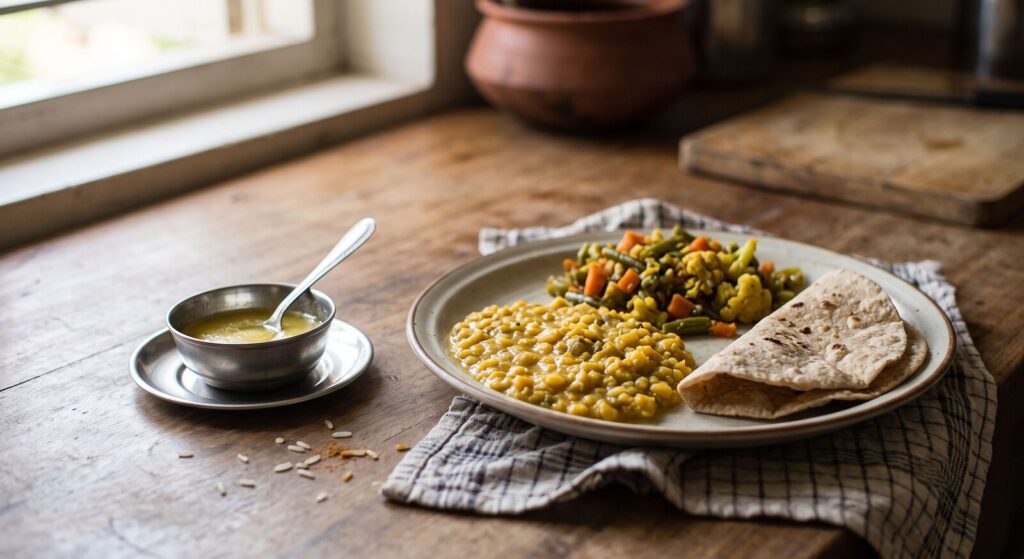
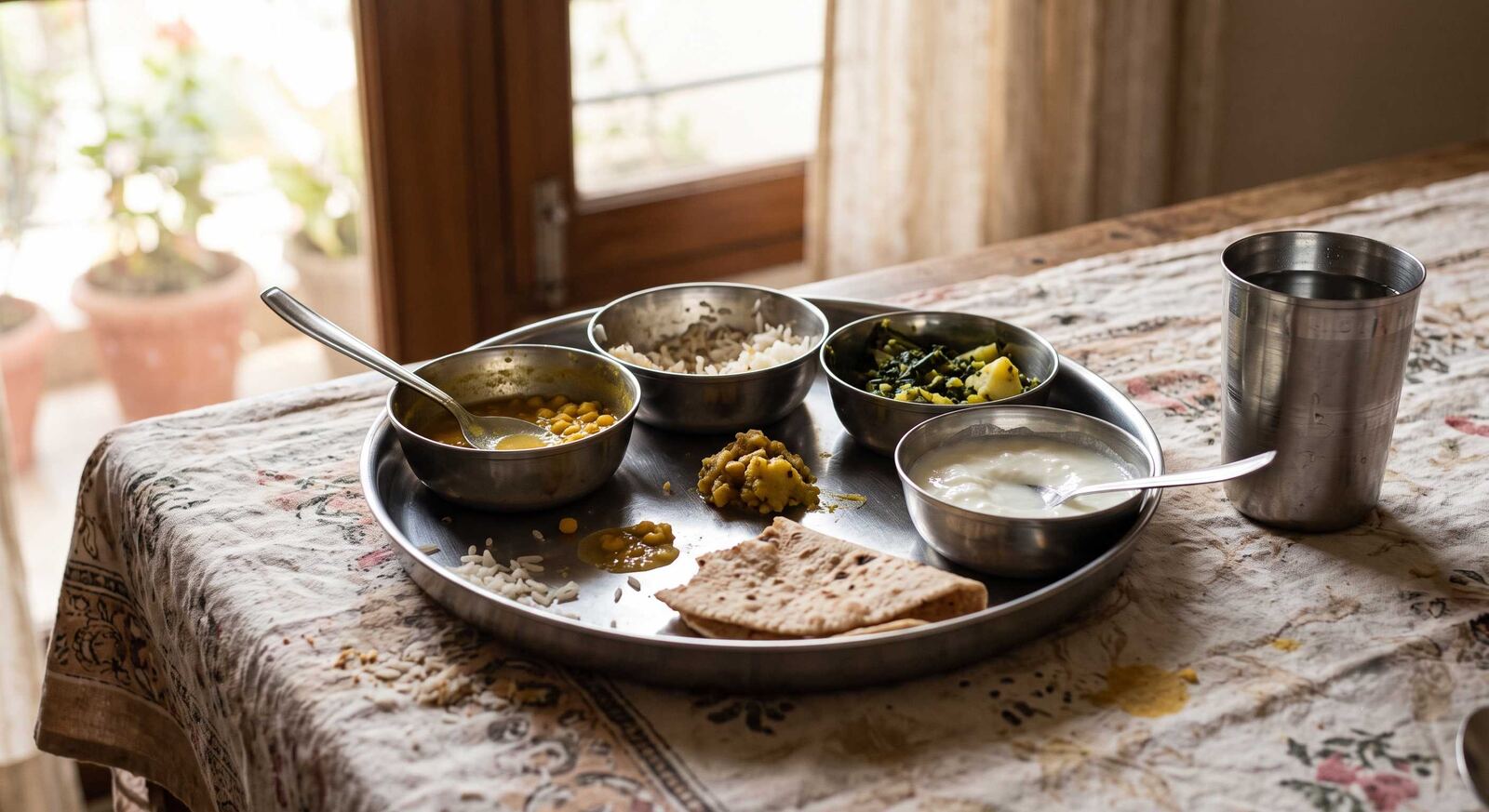
A standard thali includes dal, two or three vegetable dishes, roti or rice (or both), and some form of salad or raita. From a microbiome perspective, the dal and vegetables are doing the heavy lifting as prebiotics: they’re feeding your beneficial gut bacteria.
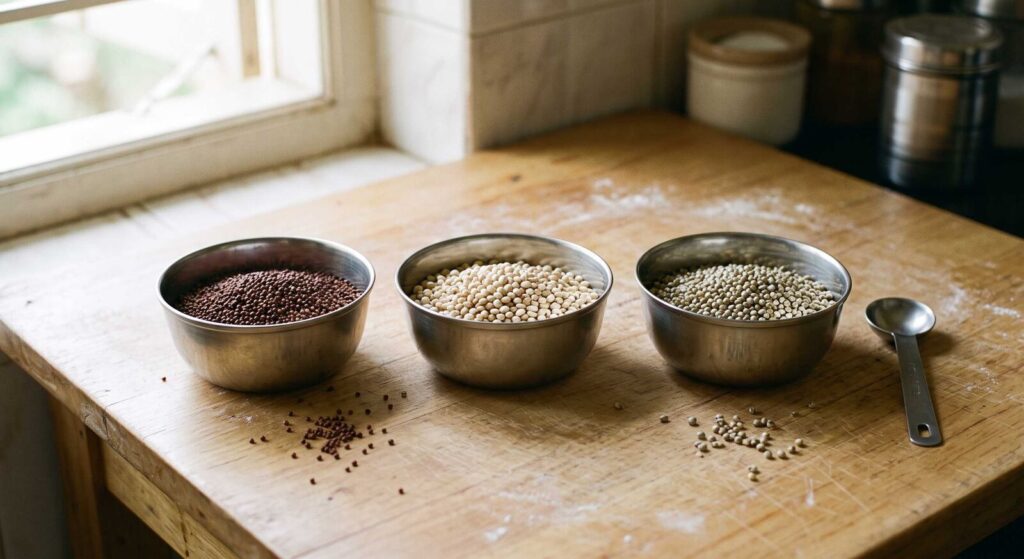
Lentils and legumes (moong, masoor, toor, chana) contain resistant starch and galacto-oligosaccharides (GOS). These are carbohydrates that your stomach and small intestine can’t break down, so they travel intact to the colon where bacteria like Prevotella, Faecalibacterium, and Roseburia ferment them into short-chain fatty acids, particularly butyrate. Butyrate is the primary fuel source for the cells lining your colon. Without adequate butyrate production, your gut lining weakens, inflammation increases, and the barrier between your gut contents and your bloodstream becomes less effective.
The sabzi (whether it’s bhindi, lauki, baingan, or palak) adds another type of fibre. Vegetable fibres are structurally different from legume fibres, and they feed different bacterial populations. Diversity of fibre sources translates to diversity of gut bacteria, and microbial diversity is one of the most consistent markers of a healthy gut across all the research.
Whole wheat roti contributes arabinoxylan, a prebiotic fibre that specifically supports Bifidobacterium growth. Even plain rice, when cooked and cooled (as often happens with leftover rice eaten the next day), develops retrograded resistant starch, a potent prebiotic.
A single thali, without trying, delivers three to four different types of prebiotic fibre from multiple sources. Most commercial prebiotic supplements give you one.
The probiotic elements: dahi, pickle, and fermented sides
Now add the dahi. Homemade curd brings live Lactobacillus and Streptococcus species, bacteria that produce lactic acid, inhibit pathogens, and support the gut’s immune function. A small katori of dahi with lunch does more than cool the meal down. It delivers live microorganisms in a protective dairy matrix that helps them survive stomach acid better than most supplement capsules.
The pickle (a properly fermented one, not the commercial vinegar kind) adds another layer. Lacto-fermented mango or lime pickle contains Lactobacillus plantarum and related species, along with organic acids that create a favourable environment for beneficial bacteria in the gut.
In South Indian thalis, you might get a fermented component in the form of the main dish itself, idli, dosa, or appam, all made from naturally fermented batters. In Gujarati thalis, dhokla serves a similar role.
Nobody designed the thali as a synbiotic meal, but that’s what it amounts to: prebiotics and probiotics in the same plate, at the same time.
A small katori of dahi with lunch does more than cool the meal down.
The anti-inflammatory spice layer
The spices add yet another dimension. Almost every component is cooked with spices that have documented effects on gut health.
Turmeric appears in the dal, in the sabzi, sometimes in the rice. Curcumin (its active compound) has been shown in studies published in journals like Gut Microbes and the Journal of Nutritional Biochemistry to increase populations of Lactobacillus and Bifidobacterium while reducing markers of intestinal inflammation. The addition of black pepper in many dishes increases curcumin absorption dramatically.
Cumin (jeera) has antimicrobial activity that selectively inhibits pathogenic bacteria while sparing beneficial ones. Asafoetida (hing), used almost universally in dal preparation, reduces gas-producing fermentation by modulating the balance between different bacterial groups. Ginger and garlic, present in most gravies, have prebiotic properties and stimulate digestive enzyme secretion.
Even the tadka (that familiar sizzle of mustard seeds, curry leaves, and cumin in hot oil) does more than add flavour. It extracts fat-soluble bioactive compounds and delivers them in a form your gut can actually use.
Want to know what your own gut actually needs? Take the BioMeBar gut assessment →
The digestive bookends
Traditional thali meals often start or end with elements that support digestion in specific ways. Raw onion slices on the side provide quercetin (an anti-inflammatory flavonoid) and fructo-oligosaccharides (a prebiotic). A wedge of lemon provides citric acid, which stimulates gastric acid production and aids protein digestion. Papad (especially the ones made from urad or moong dal) adds a crunchy source of additional legume-based fibre.
The practice of ending a meal with saunf (fennel seeds) or a small piece of gur (jaggery) does more than honour tradition. Fennel contains anethole, which relaxes smooth muscle in the gut and reduces post-meal bloating. Jaggery provides iron and a small amount of prebiotic inulin.
Even the sequence matters. Eating dal-rice before dahi, finishing with something sweet, these patterns affect gastric emptying rates, nutrient absorption, and the order in which different substrates reach the colon.
Traditional thali meals often start or end with elements that support digestion in specific ways.
How modern diets broke the system
Compare that thali to what a typical urban Indian eats today. Breakfast might be toast with jam, or a protein shake, or nothing at all. Lunch could be a sandwich from Swiggy or butter chicken with naan. Dinner might be Maggi or pizza or fried rice from the nearest restaurant.
None of this is terrible in isolation. But the cumulative effect is a diet stripped of fibre diversity, devoid of live fermented foods, low in anti-inflammatory spices, and high in refined carbohydrates, seed oils, and added sugar. The gut bacteria that thrived on the traditional pattern, the Prevotella that fermented legume fibres, the Faecalibacterium that produced butyrate from vegetable fibre, start to decline. In their place, bacteria that thrive on simple sugars and animal fats expand.
This isn’t speculation. Studies comparing the gut microbiomes of rural and urban Indians consistently find lower microbial diversity, lower Prevotella abundance, and higher levels of inflammation-associated species in urban populations.
“But do I really need to test my gut?”
Not everyone does. But if you have been chasing the same symptoms for months — bloating, low energy, mood dips, stubborn weight — guessing gets expensive and slow. Seeing your actual microbiome composition turns trial-and-error into a targeted plan.
Stop guessing. See what is actually in your gut.
BioMeBar profiles your unique microbiome and personalises recommendations to what is genuinely there, because with trillions of organisms running your biology, one-size-fits-all does not make sense.