Millets are having a moment. The government named 2023 the International Year of Millets, ragi dosa has become a fixture on urban cafe menus, and your feed is probably full of millet recipes promising everything from weight loss to clearer skin. Underneath the noise there is a real scientific story, and it is genuinely promising. It is also more unfinished than the marketing lets on.
Here is what we actually know about millets and the gut, what is still being worked out, and where the honest gaps are.
How millets differ from wheat and rice
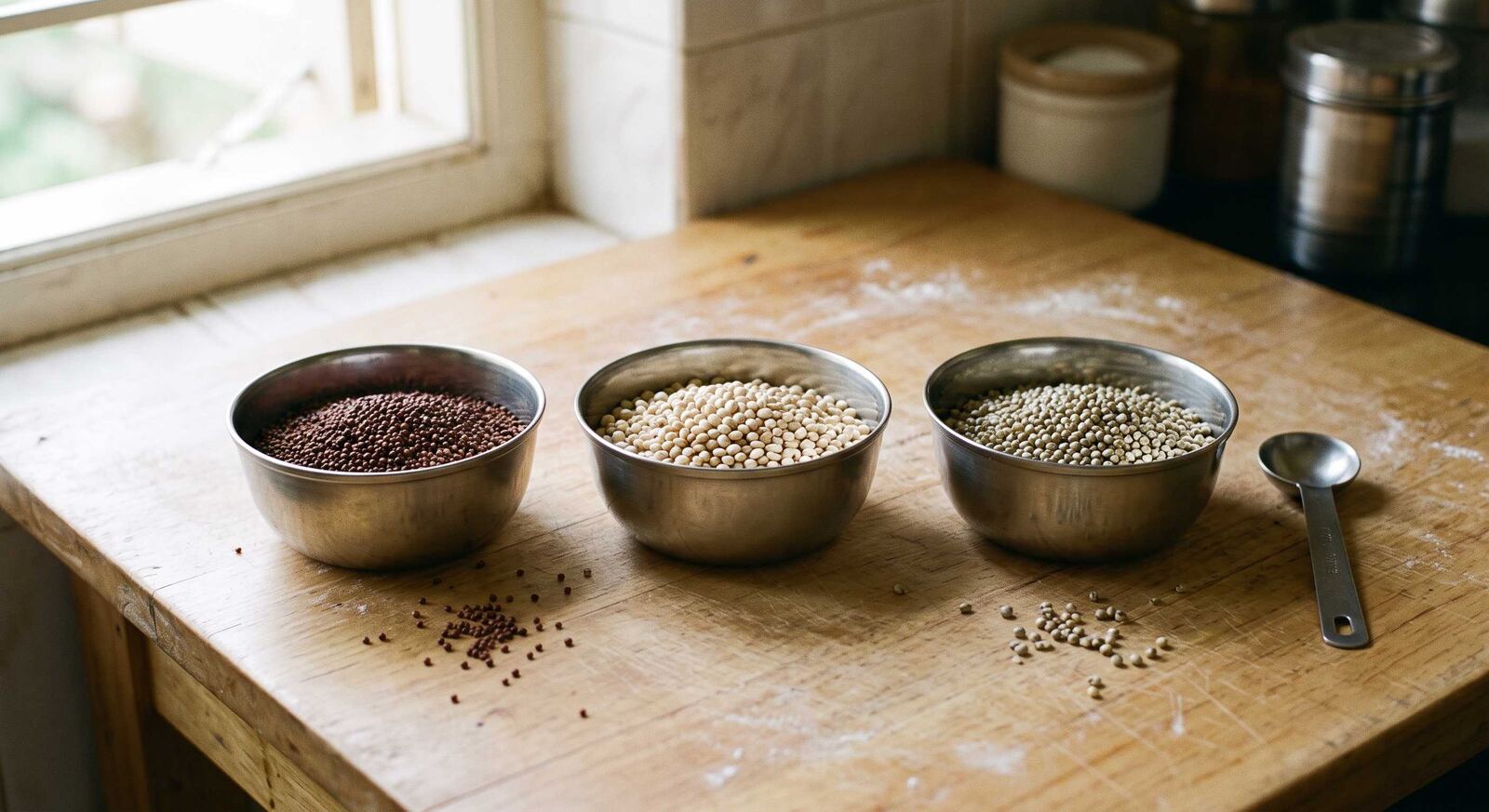
India grows a whole spread of millets: ragi (finger millet), jowar (sorghum), bajra (pearl millet), kangni (foxtail millet), kodo, barnyard, and others. Their nutrition varies a little from one to the next, but they share a few traits that make them interesting for the gut.
Start with fibre. Millets generally carry more of it than refined wheat or polished rice. Bajra has about 11 to 12 grams per 100 grams and ragi around 11, against white rice at 0.4 and refined wheat flour at 2 to 3. Whole wheat atta, at roughly 10 to 11 grams, actually keeps pace, so millets aren’t in a league of their own here.
What matters more is the kind of fibre. Millets are loaded with insoluble fibre (cellulose, hemicellulose) that adds bulk and moves things along the colon, but they also bring a useful amount of soluble fibre and resistant starch. Resistant starch is the part your own enzymes can’t break down, so it travels intact to the colon, where bacteria ferment it into short-chain fatty acids.
They also carry phenolic compounds, ferulic acid, catechins, tannins, that act as antioxidants and have prebiotic-like effects. Because these polyphenols aren’t fully absorbed in the small intestine, a good share reaches the colon, where gut bacteria turn them into bioactive compounds.
What the microbiome studies say
A growing body of work, most of it from the last five to seven years, has looked at how millets shift the gut microbiome. The findings sort themselves out by the type of study.
In vitro studies, run in lab setups that mimic the gut rather than in people, have shown millet fibres encouraging Lactobacillus and Bifidobacterium and lifting production of butyrate and propionate, two short-chain fatty acids tied closely to gut health. A 2020 study in Food Chemistry found that finger millet fibre raised Faecalibacterium prausnitzii in simulated fermentation. F. prausnitzii is one of the gut’s most important butyrate producers, and low levels of it track with inflammatory bowel disease.
Animal work has gone further. Rodent studies report that millet-based diets widen microbial diversity, push up SCFA production, calm markers of intestinal inflammation, and firm up the gut barrier compared with refined-grain diets. A foxtail millet study in Food & Function found its resistant starch grew Prevotella and Ruminococcus while trimming Escherichia-Shigella, a shift that lines up with less inflammation.
Human studies are the thin part. A trial in Molecular Nutrition & Food Research swapped rice for finger millet in type 2 diabetic patients for 12 weeks and saw better glycaemic control and modest changes in gut bacteria. An observational study of pearl millet eaters in rural India found higher Prevotella copri than in wheat-eating groups, though because it was observational, it is hard to pull the millet effect apart from everything else those communities eat.
A growing body of work, most of it from the last five to seven years, has looked at how millets shift the gut microbiome.
The blood sugar angle
One of the steadiest findings about millets is their lower glycaemic index next to rice and refined wheat. Ragi, jowar and bajra all produce a slower, gentler rise in blood sugar after a meal.
That ties back to the gut in a way that isn’t obvious at first. A sharp sugar spike sets off a chain of insulin release, inflammatory signalling and metabolic stress. Repeated often enough, those spikes feed insulin resistance, and insulin resistance comes with lower microbial diversity and more pro-inflammatory gut bacteria. So even before you count their direct prebiotic effects, the gentler blood-sugar curve millets give you may help the microbiome indirectly, by easing the metabolic stress that throws it off. That matters especially in India, where type 2 diabetes is among the most common in the world and the everyday plate leans heavily on high-glycaemic refined carbs.
Want to know what your own gut actually needs? Take the BioMeBar gut assessment →
What we still don’t know
This is the bit the hype skips. The science here is promising, but it has real holes.
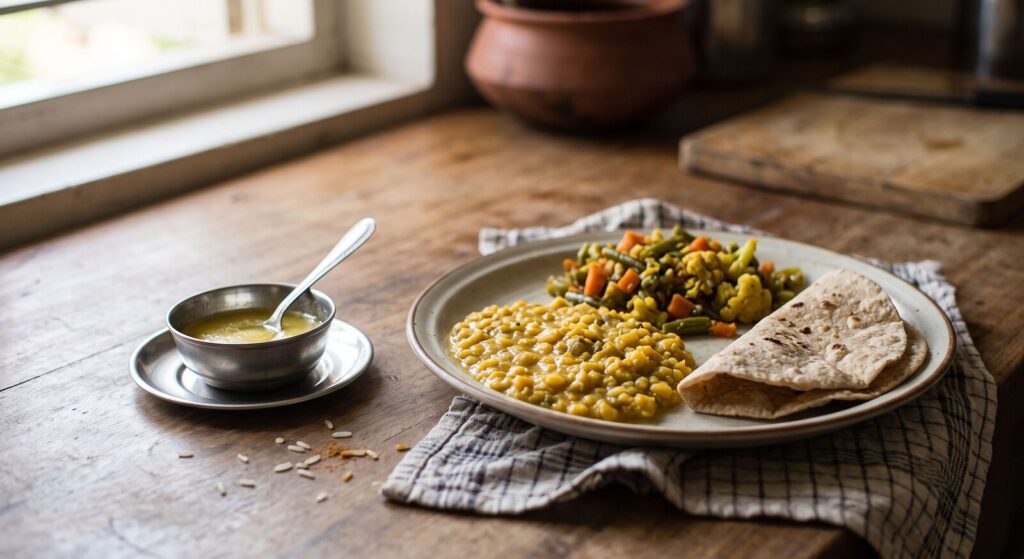
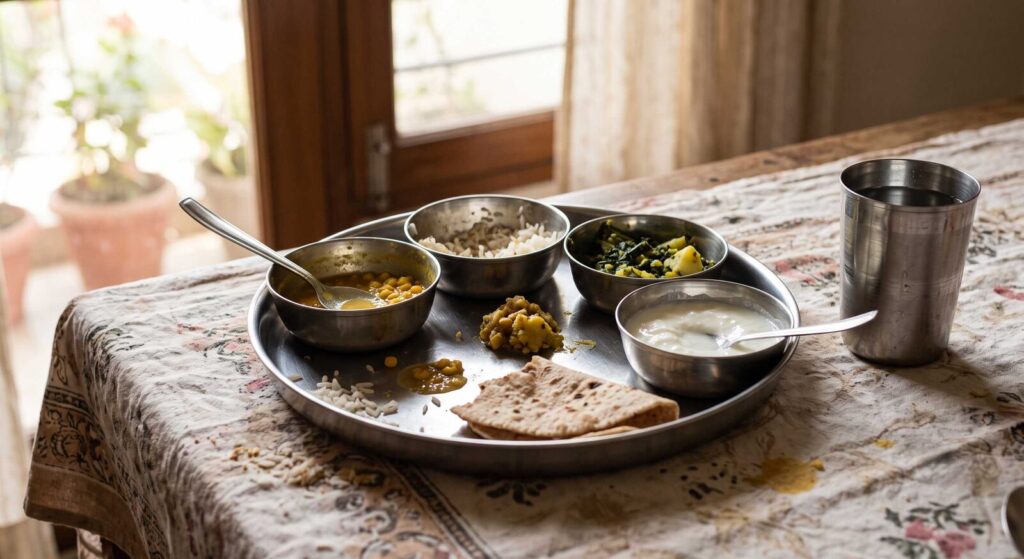
Most human trials are short, four to twelve weeks, so we have little idea what years of millet eating does to the microbiome. We also don’t know whether benefits seen for a single millet variety hold up once millets are eaten the way they usually are, mixed into a full Indian meal. You are rarely eating only ragi roti; you are eating it with dal and sabzi.
There is almost nothing comparing preparation methods. Does ragi mudde, the traditional ball, affect the gut differently from ragi dosa or a packet of ragi biscuits? Processing reshapes starch and fibre, which changes what bacteria can do with them, and a factory millet snack is structurally a world away from hand-pounded flour cooked at home.
And we don’t have studies on the exact case that matters most for cities: people raised on refined wheat and rice switching to millets. Most research has been done either in rural communities who have always eaten them or in controlled lab conditions. A gut that has run on refined grains for twenty years will respond differently to millets than one that grew up on them.
The science here is promising, but it has real holes.
The practical takeaway
Millets are genuinely good for your gut. The fibre, the resistant starch, the polyphenols, the softer glycaemic hit, all of it is well supported by basic science and animal work, and the early human evidence is encouraging.
They are not magic, though. Trading refined wheat for ragi no more fixes a disrupted microbiome than one superfood rescues a poor diet. Millets do their best work as part of a varied, fibre-rich, traditionally cooked Indian plate, alongside lentils, vegetables, fermented foods and spices.
“But do I really need to test my gut?”
Not everyone does. But if you have been chasing the same symptoms for months — bloating, low energy, mood dips, stubborn weight — guessing gets expensive and slow. Seeing your actual microbiome composition turns trial-and-error into a targeted plan.
Stop guessing. See what is actually in your gut.
BioMeBar profiles your unique microbiome and personalises recommendations to what is genuinely there, because with trillions of organisms running your biology, one-size-fits-all does not make sense.