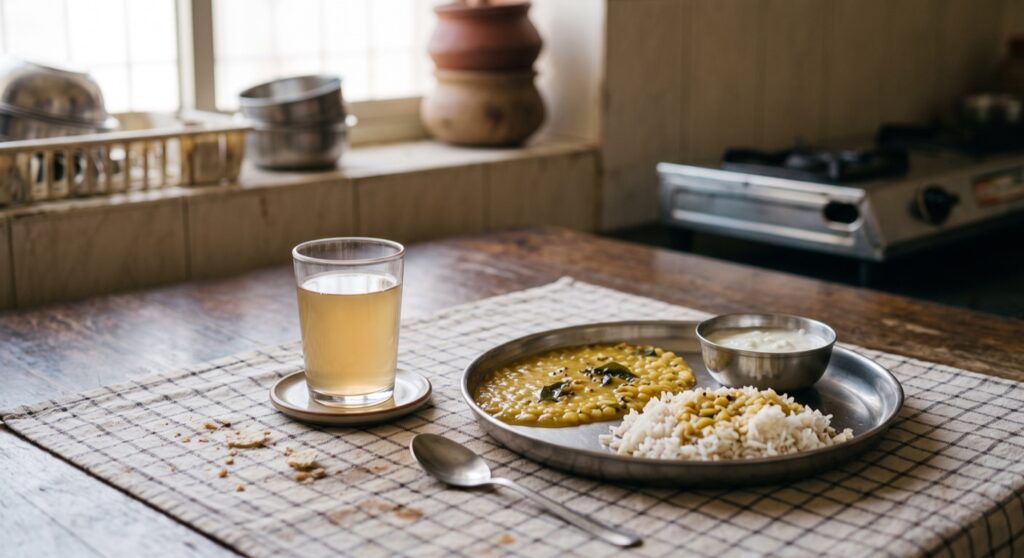
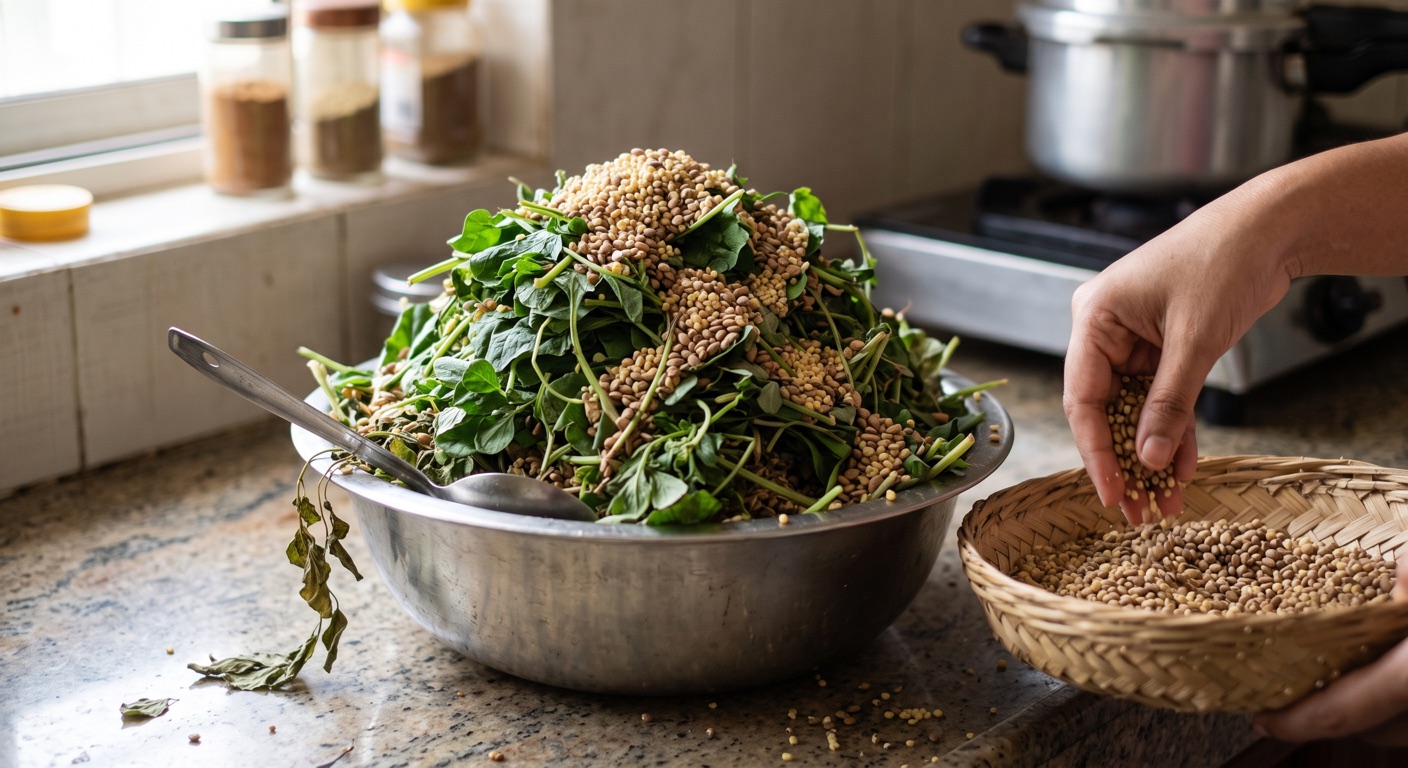
The doctor says eat more fibre. Your grandmother has been saying the same thing in different words for years: “sabzi khao, roti poori khao.” So you obey. A big bowl of raw salad, extra whole grains, more rajma, a spoonful of psyllium husk. Within a week you are more bloated than before, cramping by afternoon, and convinced your gut is broken.
It is not broken. The advice just missed the most important part. Telling everyone to eat more fibre, without saying which type or how fast to add it, is like telling everyone to exercise more without mentioning that some people have knee injuries. The direction is right. The execution can hurt.
“Fibre” is at least four different things
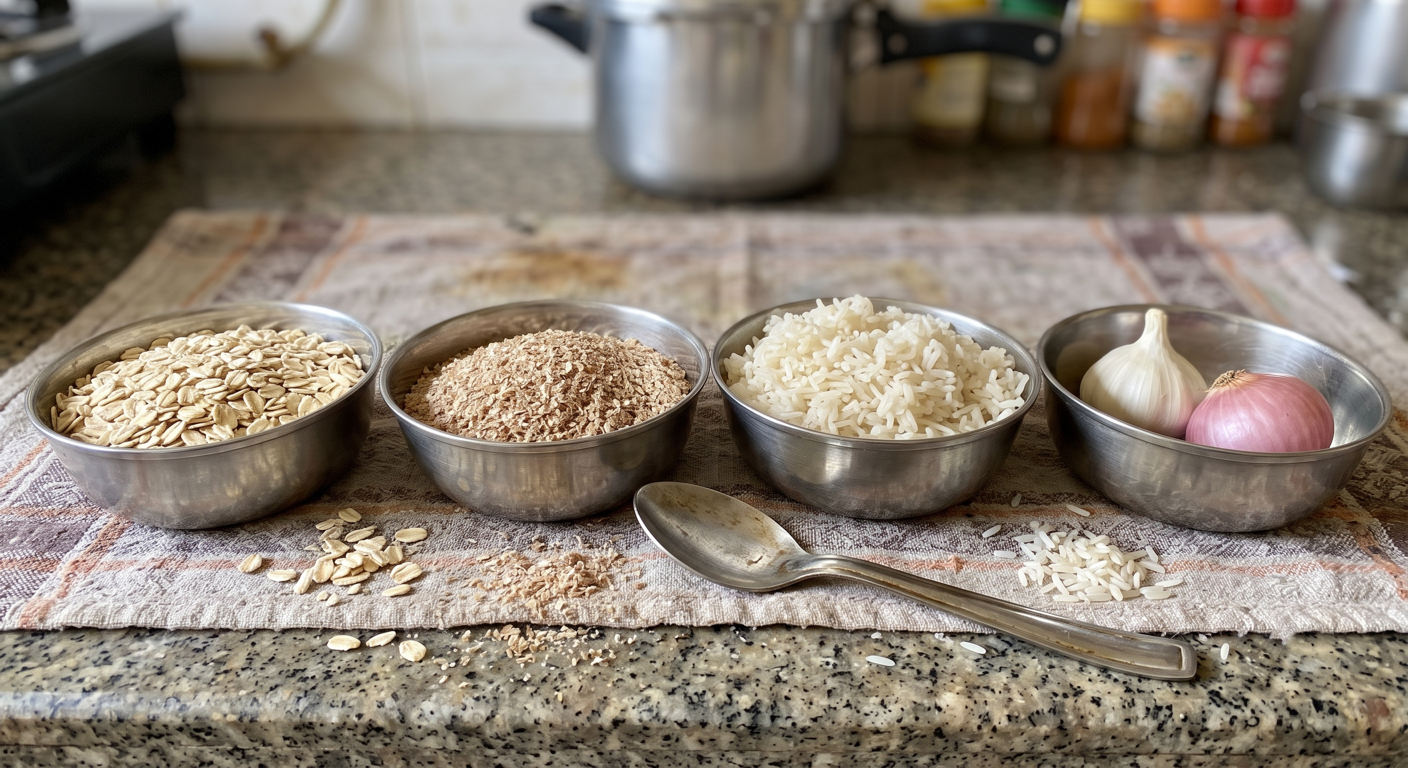
The word fibre bundles together compounds that behave completely differently once swallowed.
Soluble fibre dissolves in water and forms a gel. Oats, barley, the flesh of fruit, and the soft parts of dal are loaded with it. It slows digestion, steadies blood sugar, and much of it gets fermented by gut bacteria into short-chain fatty acids, the fuel for the cells lining your colon.
Insoluble fibre does not dissolve. Wheat bran, vegetable skins, the fibrous stems of spinach: it adds bulk and speeds the passage of stool. Your bacteria ferment very little of it, so it produces few short-chain fatty acids, but it is the classic fix for constipation.
Resistant starch is a third category. It survives the small intestine intact and reaches the colon, where bacteria ferment it enthusiastically. Cold rice left overnight in the fridge, cooked-and-cooled potatoes, raw plantain: it is among the most potent food for beneficial bacteria like Ruminococcus bromii and Bifidobacterium.
Prebiotic fibres are the selective feeders: inulin in garlic and onions, fructo-oligosaccharides in bananas, galacto-oligosaccharides in legumes. By the ISAPP definition, they are substrates selectively used by host microorganisms to confer a health benefit (Gibson, Nature Reviews Gastroenterology & Hepatology, 2017). We cover the full case for fibre and prebiotics in our guide to fibre and prebiotics.
These types do not feel the same in your body. “Eat more fibre” with no type attached hides the decision that actually decides whether you feel better or worse.
For some guts, the wrong fibre is actively painful
Irritable bowel syndrome is the clearest case. IBS is common in India, affecting roughly 4 percent of people in the largest community survey using Rome III criteria (Makharia, Journal of Neurogastroenterology and Motility, 2011), with estimates varying by criteria and setting. We look at the root causes of bloating and acidity in our guide to bloating, acidity and IBS. The type of fibre matters enormously for these patients. A meta-analysis of 14 randomised trials found that soluble fibre such as psyllium (isabgol) improved IBS symptoms, with about one in seven patients benefiting. Wheat bran showed no benefit, though the same analysis found no controlled evidence that it causes harm either, despite that being a common claim (Moayyedi, American Journal of Gastroenterology, 2014).
That is a useful reversal of the usual advice. The gel-forming soluble fibre is what the evidence supports for IBS, while coarse bran offers no demonstrated benefit. Same word, opposite effects. And the picture gets more complicated still: the low-FODMAP approach, which temporarily restricts the most fermentable carbohydrates, shows that for some people even “healthy” fibre sources are the trigger, and that restriction needs careful management and reintroduction under guidance, not a permanent lifestyle (Staudacher, Nature Reviews Gastroenterology & Hepatology, 2014).
There is an even more extreme case, though one with contested diagnostics. In small intestinal bacterial overgrowth (SIBO), the theory goes that colon-type bacteria have moved up into the small intestine, where fermentation is not supposed to happen. Feed those misplaced bacteria a highly fermentable fibre, and they ferment it right there, in a stretch of gut built for absorption, not gas, producing bloating, distension, and cramping. The diagnostic criteria for SIBO are debated, so this is a clinical picture worth raising with a doctor rather than something to self-diagnose. If fibre reliably triggers severe bloating for you, that is a reason for professional evaluation, not a reason to conclude you have SIBO on your own.
Your bacteria decide what happens to the fibre you eat
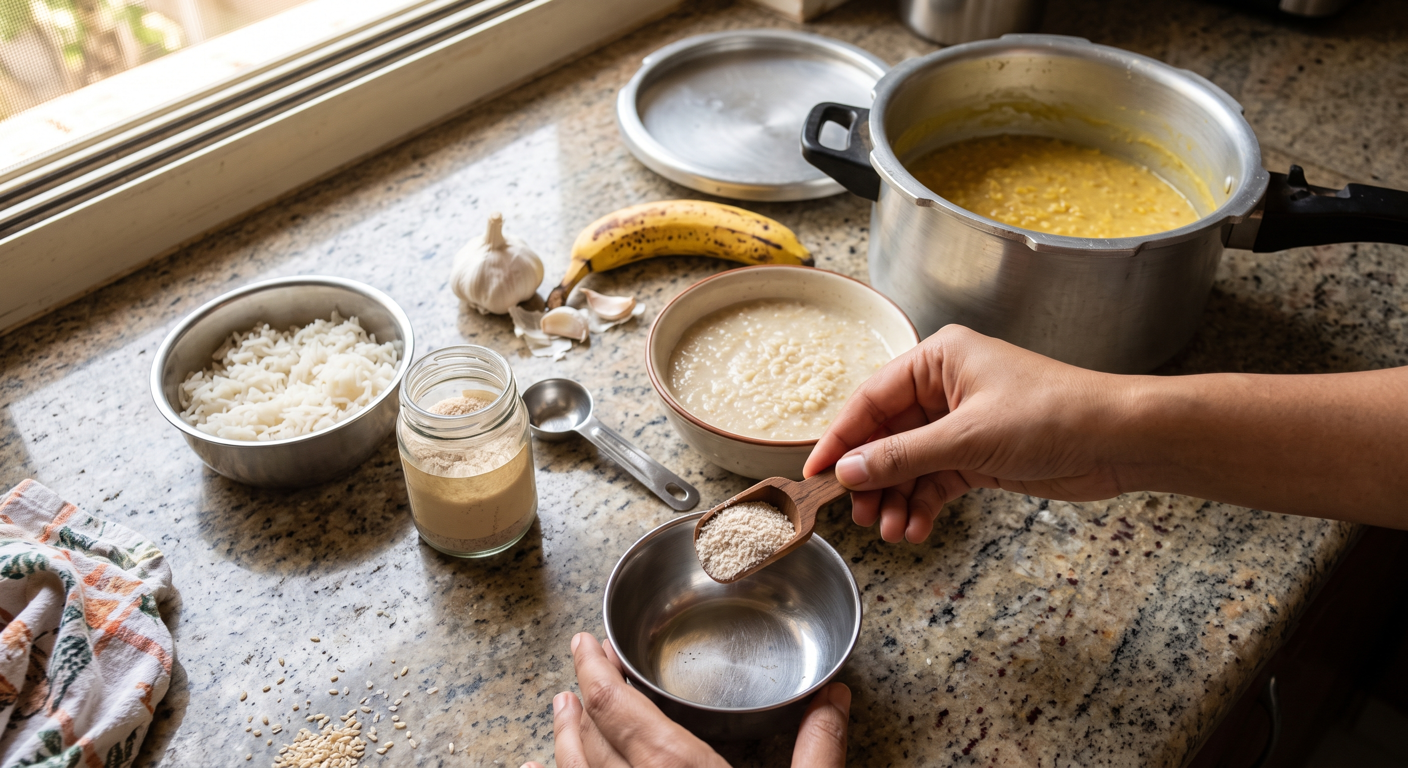
Even without a diagnosed condition, your response to fibre is gated by your existing microbial community.
Guts rich in fibre-degrading specialists such as Ruminococcus bromii and Bacteroides thetaiotaomicron tend to handle complex plant fibre well, producing beneficial short-chain fatty acids and staying regular. Prevotella species are also strongly fibre-associated, though their relationship to metabolic health is still debated (Pedersen, Nature, 2016), so their presence should not be read as a guarantee that more fibre is uniformly good for you.
If you are short on those degraders, which happens after antibiotics, long stretches of a low-fibre diet, or chronic stress, fibre becomes a traffic jam. It reaches your colon, but not enough bacteria are there to process it. Fermentation capacity genuinely varies between people, and clinicians commonly see a transition period of extra gas when fibre intake rises quickly, while communities take time to grow the bacteria needed for the new load. Dietary shifts can begin reshaping the community within days, but full adaptation is slower (David, Nature, 2014). That transition experience is well recognised in practice, even though the exact mechanism is less studied than the underlying fibre science (Koh, Cell, 2016). For a realistic sense of how long a gut rebuild takes, see our timeline for fixing gut health.
This is the part that makes the standard advice fail the people who most need it. The very people with poor gut health and low diversity are the least equipped for a sudden fibre jump. They need less fibre in one go, not less fibre overall; the answer is a slower ramp and a different starting point.
What a smarter approach looks like
None of this means fibre is bad. Fibre is one of the most protective parts of the diet, and populations eating fibre-rich diets have lower rates of colon cancer, heart disease, and type 2 diabetes (Reynolds, Lancet, 2019). The goal is to get fibre in without wrecking yourself on the way there.
- Start low and slow. If you are coming from a low-fibre diet, add one fibre source at a time, in small amounts, and watch how you respond before adding the next.
- Prefer cooked and softened over raw. For sensitive guts, cooked vegetables, well-soaked and pressure-cooked dal, and soft fruits ferment more gently than raw salads and unripe fruit.
- Reach for soluble fibre first. Isabgol, oats, daliya, and cooked vegetables are better starting points than bran or raw cruciferous vegetables. Skip bulk-forming fibre like isabgol entirely if you have a known stricture, a history of bowel obstruction, or swallowing problems, and always start it at a low dose with plenty of water.
- Use the Indian kitchen’s tools. Cold, leftover rice has higher resistant starch than freshly steamed rice. Bananas, garlic, and onion bring prebiotic fibre. Roti, daliya, and barley are gentle whole-grain options. If you do keep cooled rice, refrigerate it within an hour of cooking, use it within a day, and reheat it thoroughly before eating.
- If you have diagnosed IBS or suspect SIBO, get professional guidance before experimenting. The low-FODMAP diet and fibre selection need supervision and careful reintroduction, not guesswork.
How the fibre types compare
| Fibre type | Examples | What it does | Best for |
|---|---|---|---|
| Soluble | Oats, daliya, isabgol, dal | Gels, steadies sugar, feeds SCFA makers | IBS, gentle ramp-ups |
| Insoluble | Wheat bran, veg skins | Bulk, speeds transit | Constipation; no proven benefit or proven harm in IBS trials |
| Resistant starch | Cooled rice, raw plantain | Feeds Bifidobacterium, Ruminococcus | Diversity, after antibiotics |
| Prebiotic | Inulin, FOS, GOS | Selectively feeds beneficial bacteria | Feeding existing community |
BioMeBar: from guessing to knowing
BioMeBar profiles your unique microbiome and personalises recommendations to what is genuinely there, because with trillions of organisms running your biology, one-size-fits-all does not make sense.
If you have tried “eat more fibre” and ended up worse, ask whether you know what your gut actually needs. Fibre-degrading specialists like Ruminococcus are the classic profile of a traditional Indian diet built on dal and whole grains, and if those populations are present, you can likely handle a broad range of fibre. If they are depleted, the answer is not more fibre overnight; it is rebuilding the community gradually and choosing fibre types your specific bacteria can use. That is the difference between treating fibre as a volume question and treating it as a matching question. BioMeBar reads your profile to answer the matching question.
Take the BioMeBar gut assessment →
Limitations and honest caveats
The IBS fibre evidence comes mostly from meta-analyses of trials with varied definitions of IBS and variable outcome measures, and individual tolerance varies widely. SIBO findings rest on a narrower evidence base, and the low-FODMAP diet should only be followed under professional guidance because prolonged restriction can starve beneficial bacteria. Fibre response is individual, so generic rules will always miss some people in both directions.
Frequently asked questions
Why does eating more vegetables make me bloated?
Raw vegetables are rich in fermentable fibre and, for a gut with low diversity or IBS, that fibre can be fermented into excess gas. Cooking vegetables and adding fibre gradually usually helps.
What is the best fibre for IBS?
Soluble, gel-forming fibre like psyllium (isabgol) has the best evidence in IBS. Wheat bran showed no benefit in the meta-analysis, though that same analysis found no controlled evidence that it causes harm either, despite that being a common claim. Individual tolerance still varies, so guidance from a clinician is worth it.
Is isabgol safe to take daily?
Psyllium is a well-studied soluble fibre used for constipation and IBS. It should be started at a low dose with plenty of water. It is not suitable if you have a bowel stricture, a history of obstruction, or swallowing problems, and long-term use is best discussed with a doctor.
Is cold rice better for your gut than hot rice?
Somewhat. Cooling cooked rice converts some of its starch into resistant starch, which reaches the colon intact and feeds beneficial bacteria. The increase is real but modest, and reheating partially reverses it. Refrigerate rice within an hour of cooking, use within a day, and reheat thoroughly before eating.
References
- Gibson GR, et al. The International Scientific Association for Probiotics and Prebiotics consensus statement on the definition and scope of prebiotics. Nature Reviews Gastroenterology & Hepatology, 2017.
- Moayyedi P, et al. The effect of fiber supplementation on irritable bowel syndrome: a systematic review and meta-analysis. American Journal of Gastroenterology, 2014.
- Makharia GK, et al. Prevalence of irritable bowel syndrome: a community based study from northern India. Journal of Neurogastroenterology and Motility, 2011.
- Staudacher HM, et al. Mechanisms and efficacy of dietary FODMAP restriction in IBS. Nature Reviews Gastroenterology & Hepatology, 2014.
- Koh A, et al. From dietary fiber to host physiology: short-chain fatty acids as key bacterial metabolites. Cell, 2016.
- David LA, et al. Diet rapidly and reproducibly alters the human gut microbiome. Nature, 2014.
- Pedersen HK, et al. Human gut microbes impact host serum metabolome and insulin sensitivity. Nature, 2016.
- Reynolds A, et al. Carbohydrate quality and human health: a series of systematic reviews and meta-analyses. Lancet, 2019.
This article is educational and is not a substitute for professional medical advice.