
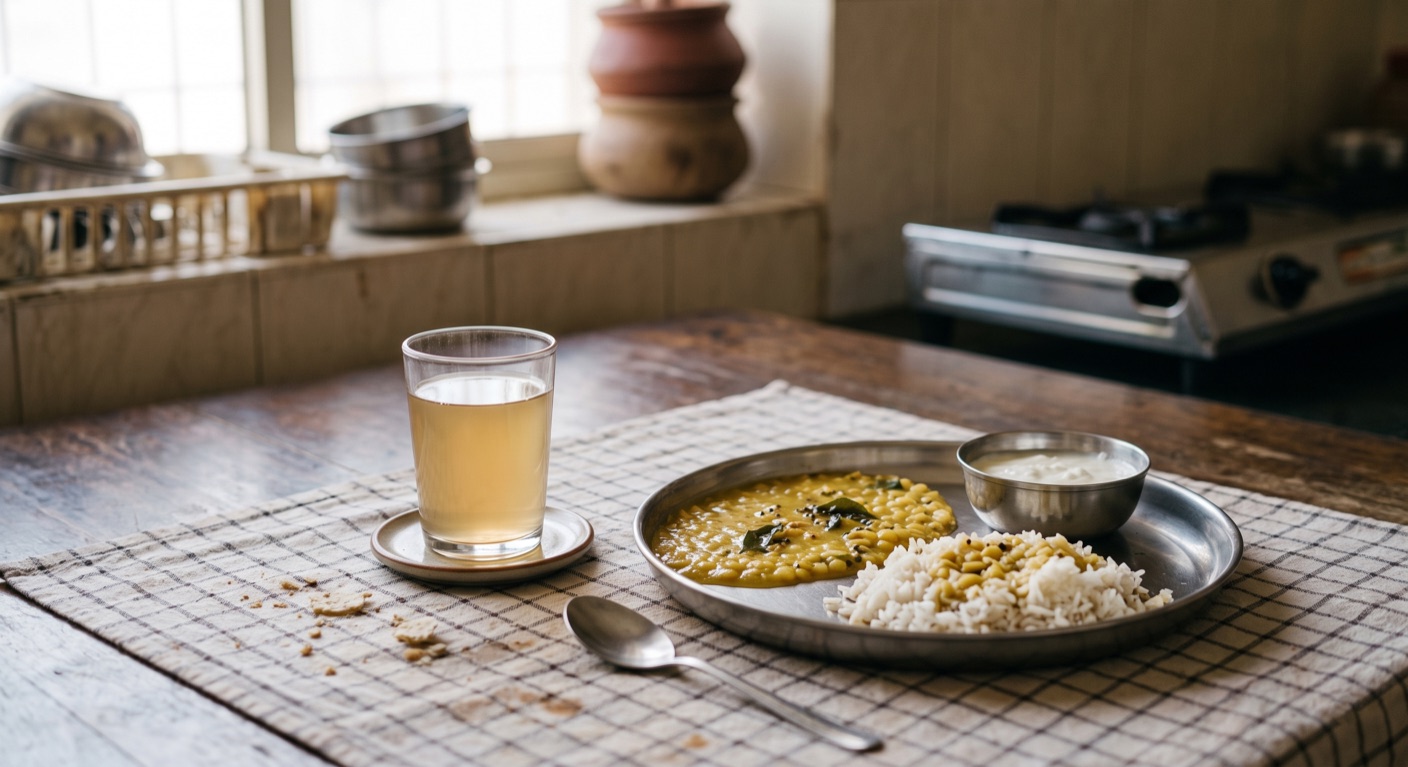
The same forward circles through every Indian WhatsApp group: a tablespoon of apple cider vinegar in warm water each morning, and the acidity, the bloating, the stubborn weight, all of it quietly sorts itself out. A cousin swears by it. A wellness brand sells it in a fancy bottle for Rs 800. Your mother-in-law has started taking it too.
Here is the uncomfortable part. The evidence supports a fraction of what the forward claims. Apple cider vinegar does one thing genuinely well. Almost everything else credited to it, and the gut claims especially, rests on a misunderstanding of what vinegar actually is, the same failure mode as much of the confident advice that circulates online about gut health.
What acetic acid actually is
Apple cider vinegar starts as fermented apple juice. Yeast turns the sugars into alcohol, then Acetobacter bacteria turn that alcohol into acetic acid. The finished bottle is roughly five to six per cent acetic acid, with trace amounts of other organic acids, some polyphenols, and, in the cloudy unfiltered version, the “mother,” a layer of bacteria and cellulose.
Acetic acid is almost certainly the active ingredient, and the trials that show a blood-sugar effect used ordinary vinegars, not premium ACV. No study has ever shown that ACV outperforms plain vinegar at the same acidity, which is a good reason not to pay eight times more for it. The mother, the brand and the provenance of the apples change the label, not the chemistry.
This matters for every claim that follows. Once you understand that the active molecule is ordinary acetic acid, several marketing claims collapse on their own.
The one claim that holds: blood sugar after a heavy meal
This is the real evidence, and it is real but modest.
A 2017 meta-analysis pooling clinical trials found that vinegar taken with a meal reduced post-meal glucose and insulin responses (Shishehbor, Diabetes Research and Clinical Practice, 2017). An often-cited 2004 study in Diabetes Care showed that vinegar improved insulin sensitivity after a high-carbohydrate meal in people with insulin resistance or type 2 diabetes, but it is a short letter with just 29 participants split across three groups, with no abstract, so treat it as suggestive rather than definitive (Johnston, Diabetes Care, 2004). And a 2005 study of 12 healthy volunteers in a single acute crossover test found that vinegar served with bread lowered the glucose and insulin rise and increased how full people felt (Östman, European Journal of Clinical Nutrition, 2005).
The mechanism is unglamorous. Acetic acid slows gastric emptying, so food leaves the stomach more slowly (Hlebowicz, BMC Gastroenterology, 2007), and it may slow how quickly starches break down. That is the entire trick. It also carries a safety corollary that the forwards never mention: in people with diabetic gastroparesis, where the stomach already empties too slowly, vinegar makes that worse. A pilot study in ten patients with type 1 diabetes and gastroparesis found apple cider vinegar significantly slowed gastric emptying further, and the authors concluded the effect may be adverse in this group. If you have diabetes with delayed stomach emptying, do not use vinegar this way.
For an Indian reader this is genuinely relevant, because rice and roti are exactly the high-carbohydrate meals the studies used. If a heavy rice-and-dal lunch leaves you sleepy and craving more, a diluted spoonful of vinegar with the meal may smooth that curve a little, provided you do not have diabetes with delayed stomach emptying, which rules this out, and provided you dilute it. The caution belongs right here, not in a footnote.
But note the limits, because they matter. The effect is modest, not a cure. It is not a substitute for diabetes medication, and if you are on medication for blood sugar, vinegar is a garnish, not a treatment. Two specific risks follow. First, on insulin or sulfonylureas, vinegar adds to the glucose-lowering effect, and additive hypoglycaemia is a real concern rather than a theoretical one. Second, a published case report links large daily quantities of cider vinegar to hypokalaemia (low potassium), high renin and osteoporosis (Lhotta, Nephron, 1998), relevant if you are on diuretics, digoxin or other potassium-lowering drugs. Nobody should skip their prescribed care because of a morning shot. The honest version of the evidence says “small, real, secondary,” not “transforms your metabolism.”
Where the claims outrun the science
Now the part that sells the Rs 800 bottles.
“ACV balances your gut pH.” Your digestive tract regulates its own pH at every level. The stomach stays highly acidic, around pH 1.5 to 3.5, to digest protein and kill pathogens. The small intestine is buffered to slightly alkaline by pancreatic bicarbonate. The colon sits closer to neutral. A tablespoon of vinegar added to this system is a spoonful of warm water thrown into a tank; the body’s buffering handles it without noticing. There is no imbalance for vinegar to correct.
“ACV is a probiotic.” The cloudy version does contain live Acetobacter bacteria. But a probiotic, by the formal definition, is a live microorganism that, in adequate amounts, confers a health benefit (Hill, Nature Reviews Gastroenterology & Hepatology, 2014). Acetobacter is not a recognised probiotic. It does not colonise the gut, and no one has shown that drinking it delivers anything like the effects of the named strains with trial data behind them, such as certain Lactobacillus or Bifidobacterium species. Living in a bottle is not the same as earning the name, the same reasoning that explains why most probiotic products underdeliver.
“ACV cures acid reflux.” This one is worth being blunt about, because it can make things worse. The theory runs: reflux means low stomach acid, so add acid. In a small number of people, low stomach acid does cause reflux-like symptoms. But most reflux is a mechanical problem: a weakened lower oesophageal sphincter, transient sphincter relaxations, or a hiatal hernia letting stomach contents back up. H. pylori is not a cause of reflux, if anything the evidence points the other way. A 2025 systematic review and meta-analysis found an inverse association between H. pylori infection and GERD, and a higher risk of reflux after H. pylori eradication (pooled OR 2.01, 95% CI 1.44–2.81) (Wang, Journal of Gastroenterology and Hepatology, 2025). Pouring more acid onto that setup can irritate an already inflamed oesophagus, and there are no trials showing vinegar helps GERD. Gastroenterologists do not recommend it.
“ACV heals leaky gut.” Intestinal permeability is a real and well-studied phenomenon, the loosening of the junctions between gut-lining cells. The claim that vinegar repairs it has no clinical support. If anything, the evidence runs the other way: the barrier is supported by the short-chain fatty acids your own bacteria produce when they ferment fibre, not by a vinegar dose.
Common signs the morning shot is doing nothing
The gut claims above predict exactly what you should notice if vinegar were working. If none of these change after a few honest weeks, the shot is not a gut program.
- Bloating and acidity persist. If the symptoms that made you start the shot are unchanged after four to eight weeks, nothing is being balanced. Acetic acid does not alter gut pH.
- Weight does not move. One 12-week double-blind trial in 155 obese Japanese adults did find significantly lower body weight, visceral fat and triglycerides on daily vinegar (Kondo, Bioscience, Biotechnology, and Biochemistry, 2009), but the difference was around one to two kilograms, it has not been replicated in other populations, and it is smaller than what changing the plate and the portion achieves.
- Energy still swings after meals. The blood-sugar effect is modest and meal-specific. A sugar crash that follows a heavy meal will not be cured by a shot.
- The shot itself stings. Burning in the throat or chest is a sign of irritation, not of “detox.” That is the oesophagus complaining, and it is the body’s way of saying undiluted acid is a bad idea.
The ways ACV can actually hurt you
The risks are not exotic.
Tooth enamel. Acetic acid softens enamel, and daily undiluted swigs wear it down permanently. A case report describes severe erosive tooth wear in a 15-year-old who drank a daily glass of ACV for weight loss (Gambon, Nederlands Tijdschrift voor Tandheelkunde, 2012). If you do take vinegar, dilute it heavily, use a straw if you like, and do not brush your teeth immediately afterwards. Brushing softened enamel speeds up the damage.
Oesophageal irritation. Undiluted vinegar can irritate the throat and oesophagus, and there is a published case of oesophageal injury caused by an apple cider vinegar tablet lodging in the throat (Hill, Journal of the American Dietetic Association, 2005). Liquid shots have not been formally studied, which is a reason for caution rather than reassurance, always dilute.
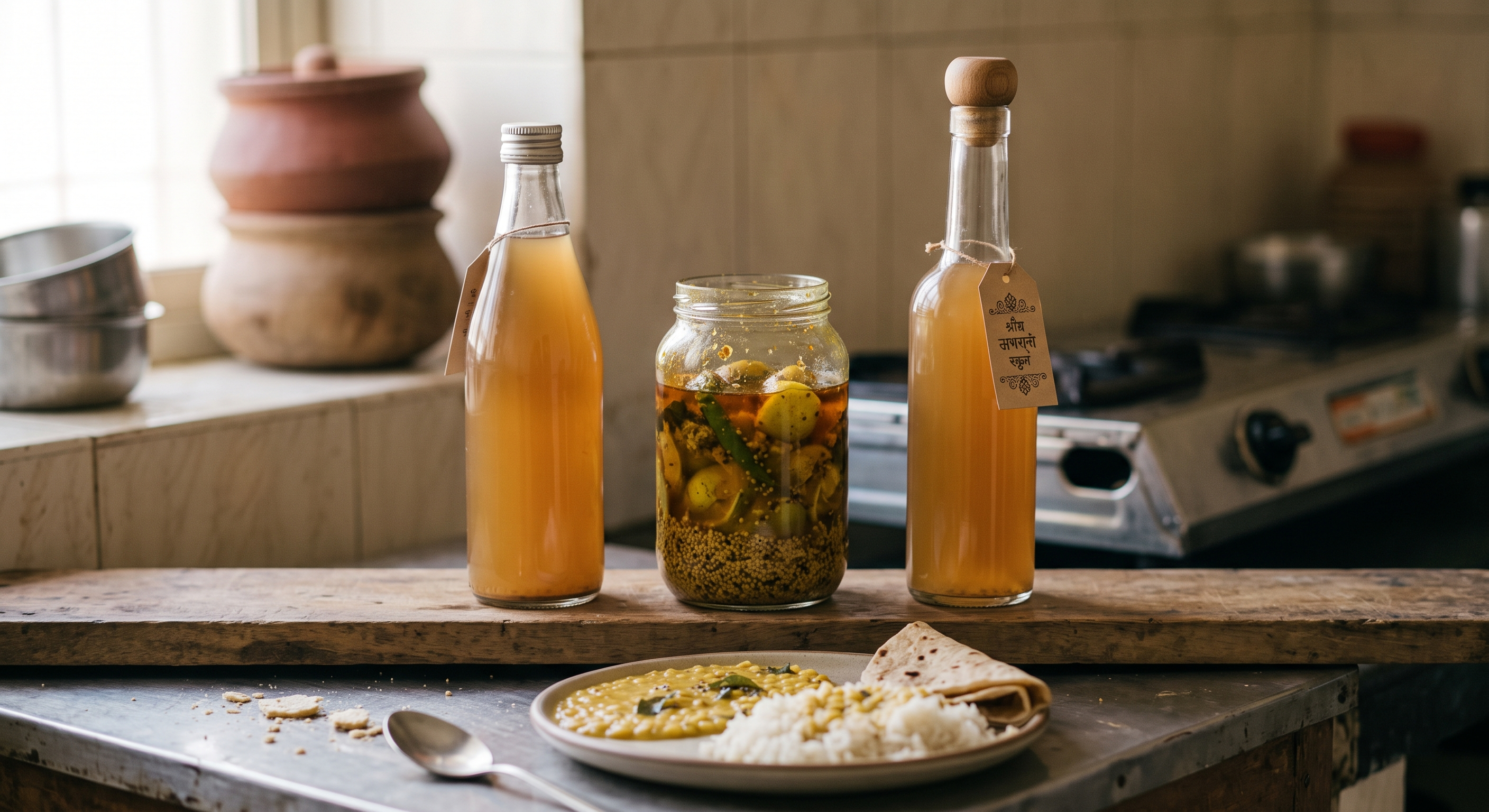
The money question. There is no reason to spend Rs 500 to Rs 800 on imported ACV when a local bottle of sirka with the same acetic acid content costs a fraction of that. Your digestive system cannot tell the difference, because there is no difference to tell.
The Indian angle: you already own a better version of this
Vinegar is not foreign to Indian kitchens. Sirka, in every form, has been part of the cuisine for centuries, in pickles, in raita variations, in marinades, in chutneys. Your grandmother’s achaar keeps for months partly because the acidic environment discourages spoilage. Nobody needed a wellness import to discover acetic acid.
The more interesting point is the context. Indian meals are often built around rice and roti, which is precisely where the modest blood sugar effect of vinegar is most useful. But the same meals are also where the bigger gut levers sit: the dal on the side, the vegetables, the curd, the overnight break between dinner and breakfast. Vinegar tinkers at the margins of one meal. Those other things shape your microbiome meal after meal.
How the options compare
| What it is | What it does | Evidence | Cost | Bottom line |
|---|---|---|---|---|
| Morning ACV shot | Slightly smooths post-meal blood sugar | Real but modest (meta-analysis of trials) | Rs 500–800 for imports | A condiment with a documented side effect |
| Local sirka | The same acetic acid, same effect | Identical chemistry | Rs 60 or less | The same result at a fraction of the price |
| Generic “gut reset” supplements | Often laxative or fibre blends with vague claims | Mostly unproven for the claims made | Rs 500–2,000 | Buy fibre, not the label |
| Gut assessment + personalised plan | Sequencing describes which species are in your sample and which are low | Sequencing is reliable at describing what is in a sample; whether test-guided personalisation improves symptoms has not yet been tested in randomised trials | One-time assessment | A starting picture, not a diagnosis |
What actually helps
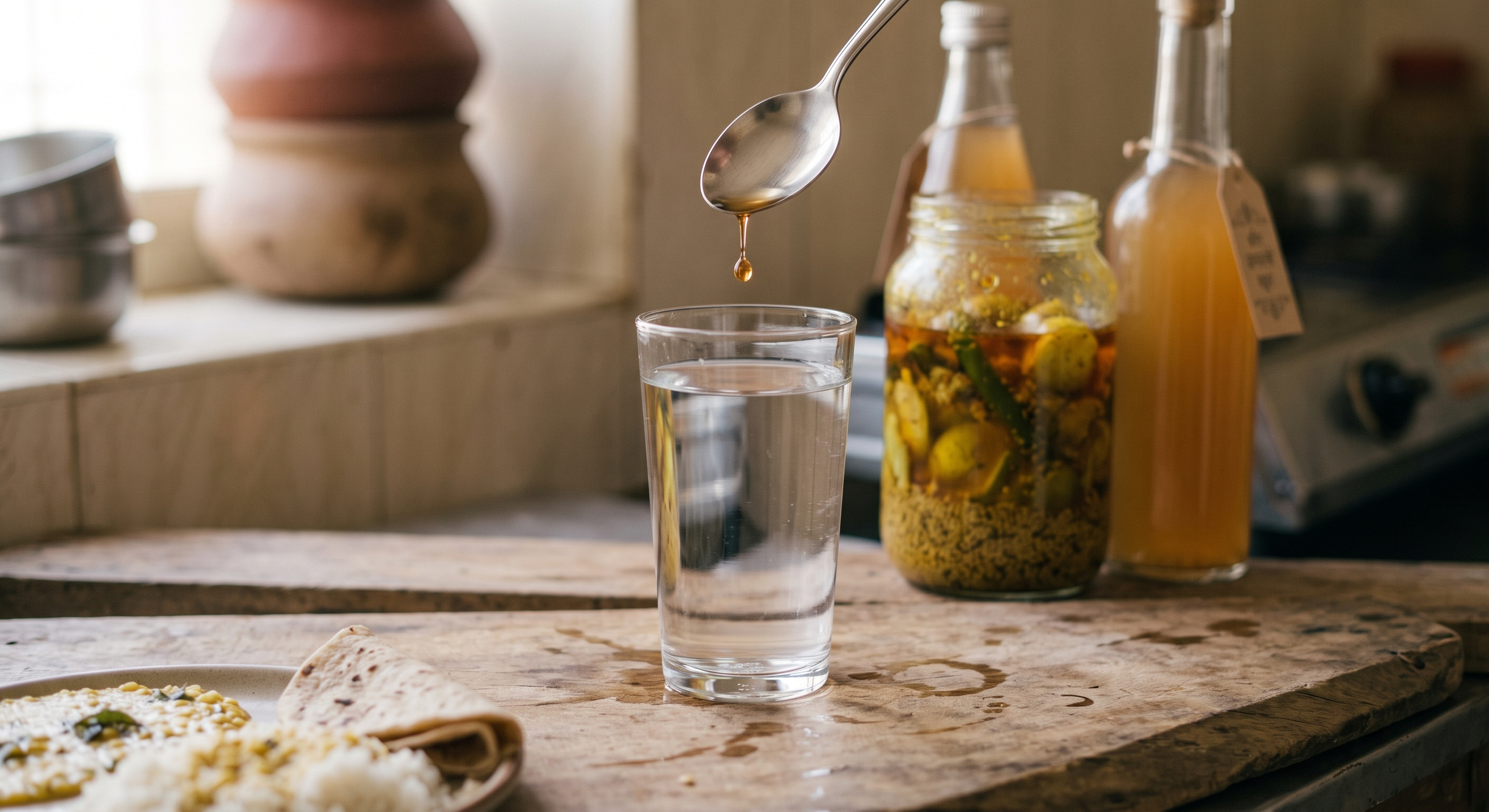
If you enjoy a diluted spoonful before a heavy meal and it sits well, keep it, but dilute it properly, roughly one to two teaspoons of vinegar in a full glass of water, and stop if you have active reflux, gastritis, a peptic ulcer, oesophagitis or Barrett’s oesophagus, where the acid can make things worse. The blood sugar effect is real enough to justify, provided you dilute it and watch your teeth. Use vinegar in the kitchen freely. It is a condiment with a documented side effect, not a medicine, and not a poison.
What it is not is a gut health program. A tablespoon of vinegar adds no fibre, feeds no bacteria, delivers no meaningful live cultures, and repairs no gut lining. If your goal is a healthier gut, the levers with actual evidence are boring and familiar: a wide range of plant foods across the week, homemade dahi and other traditionally fermented foods, a decent overnight break between meals, and fewer unnecessary antibiotics. Those do more in a month than a vinegar regimen will do in a year, and they cost about the same as the condiment shelf, fibre being the cheapest and best-studied of them all, as covered in the case for fibre and prebiotics.
BioMeBar: from guessing to knowing
A single food can only nudge the margins of one meal. If you have been chasing the same symptoms for months, bloating, low energy, mood dips, stubborn weight, guessing gets expensive and slow. A personalised assessment of your microbiome tells you what is genuinely there, not what an influencer assumes. BioMeBar profiles your specific microbial profile and builds recommendations that match your biology, so the next step is targeted instead of another experiment.
Is ACV a probiotic?
No. It contains live Acetobacter bacteria, but Acetobacter is not a recognised probiotic, does not colonise the gut, and has no demonstrated health benefit. Probiotic status belongs to specific named strains with trial evidence.
Can apple cider vinegar cure acid reflux?
There is no evidence it does, and for most reflux cases adding acid can worsen symptoms. Reflux is usually a mechanical problem with the lower oesophageal sphincter, a weakened valve, transient relaxations, or a hiatal hernia. H. pylori is not a cause of reflux; if anything, reflux can appear after H. pylori is eradicated.
Does ACV heal leaky gut?
No clinical evidence supports this. Intestinal permeability is a real phenomenon, but vinegar has not been shown to affect it. Fibre and the short-chain fatty acids it produces have far more support for gut-barrier health.
Is it safe to drink ACV every day?
Diluted, in moderation, the risk is low for most people. Undiluted or frequent daily use can erode tooth enamel and irritate the oesophagus. Skip it if you have active reflux, gastritis, peptic ulcer, oesophagitis or Barrett’s oesophagus, or diabetic gastroparesis, and use care on insulin, sulfonylureas, diuretics or digoxin. A local bottle of sirka works as well as imported ACV for a fraction of the price.
References
- Shishehbor F, Mansoori A, Shirani F. Vinegar consumption can attenuate postprandial glucose and insulin responses; a systematic review and meta-analysis of clinical trials. Diabetes Research and Clinical Practice, 2017.
- Johnston CS, Kim CM, Buller AJ. Vinegar improves insulin sensitivity to a high-carbohydrate meal in subjects with insulin resistance or type 2 diabetes. Diabetes Care, 2004. Letter; Comparative Study, 29 participants across three groups.
- Östman E, Granfeldt Y, Persson L, Björck I. Vinegar supplementation lowers glucose and insulin responses and increases satiety after a bread meal in healthy subjects. European Journal of Clinical Nutrition, 2005. Twelve healthy volunteers, single acute crossover.
- Hill C, et al. Expert consensus document: The International Scientific Association for Probiotics and Prebiotics consensus statement on the scope and appropriate use of the term probiotic. Nature Reviews Gastroenterology & Hepatology, 2014.
- Kondo T, Kishi M, Fushimi T, Ugajin S, Kaga T. Vinegar intake reduces body weight, body fat mass, and serum triglyceride levels in obese Japanese subjects. Bioscience, Biotechnology, and Biochemistry, 2009.
- Hlebowicz J, Darwiche G, Björgell O, Almér LO. Effect of apple cider vinegar on delayed gastric emptying in patients with type 1 diabetes mellitus: a pilot study. BMC Gastroenterology, 2007.
- Hill LL, Woodruff LH, Foote JC, Barreto-Alcoba M. Esophageal injury by apple cider vinegar tablets and subsequent evaluation of products. Journal of the American Dietetic Association, 2005.
- Gambon DL, Brand HS, Veerman EC. Unhealthy weight loss. Erosion by apple cider vinegar. Nederlands Tijdschrift voor Tandheelkunde, 2012.
- Lhotta K, Höfle G, Gasser R, Finkenstedt G. Hypokalemia, hyperreninemia and osteoporosis in a patient ingesting large amounts of cider vinegar. Nephron, 1998.
- Wang H, Qu Y, Lin Y, Liu Z, Lagergren J, Yuan S, Ness-Jensen E, Jiang W, Xie SH. Helicobacter pylori infection and eradication in relation to gastroesophageal reflux disease. Journal of Gastroenterology and Hepatology, 2025.