By the end of this article, you will know what antibiotics actually do to your gut bacteria, why recovery takes months rather than days, which interventions are backed by evidence during and after a course, and how to tell when something deserves a doctor instead of another supplement.
The five-day course finishes. The infection clears. And then, a week later, you are bloated after meals you used to handle without thinking, your stomach churns, and the loose stools refuse to settle. The tablet did its job. Nobody warned you about what it did to your gut on the way out.
Walk into a clinic anywhere in India with a fever or a cough and you will often walk out with a broad-spectrum antibiotic prescription, even when the illness is viral and the drug cannot touch it. Antibiotics are handed out freely across the country, for everything from colds to “just to be safe.” Given how common they are, you would think the aftermath would be better understood. It is not. Recovery after antibiotics is rarely automatic, rarely quick, and for some of your bacteria it never fully completes.
What a course of antibiotics does, in plain terms
Your gut is home to hundreds of species of bacteria that digest fibre, train your immune system, and keep the lining of your intestine healthy. Antibiotics do not know which ones you need. Broad-spectrum drugs kill bacteria based on their structure, gram-positive or gram-negative, not based on whether they are helping you or hurting you.
The most vulnerable members of your community are often the most valuable ones. When Danish researchers tracked healthy men through a short course of broad-spectrum antibiotics, the species that dropped earliest and deepest included Bifidobacterium and the butyrate producers, bacteria that convert the fibre you eat into short-chain fatty acids that fuel the cells lining your colon (Palleja, Nature Microbiology, 2018). When they disappear, the niches they occupied open up. Opportunistic organisms that were previously held in check find room to expand, which is one reason a course of antibiotics so often ends with diarrhoea, cramping, or bloating.
So the gut after antibiotics has been through a genuine disturbance, and its most useful residents are the ones most likely to be missing. Calling it “a little off” undersells what happened.
Where the evidence is real
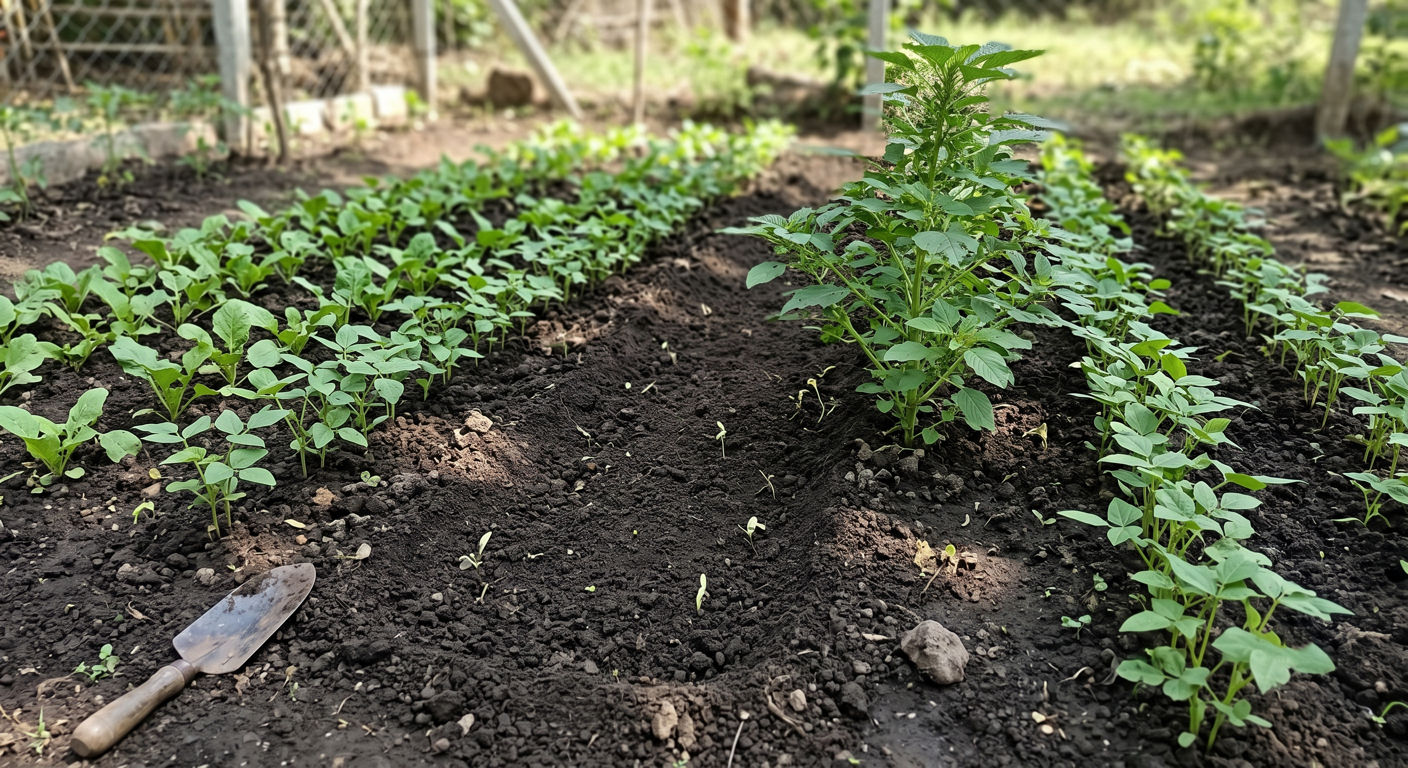
Recovery is partial and slow. The most detailed study of this followed twelve healthy young men for six months after a single four-day course of three broad-spectrum antibiotics. On average, the overall composition of their gut microbiomes recovered to near baseline within about six weeks. That sounds reassuring. But the same study found that nine species that had been present in every single volunteer before the treatment were still undetectable in most of them six months later. The average recovered; the species-level losses lingered (Palleja, Nature Microbiology, 2018).
The yeast probiotic works, and it is a yeast for a reason. Saccharomyces boulardii is not a bacterium, so antibiotics do not kill it. A 2015 meta-analysis pooling 21 randomised trials and 4,780 patients found that taking it alongside antibiotics roughly halved the risk of antibiotic-associated diarrhoea, from about 18.7% to 8.5% (Szajewska, Alimentary Pharmacology & Therapeutics, 2015).
The generic probiotic is a lottery, not a guarantee. In a 2018 study in Cell, the same probiotic supplement produced very different colonisation patterns in different people, and the effect could be predicted from the person’s own gut composition before they took it (Zmora, Cell, 2018). A strain that works in one gut can do little in another. A companion paper in the same issue found that after antibiotics, probiotics actually delayed post-antibiotic microbiome reconstitution compared to spontaneous recovery — the probiotic-colonised gut took longer to return to its pre-antibiotic state (Suez, Cell, 2018). This does not mean all probiotics are useless after antibiotics, but it does mean “take a probiotic to rebuild” is too simple.
Diet shifts the ecosystem within days. When researchers put people on controlled diets, measurable microbiome changes appeared within days (David, Nature, 2014). The composition moves fast; the full rebuild does not.
Where the popular claims fail
“One bowl of dahi fixes everything.” Dahi is genuinely useful, but it is a small part of an ecosystem-rebuilding process measured in months, not a one-time reset.
“Loose motion after antibiotics is always normal.” Sometimes it is, sometimes it is not. If diarrhoea is severe, lasts more than a few days, or comes with blood, fever, or worsening cramping, see a doctor. Untreated, an opportunistic overgrowth can turn into something that needs proper medical care. No amount of dahi or probiotics replaces that.
“More antibiotics mean more protection.” The opposite is true for your gut. Every unnecessary course is another hit on your microbial community.
“Any probiotic counts.” L. rhamnosus GG has a comparable overall effect size to S. boulardii (RR 0.49 vs 0.47) but the benefit is clearest in children and was not statistically significant in adults; most other bacterial strains have thinner or mixed data for this specific use. The strain and the situation matter.
Common signs your gut took a hit
- Bloating and gas after foods you previously tolerated, in the days and weeks after finishing the course.
- Loose stools or diarrhoea that settles and then returns.
- Cramping or a churning feeling that had not been there before the illness.
- Unusual urgency or a change in your normal bowel rhythm.
- Low-level fatigue, which some read as “still recovering from the infection” when it may be the disturbed ecosystem.
The Indian angle
The same finding about recovery times matters differently in India than it does in Copenhagen, where the flagship study was run. The volunteers were young, healthy men with no recent antibiotic history. Most Indian adults have taken many courses over a lifetime, often for viral infections that would have cleared alone, sometimes in doses stopped early because the person felt better. Each course is another disturbance. If some species take months to return, or never fully return, then a decade of “just in case” prescriptions chips away at your own gut, one course at a time.
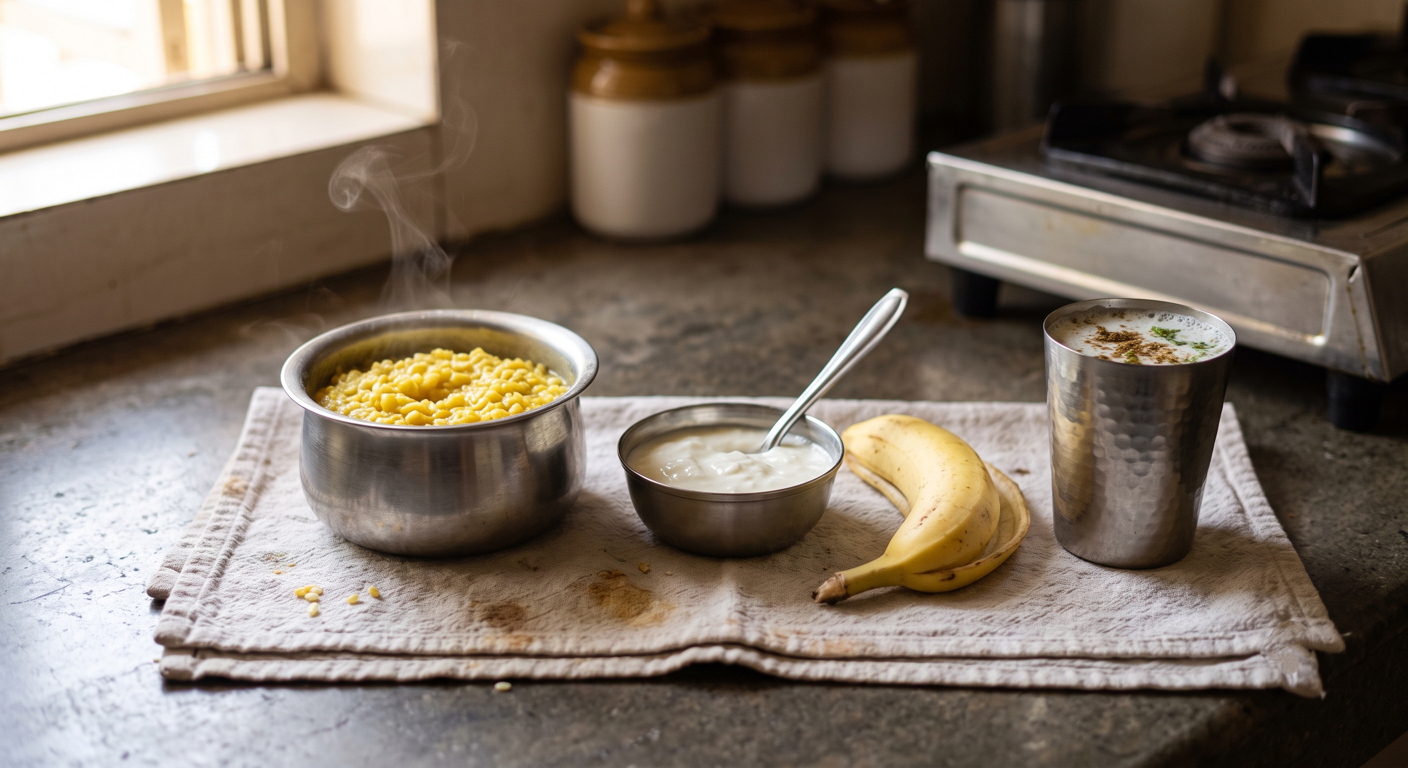
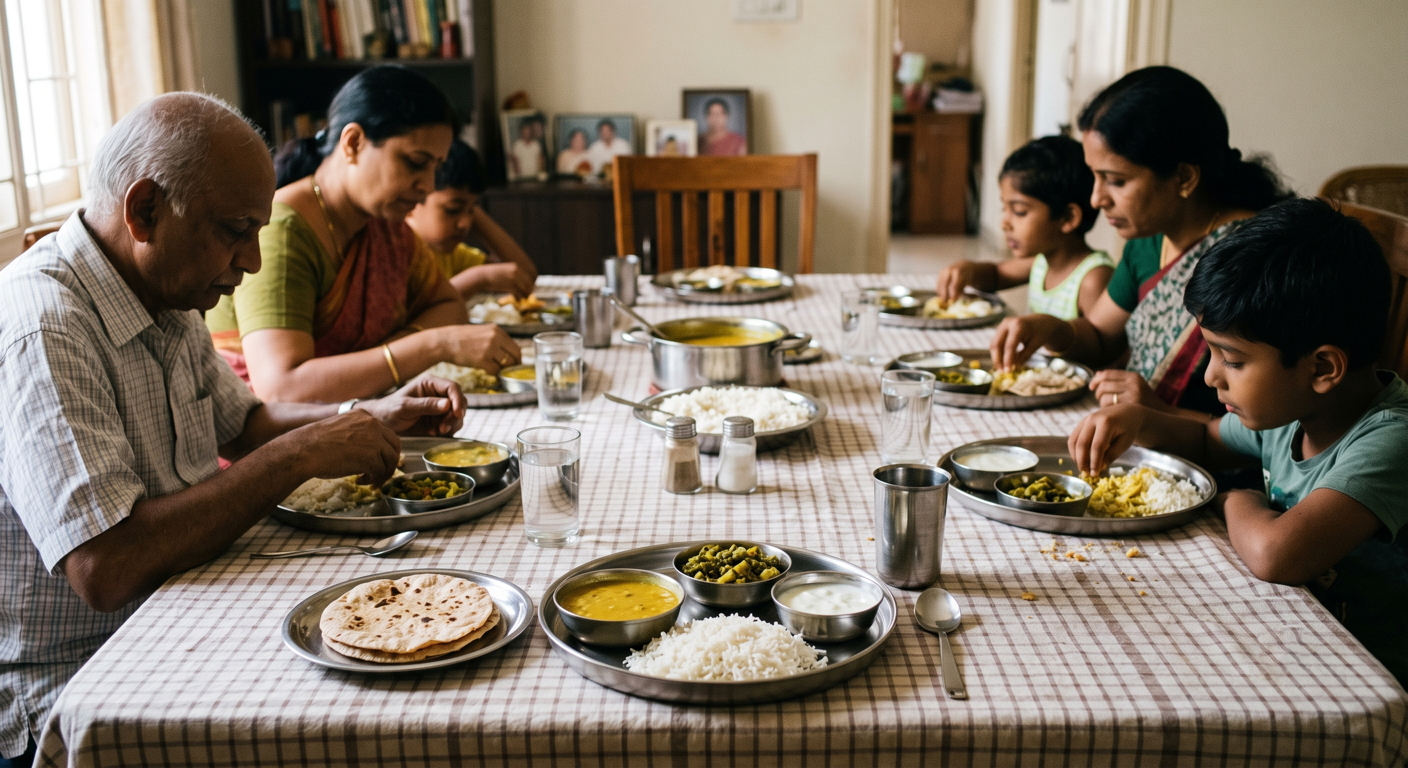
India also has genuine assets for recovery that the Danish volunteers did not. Homemade dahi and chaas carry live lactic acid bacteria. Idli and dosa batter is genuinely fermented, but steaming and griddling kill those organisms, so the benefit there is the transformed food (lower phytate, easier digestion), not live bacteria. The traditional “sick person” diet, khichdi, well-cooked dal, rice, banana, is gentle on a recovering gut lining. And the rotating dals, seasonal sabzi, and whole grains of a regional Indian diet are exactly the fibre diversity a rebuilding ecosystem needs. The raw materials are already in your kitchen. For more on how the Indian thali delivers this diversity, see The Indian Thali as a Microbiome Template.
How the options compare
| What it is | What it does | Evidence | Cost | Bottom line |
|---|---|---|---|---|
| S. boulardii during the course | Reduces antibiotic-associated diarrhoea; survives antibiotics because it is a yeast | Strong; 21 trials, ~50% risk reduction | Low | Can be taken alongside the antibiotic (it is a yeast, not a bacterium) |
| Generic bacterial probiotic | Variable; response depends on your baseline gut | Mixed in this specific situation | Rs 200-800 per bottle | Use only if matched to your pattern |
| Gentle “sick person” diet (khichdi, dal, banana) | Spares a strained gut lining during and just after the course | Traditional, low-risk, sensible | Low | Right for the first weeks |
| Fermented foods + fibre variety over months | Feeds and restores the ecosystem | Randomised trial evidence supports fermented foods for increasing diversity; fibre variety has strong evidence for feeding SCFA production but did not itself raise diversity in the one head-to-head trial | Low | The real rebuilding phase |
| Antibiotics “just to be safe” for viral illness | Does nothing for a virus, damages your gut, drives resistance | Harmful | Varies | The single best thing to avoid |
What actually helps
During the course. If you are on antibiotics now, Saccharomyces boulardii has the best-characterised evidence for reducing antibiotic-associated diarrhoea in adults, though guidelines rate the overall certainty as low and list several multi-strain bacterial products as reasonable alternatives. Because it is a yeast, it does not need to be spaced away from the antibiotic and can be taken alongside it. Meanwhile, keep meals gentle: khichdi, well-cooked dal, rice, banana. This is the traditional Indian “sick person” diet for a reason, and a recovering gut lining does not need heavy, oily, or very spicy food on top of everything else.
The first weeks after. Once the course is over, you can start deliberately rebuilding. Begin with small amounts of fresh, ideally homemade dahi, then add chaas and cooked ferments such as idli and dosa gradually. Reintroduce fibre slowly: cooked and peeled vegetables before raw ones, ripe banana before whole beans. A gut whose microbial community is still thin will protest if you suddenly hit it with a heavy load of legumes.
The months that follow. The rebuilding happens here. Studies show that dietary changes can shift the microbiome within days, but rebuilding a genuinely diverse community takes weeks to months. The single most reliable lever is variety: different dals across the week, seasonal vegetables, whole grains, nuts, seeds. Diversity of plant foods is what feeds diversity of bacteria. Aim for a rotating set of foods rather than a handful of “superfoods.” For more on how the Indian diet shapes gut bacteria, see How the Indian Diet Shapes Your Gut Microbiome.
On the generic capsule. The probiotic everyone reaches for may or may not help you. In the Cell study, the same supplement produced different results in different people, predictable from their baseline gut. That is not a reason to avoid probiotics, but it is a reason to stop treating them as a guaranteed fix.
BioMeBar: from guessing to knowing
BioMeBar profiles your unique microbiome and personalises recommendations to what is genuinely there, because with trillions of organisms running your biology, one-size-fits-all does not make sense.
The standard advice, “have dahi and eat well,” is right as far as it goes, but it does not tell you which species your last course removed or whether your community is actually recovering. A gut profile describes what is present; it is not validated to determine whether an individual’s post-antibiotic microbiome has “recovered,” and no consumer stool-sequencing test currently makes that claim. For more on what gut testing can and cannot tell you, see What Gut Testing Can and Cannot Tell You.
Limitations and honest caveats
The recovery timeline in this article comes largely from a small study of twelve healthy young men with no recent antibiotic history, so real-world recovery varies widely and is generally slower. Species-level losses were still detectable six months out, but most people do substantially recover with time. S. boulardii reduces but does not eliminate antibiotic-associated diarrhoea, and severe, bloody, or persistent symptoms need a doctor, not supplements. Probiotic effects vary between people and strains, and no supplement replaces finishing your prescribed course.
Frequently asked questions
How long does it take for the gut to recover after antibiotics?
In the best-studied example, overall gut composition returned to near baseline in roughly six weeks, but some species that were lost were still undetectable in most people six months later. Expect weeks for partial recovery and months for meaningful rebuilding, and know that individual results vary widely.
Should I take probiotics while on antibiotics?
Saccharomyces boulardii has the best-characterised evidence for reducing antibiotic-associated diarrhoea in adults, though guidelines rate the overall certainty as low and list several multi-strain bacterial products as reasonable alternatives. Because it is a yeast, it does not need to be spaced away from the antibiotic and can be taken alongside it.
Can antibiotics permanently damage the gut?
For most people, no, the community recovers. But repeated courses, taken close together, can leave a progressively less diverse gut, and some species are slow to come back. That is the argument for rebuilding deliberately and for avoiding unnecessary courses.
Is homemade dahi enough to restore the gut after antibiotics?
It is a useful and worthwhile step, but it is not the whole answer. Fermented foods feed and support the community, while fibre variety across weeks is what lets lost species and their neighbours recover.
When should I see a doctor instead of managing at home?
If diarrhoea is severe, lasts more than a few days, or comes with blood, fever, or worsening cramping, stop self-managing and see a doctor. An opportunistic overgrowth can need proper medical care that no dahi or probiotic can replace.
References
- Palleja A, Mikkelsen KH, Forslund SK, et al. Recovery of gut microbiota of healthy adults following antibiotic exposure. Nature Microbiology, 2018.
- Szajewska H, Kołodziej M. Systematic review with meta-analysis: Saccharomyces boulardii in the prevention of antibiotic-associated diarrhoea. Alimentary Pharmacology & Therapeutics, 2015.
- Zmora N, Zilberman-Schapira G, Suez J, et al. Personalized gut mucosal colonization resistance to empiric probiotics is associated with unique host and microbiome features. Cell, 2018.
- David LA, Maurice CF, Carmody RN, et al. Diet rapidly and reproducibly alters the human gut microbiome. Nature, 2014.
- Suez J, Zmora N, Zilberman-Schapira G, et al. Post-antibiotic gut mucosal microbiome reconstitution is impaired by probiotics and improved by autologous FMT. Cell, 2018.
This article is educational and is not a substitute for professional medical advice.