
Your grandmother never used the word "probiotic." She just made dahi every evening, left the idli batter to ferment overnight, and insisted that a meal without curd wasn’t complete. Turns out she was running a microbiology lab in her kitchen, she just didn’t call it that.
Indian fermented foods have been part of daily eating for centuries. But now that probiotics have become a multi-billion dollar industry, a fair question is: how do our traditional ferments actually stack up against those expensive capsules? The answer is more interesting (and more nuanced) than either side of the debate usually admits.
What’s actually living in your dahi?
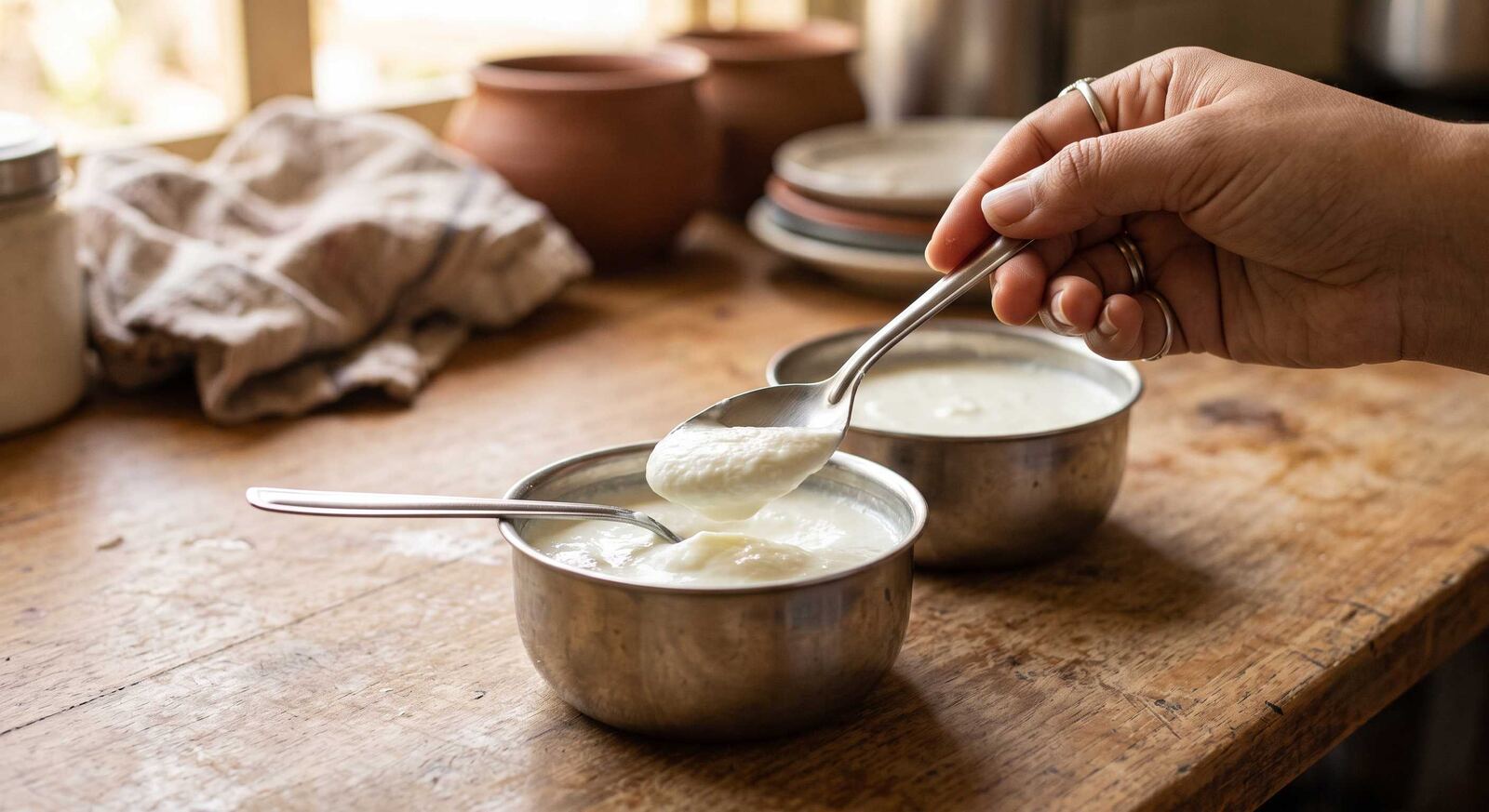
When you set curd at home using a spoonful of yesterday’s dahi as a starter, you’re inoculating milk with a complex community of bacteria. Studies analysing Indian homemade dahi have identified species like Lactobacillus delbrueckii, Lactobacillus helveticus, Lactococcus lactis, Streptococcus thermophilus, and various Enterococcus species. The exact composition varies, your dahi is literally different from your neighbour’s dahi, because each household’s starter culture has its own microbial fingerprint shaped by the local environment, the type of milk used, and even the temperature at which it sets.
This is very different from what’s inside a commercial probiotic capsule. A typical probiotic supplement contains one to five standardised strains, usually Lactobacillus acidophilus, Lactobacillus rhamnosus, or Bifidobacterium lactis, grown in industrial fermenters under controlled conditions. Your nani’s dahi contains a community, organisms that have coexisted, competed, and cooperated over countless generations of being passed from one batch to the next.
Research published in journals like Food Microbiology and the Indian Journal of Microbiology has found that some strains isolated from Indian dahi show genuine probiotic characteristics: acid tolerance (they survive stomach acid), bile tolerance (they survive the small intestine), antimicrobial activity against pathogens, and the ability to adhere to intestinal cells. But to be honest about it, showing these properties in a lab dish is not the same as proving clinical benefit in a human body. Most strains in homemade dahi haven’t been through rigorous human trials.
South Indian ferments: a different beast entirely
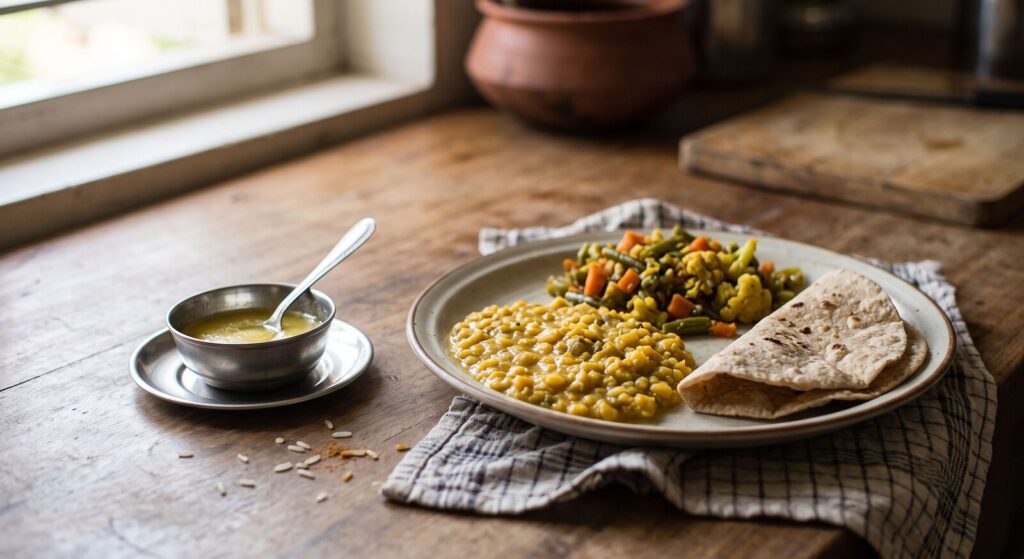
Idli and dosa batter fermentation is a genuinely interesting microbial process. When you mix rice and urad dal, soak them, grind them into a batter, and leave it to ferment, you create conditions for a natural microbial succession. Leuconostoc mesenteroides kicks things off: it’s a lactic acid bacterium that thrives in the early, less acidic stages and produces carbon dioxide (that’s what makes the batter rise). As acidity increases, Lactobacillus species take over and continue the fermentation.
This process does several things simultaneously. It breaks down phytic acid, a compound in grains and legumes that blocks absorption of iron, zinc, and calcium. It increases B-vitamin content, particularly B12 in some cases. It partially digests proteins, making them easier to absorb. And it produces organic acids that inhibit the growth of harmful bacteria.
Dhokla batter undergoes a similar process. Appam batter, fermented rice preparations from the Northeast, each regional fermented food has its own microbial cast of characters adapted to local grains, local water, and local climates.
Idli and dosa batter fermentation is a genuinely interesting microbial process.
Kanji and lacto-fermented pickles
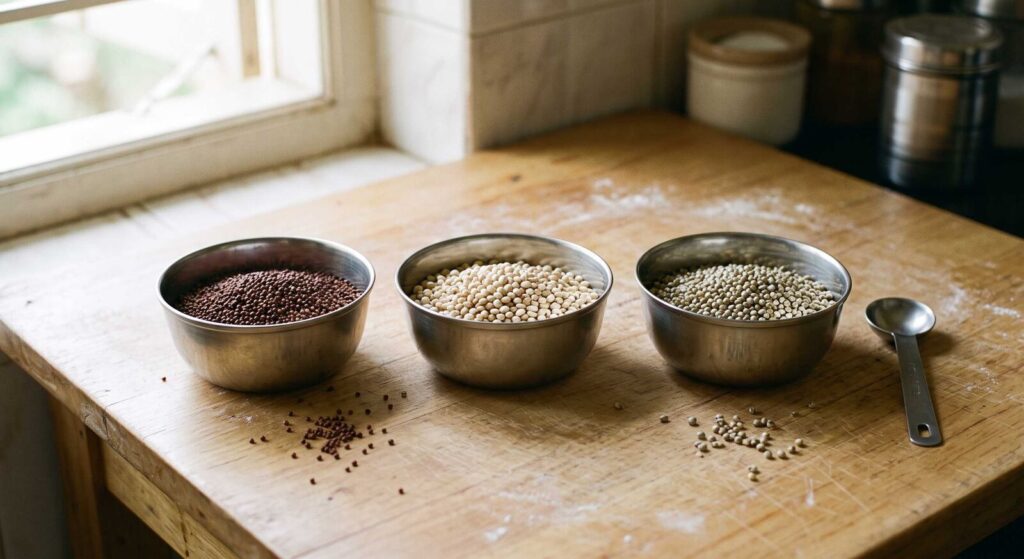
Kanji, the deep purple drink made by fermenting black carrots with mustard seeds and water, is North India’s answer to kombucha, except it’s been around far longer. Microbiological analysis of kanji has found Lactobacillus plantarum, Lactobacillus brevis, and Pediococcus species, all of which are well-recognised lactic acid bacteria with documented health properties.
Traditional Indian pickles (the ones made with salt and mustard oil, left to mature in the sun) are also lacto-fermented. The key distinction here is between genuinely fermented pickles and the vinegar-based or oil-drowned versions that dominate store shelves today. A proper fermented aachar undergoes microbial transformation. A vinegar pickle is just preserved food: no live bacteria, no fermentation metabolites.
Want to know what your own gut actually needs? Take the BioMeBar gut assessment →
So are these as good as commercial probiotics?
It depends on what you mean by "as good."
Traditional fermented foods have several advantages that capsules don’t. They deliver bacteria in a food matrix, alongside proteins, fats, and organic acids that can protect the bacteria through the digestive tract. They contain metabolites (lactic acid, bacteriocins, short-chain fatty acids) that are themselves beneficial, independent of whether the bacteria survive. They provide a diverse community of organisms rather than a single strain. And they’ve been consumed safely by millions of people for centuries, the longest safety trial you could ask for.
But commercial probiotics have advantages too. They contain specifically characterised strains with known properties. They come in standardised doses, you know you’re getting 10 billion CFU of a particular strain. Some strains used in supplements (like Lactobacillus rhamnosus GG or Saccharomyces boulardii) have been through dozens of randomised controlled trials for specific conditions. Your dahi has not.
The honest position is: traditional Indian fermented foods are a valuable part of a gut-supporting diet, but they’re not a replacement for a targeted probiotic intervention when one is needed. And a probiotic capsule, no matter how well-studied, doesn’t replace the broader nutritional and microbial benefits of regularly eating real fermented foods.
It depends on what you mean by "as good." Traditional fermented foods have several advantages that capsules don’t.
What we’re losing and why it matters
The real concern goes beyond the dahi-versus-probiotic debate. We’re consuming fewer genuine fermented foods than we used to. Packaged "probiotic" yogurt with added sugar and flavouring is not the same thing as home-set dahi. Store-bought pickle in vinegar isn’t fermented. Instant idli batter from a packet may or may not have undergone proper fermentation. Even in households that still make dahi, the practice of passing starter cultures across generations is fading.
Each of these shifts means less microbial diversity in our daily diet. And since the Indian gut microbiome has co-evolved with these traditional fermented foods over generations, losing them is a biological loss as much as a cultural one.
“But do I really need to test my gut?”
Not everyone does. But if you have been chasing the same symptoms for months — bloating, low energy, mood dips, stubborn weight — guessing gets expensive and slow. Seeing your actual microbiome composition turns trial-and-error into a targeted plan.
Stop guessing. See what is actually in your gut.
BioMeBar profiles your unique microbiome and personalises recommendations to what is genuinely there, because with trillions of organisms running your biology, one-size-fits-all does not make sense.