If you have PCOS, you’ve probably been told some version of the following: lose weight, take metformin, maybe go on birth control pills, and manage your symptoms. You’ve probably also been told that PCOS is a hormonal disorder, too many androgens, irregular ovulation, insulin resistance.
All of that is true, but it’s incomplete, because the question nobody seems to ask is what’s driving the hormone imbalance in the first place. Why do some women develop insulin resistance and androgen excess while others with similar diets and lifestyles don’t?
Increasingly, the answer points to the gut.
The gut-PCOS connection isn’t just correlation
PCOS affects an estimated 20-25% of Indian women of reproductive age, one of the highest prevalence rates globally. Despite being so common, it remains poorly understood. It’s classified as an endocrine disorder, but it behaves more like a systemic metabolic and inflammatory condition. And that’s exactly the kind of condition where the gut microbiome tends to show up as a player.
Multiple studies have now documented that women with PCOS have significantly different gut microbiome profiles compared to women without PCOS. A 2017 study in The Journal of Clinical Endocrinology & Metabolism found reduced microbial diversity in PCOS patients, with lower populations of Lactobacillus, Bifidobacterium, and butyrate-producing bacteria like Faecalibacterium prausnitzii. Meanwhile, bacteria associated with inflammation (certain Prevotella and Escherichia species) were elevated.
But the real question is whether this is cause or consequence. Does PCOS change the gut microbiome, or does gut dysbiosis contribute to PCOS? The answer appears to be both: it’s a bidirectional relationship, and that’s what makes it both complicated and potentially useful for treatment.
How gut bacteria influence PCOS mechanisms
Three interconnected pathways link gut dysbiosis to PCOS symptoms. Understanding them helps explain why gut-targeted interventions might actually help.
Insulin resistance. This is the metabolic engine of PCOS in the majority of cases. When your cells stop responding well to insulin, your pancreas produces more insulin to compensate. High circulating insulin then stimulates the ovaries to produce more androgens, testosterone and its relatives. This is why metformin, which improves insulin sensitivity, helps many women with PCOS even though it’s technically a diabetes drug.
Your gut microbiome directly influences insulin sensitivity. Short-chain fatty acids (SCFAs), particularly butyrate and propionate, produced by bacteria fermenting dietary fibre, improve insulin signalling in multiple ways: they enhance the gut barrier, reduce systemic inflammation, and directly modulate insulin receptor sensitivity. Women with PCOS consistently show reduced SCFA production, and this maps onto their insulin resistance severity.
A 2019 study in Cell Metabolism demonstrated this causally in mice: transplanting the gut microbiome from women with PCOS into healthy mice induced insulin resistance, altered sex hormone levels, and disrupted ovarian function. The mice developed PCOS-like symptoms purely from receiving dysbiotic bacteria. When researchers then administered Lactobacillus plantarum to these mice, insulin sensitivity improved and hormone levels partially normalised.
Chronic low-grade inflammation. PCOS involves elevated inflammatory markers (CRP, IL-6, TNF-alpha) even in women who are lean and otherwise metabolically healthy. This inflammation isn’t coming from an infection. It’s systemic, subtle, and persistent.
A primary source is the gut. When the intestinal barrier is compromised (something that gut dysbiosis both causes and worsens) bacterial endotoxins (lipopolysaccharides or LPS) leak into the bloodstream. This triggers an immune response that produces chronic inflammation. The inflammation in turn worsens insulin resistance (because inflammatory signalling interferes with insulin receptor function), which increases androgen production, which disrupts ovulation. It’s a self-reinforcing cycle.
The gut bacteria that protect the intestinal barrier, primarily butyrate producers like Faecalibacterium prausnitzii and Roseburia species, are precisely the ones that are reduced in PCOS. Without adequate butyrate, the cells lining your intestine lose their primary fuel source, the barrier weakens, and the inflammatory cascade begins.
Oestrogen metabolism. Your gut contains a collection of bacteria collectively called the estrobolome, bacteria that produce enzymes (primarily beta-glucuronidase) that determine how much oestrogen is recycled back into circulation versus excreted. When the estrobolome is disrupted, oestrogen metabolism goes off-balance.
In PCOS, this manifests as altered oestrogen-to-androgen ratios that further disrupt the hormonal environment needed for regular ovulation. This goes beyond simply having "too many androgens": the entire hormonal ecosystem is shifted, and the gut is one of the organs doing the shifting.
Three interconnected pathways link gut dysbiosis to PCOS symptoms.
What this means for treatment
This has practical consequences. If gut dysbiosis is both contributing to and being worsened by PCOS, then addressing gut health should logically complement standard PCOS treatments. The evidence, while still developing, supports this idea.
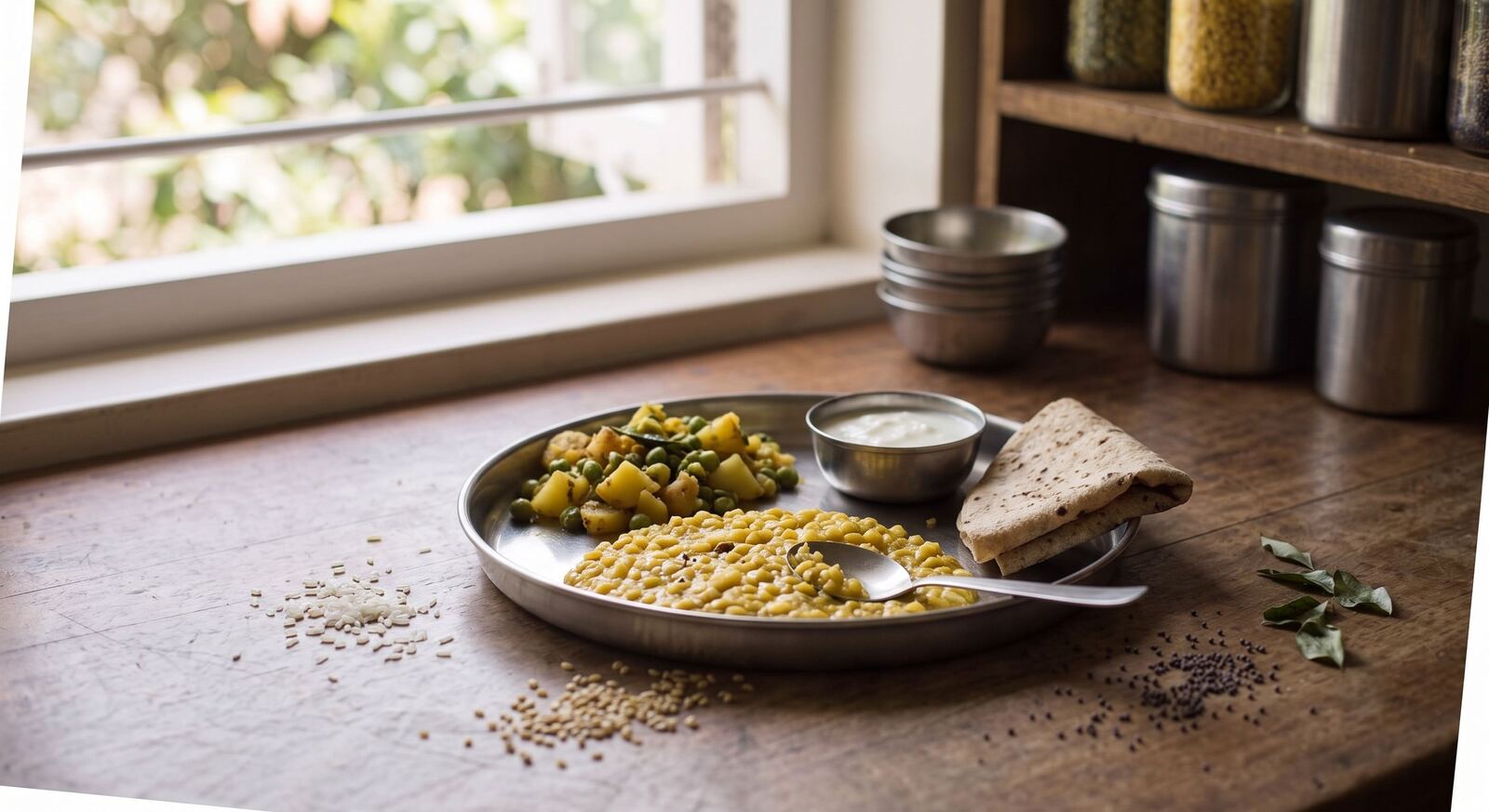
Dietary fibre is probably the most underrated intervention for PCOS. Not because fibre is magical, but because it feeds the SCFA-producing bacteria that are depleted in PCOS. The typical Indian diet, when it includes sufficient dal, vegetables, and whole grains, provides excellent prebiotic substrates. But the urban Indian diet, heavy on refined carbs, low on vegetables, reliant on processed snacks and delivery food, often falls short.
A practical target is 25-30 grams of fibre per day from diverse sources. One bowl of dal provides about 5 grams. A sabzi with mixed vegetables adds another 4-5. Two rotis made from whole wheat flour give you 4 grams. Add some fruits, a salad, and you’re getting close. The variety matters as much as the quantity, different fibres feed different bacteria.
Fermented foods supply live bacteria that can help rebalance the gut ecosystem. Homemade dahi is a staple in most Indian households and is genuinely helpful: it provides Lactobacillus species that are specifically depleted in PCOS. Fermented foods like idli/dosa batter, kanji, and traditionally prepared pickles (brine-fermented, not vinegar-based) add microbial diversity.
Reducing refined carbohydrates and added sugars affects more than blood sugar; it also shifts gut microbial composition. Diets high in simple sugars promote the growth of bacteria that don’t produce SCFAs and may increase intestinal permeability. The goal isn’t to eliminate carbohydrates but to swap the ones that wreck your gut bacteria for the ones that feed them. Sabut atta over maida. Brown or hand-pounded rice over polished white. Whole fruit over juice.
Anti-inflammatory foods have dual benefits, directly reducing systemic inflammation and supporting anti-inflammatory gut bacteria. Haldi (turmeric with its active compound curcumin), adrak (ginger), and omega-3 fatty acids from foods like flaxseeds, walnuts, and fatty fish all have evidence behind them. Curcumin specifically has been shown to modulate gut microbial composition and reduce intestinal permeability in several studies.
Exercise improves insulin sensitivity through mechanisms that include gut microbiome modulation. A 2018 study found that six weeks of moderate exercise independently increased gut microbial diversity and SCFA-producing bacteria, even without dietary changes. For women with PCOS, 150 minutes of moderate activity per week (brisk walking counts) addresses both the metabolic and the microbial aspects of the condition.
Want to know what your own gut actually needs? Take the BioMeBar gut assessment →
Why the gut lens matters for PCOS management
The standard PCOS treatment approach, metformin for insulin resistance, spironolactone for androgens, oral contraceptives for cycle regulation, addresses symptoms effectively. But these medications also affect the gut microbiome, sometimes positively (metformin has been shown to increase Akkermansia muciniphila, a beneficial species) and sometimes less so.
What the gut microbiome perspective adds is not a replacement for conventional treatment but a complementary framework. It explains why some women with PCOS respond well to dietary changes while others don’t: their gut microbiomes are processing the same foods differently. It explains why two women with identical PCOS diagnoses can have different symptom severity, since their inflammatory and metabolic profiles differ partly because of gut microbial differences. And it offers an additional intervention target that standard endocrine treatment ignores.
For a condition that affects one in four Indian women and is influenced by diet, inflammation, metabolism, and hormones simultaneously, understanding the gut connection isn’t optional anymore. It’s a piece of the puzzle that makes the whole picture make more sense.
If you have PCOS and want to understand whether gut health is playing a role in your specific symptoms, BioMeBar’s personalised microbiome approach can help identify the bacterial imbalances that standard PCOS workups miss, because your gut is as individual as your hormone profile, and addressing both together tends to work better than addressing either alone.
“But do I really need to test my gut?”
Not everyone does. But if you have been chasing the same symptoms for months — bloating, low energy, mood dips, stubborn weight — guessing gets expensive and slow. Seeing your actual microbiome composition turns trial-and-error into a targeted plan.
Stop guessing. See what is actually in your gut.
BioMeBar profiles your unique microbiome and personalises recommendations to what is genuinely there, because with trillions of organisms running your biology, one-size-fits-all does not make sense.