Your baby is born with a gut that is essentially a blank slate, a sterile (or nearly sterile) digestive tract waiting to be colonised by trillions of bacteria. Over the next thousand days, roughly from birth to age three, this gut will be populated by a microbial community that will influence your child’s immune development, metabolism, brain function, and disease risk for decades to come.
No pressure, right?
The reality is both more reassuring and more fascinating than the anxiety-inducing Instagram posts suggest. Your baby’s microbiome is resilient, adaptable, and heavily influenced by factors that most Indian parents are already doing well, breastfeeding, home-cooked food, exposure to family members and natural environments. But there are also a few things worth knowing that can make a meaningful difference.
Birth to six months: the colonisation window
The bacteria that arrive first in your baby’s gut have a significant advantage. They establish themselves, consume available nutrients, and shape the environment for bacteria that arrive later. This is why the mode of delivery matters, not because C-section babies are doomed (they absolutely are not), but because different first colonisers create different developmental trajectories.
Vaginally delivered babies are initially colonised by Lactobacillus, Prevotella, and Bacteroides from the birth canal and surrounding area. C-section babies are first colonised by Staphylococcus, Corynebacterium, and Streptococcus from skin and hospital surfaces. By about six to nine months, these differences start narrowing. By age three, they’ve largely converged, but the immune programming that happened during those early months may have lasting effects.
Breastfeeding is the single most powerful microbiome-shaping factor in the first six months, and the mechanism is clever. Breast milk contains human milk oligosaccharides (HMOs), complex sugars that the baby cannot digest. They pass through the stomach and small intestine completely intact. The mother’s body spends significant energy producing sugars her baby can’t use because they aren’t meant for the baby at all.
They feed specific bacteria (particularly Bifidobacterium longum subspecies infantis) that have evolved the enzymes to break down HMOs. When these bacteria digest HMOs, they produce short-chain fatty acids that nourish the infant’s gut lining, strengthen the intestinal barrier, and train the developing immune system. Breast milk doubles as a precise prebiotic delivery system.
This is why breastfed babies have gut microbiomes dominated by Bifidobacterium, while formula-fed babies develop more diverse but less specialised communities. It’s also why exclusive breastfeeding for six months, as recommended by WHO and Indian paediatric guidelines, has benefits that go well beyond nutrition.
For mothers who can’t breastfeed or choose not to (and there are many valid reasons for both) this isn’t cause for panic. Modern formulas are increasingly supplementing with HMOs and probiotics. And breastfeeding is one factor among many. A formula-fed baby in a loving home with diverse food introduction and minimal unnecessary antibiotics will develop a healthy microbiome. The science is about understanding mechanisms, not about creating guilt.
Six months to two years: the food transition
When you start introducing solid foods (typically around six months) you’re doing something profound to your baby’s gut ecosystem. You’re essentially introducing an entirely new set of substrates for bacteria to feed on, and this triggers a major shift in microbial composition.
The bacteria that thrive on breast milk oligosaccharides begin to decline. Bacteria that can digest plant fibres, starches, and proteins (Bacteroides, Roseburia, Faecalibacterium) begin to increase. This transition takes months, and the foods you introduce shape which bacterial populations grow.
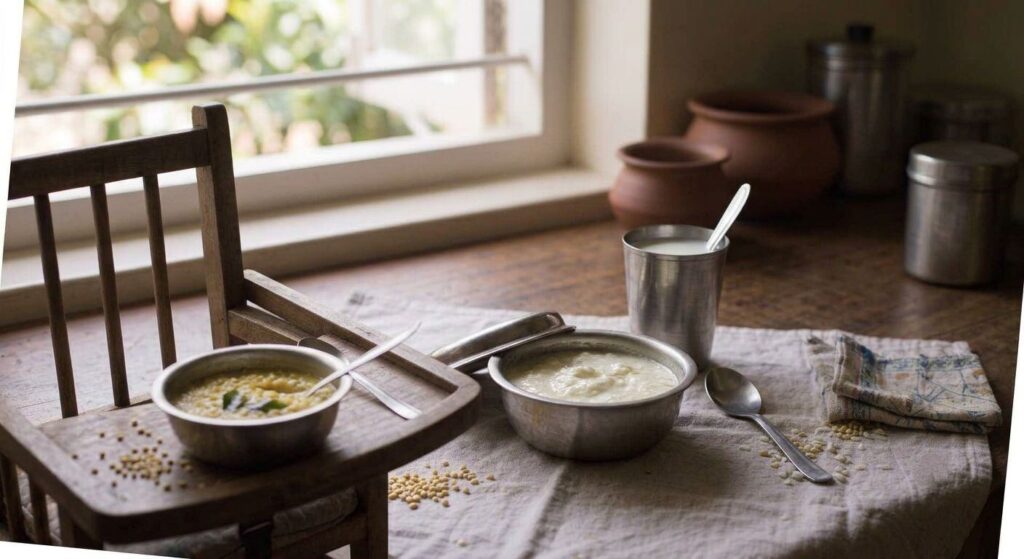
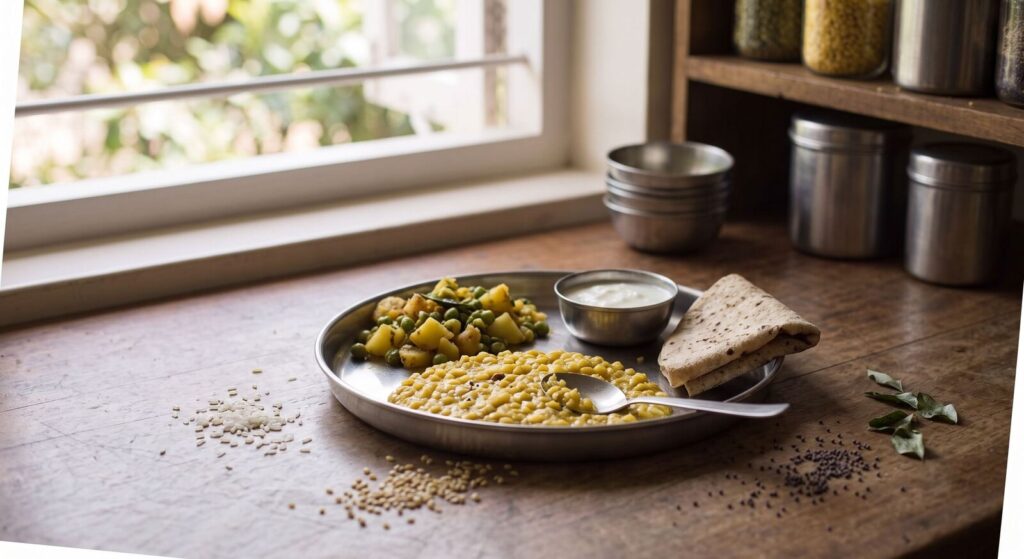
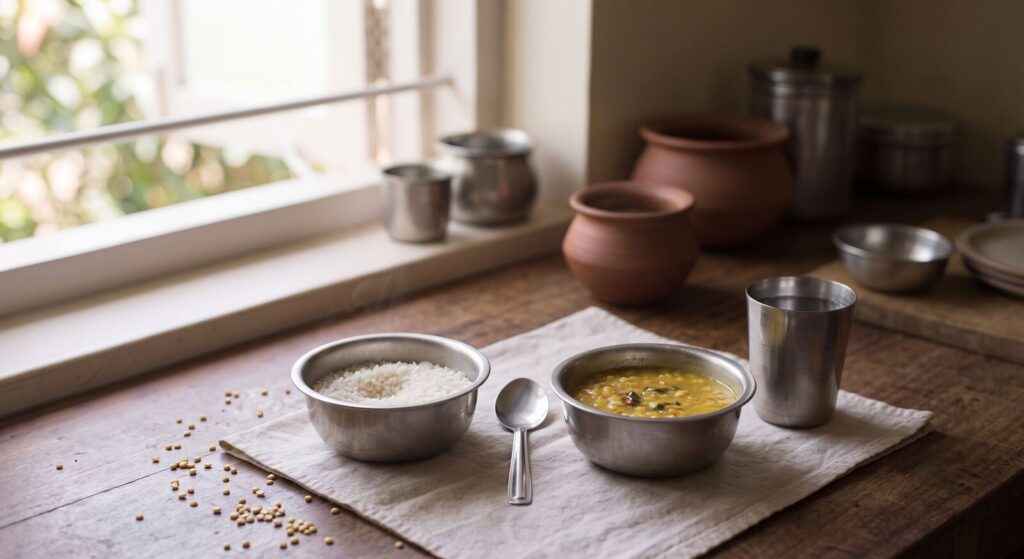
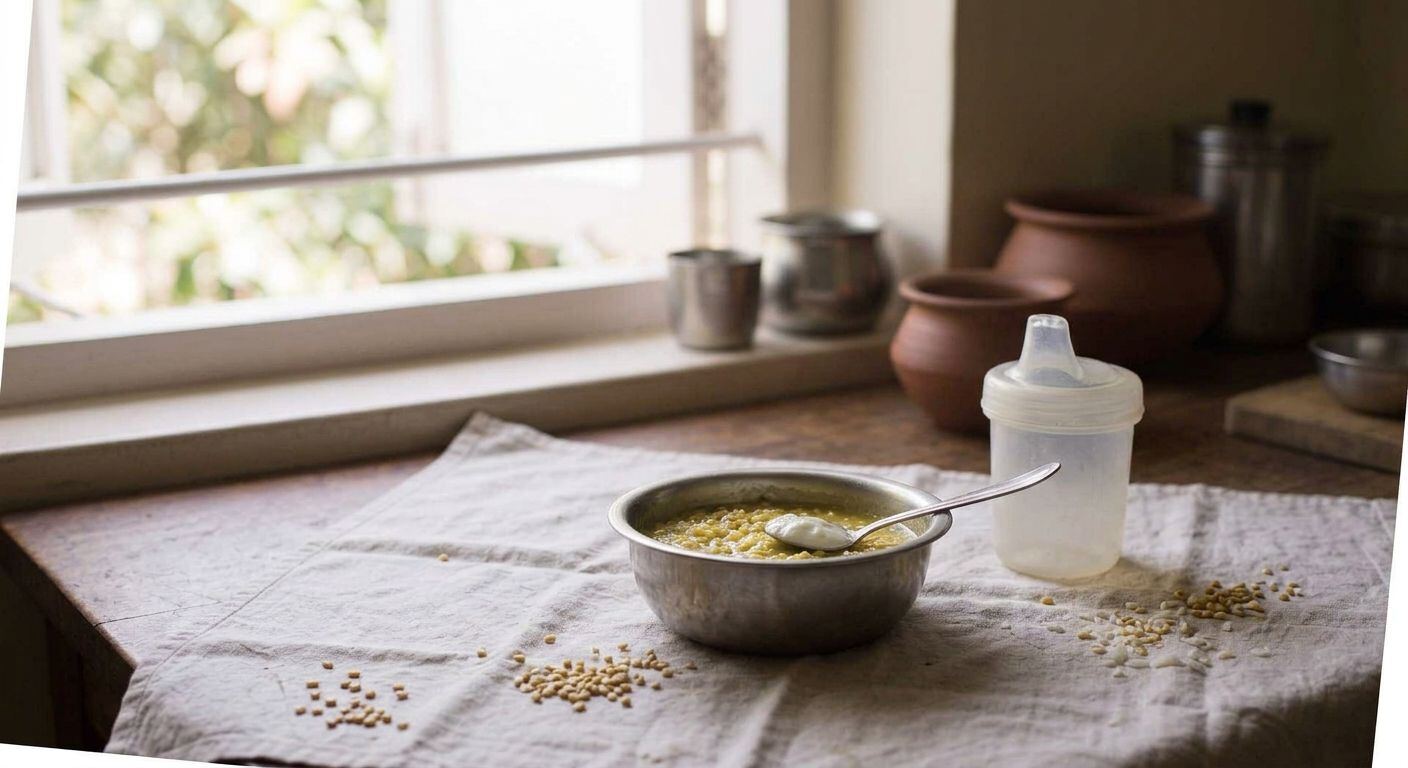
Indian parents actually have an advantage here, though they may not realise it. The traditional Indian approach to weaning, starting with dal ka paani, then mashed dal-chawal, then gradually introducing different sabzis, dahi, khichdi with varied vegetables, provides exactly the kind of diverse, fibre-rich, fermented-food-inclusive diet that supports healthy microbiome development.
Compare this with the commercial baby food approach that’s becoming more common in urban India, pouches of pureed single fruits, rice cereals, and processed snacks marketed as "healthy for babies." These foods are convenient, but they’re nutritionally and microbially limited. A homemade khichdi with moong dal, a few vegetables, a pinch of haldi, and a little ghee provides a wider range of fibres, resistant starches, and bioactive compounds than any pouch.
The diversity of foods matters more than any single food. A 2018 study in Cell found that the variety of plant-based foods in an infant’s diet was a stronger predictor of microbial diversity at age one than any other dietary factor. Every new vegetable, grain, or legume introduces new types of fibre that feed different bacterial species.
The lauki your baby makes a face at, the palak dal they spit out, the beetroot that stains everything, each of these is feeding a different bacterial community. No exotic superfoods required. Keep offering variety, even when most of it ends up on the floor.
The bacteria that thrive on breast milk oligosaccharides begin to decline.
The antibiotic question
This one is tricky, because Indian parents navigate a medical system that has some of the highest antibiotic prescription rates in the world.
Antibiotics are lifesaving when needed. A baby with a bacterial ear infection, pneumonia, or urinary tract infection needs antibiotics, full stop. The problem is the antibiotics prescribed for viral infections (which antibiotics can’t treat), for mild fevers, or "just in case", practices that remain common in Indian paediatric care.
Each course of antibiotics in the first three years of life has a measurable impact on the developing gut microbiome. A single course of amoxicillin can reduce microbial diversity by 25-50%, and some bacterial populations take months to recover. A 2016 study in Nature Microbiology reported that children who received multiple antibiotic courses before age two had persistently altered microbiomes and higher rates of asthma and obesity by age five, compared to children with fewer antibiotic exposures.
The right response isn’t to refuse antibiotics when your paediatrician prescribes them. It’s to ask one question: "Is this definitely a bacterial infection, or could it be viral?" It means getting a second opinion if you’re prescribed antibiotics for a mild cold or a low-grade fever that’s been present for only a day. It means finishing the full course when antibiotics are genuinely needed, rather than stopping early (which promotes resistant bacteria without giving the full therapeutic benefit).
After a necessary course of antibiotics, supporting microbiome recovery through continued breastfeeding (if applicable), fermented foods like thin dahi, and diverse plant-based foods helps the gut rebuild faster.
Want to know what your own gut actually needs? Take the BioMeBar gut assessment →
Environment, family, and the hygiene question
Indian babies, especially those in joint families, are exposed to a rich microbial environment from day one. Multiple family members holding the baby, shared cooking spaces, older siblings bringing home bacteria from school, and outdoor play in gardens and parks, all of these are microbiome-building exposures.
The "hygiene hypothesis" (now more accurately called the "old friends hypothesis") suggests that early microbial exposure trains the immune system to distinguish between harmful pathogens and harmless substances. Children raised in overly sanitised environments may develop immune systems that overreact to harmless triggers, leading to allergies, eczema, and asthma.
A 2020 study in Nature Medicine found that children raised with pets, in rural environments, or with more siblings had higher gut microbial diversity and lower rates of allergic disease by age five. This doesn’t mean hygiene doesn’t matter, handwashing before meals and after using the toilet is non-negotiable. But it means the Indian grandmother who lets the baby play on the floor, who doesn’t sanitise every surface, who takes the child to the park where they inevitably put soil-covered hands in their mouth, she may be instinctively doing something that the science supports.
The sanitiser-on-everything, sterilise-every-toy approach that urban Indian parenting has absorbed from Western anxiety culture may actually be counterproductive for microbiome development. Basic hygiene, yes. Sterility, no.
Indian babies, especially those in joint families, are exposed to a rich microbial environment from day one.
The first 1000 days are a window, not a deadline
By age three, a child’s gut microbiome begins to resemble an adult configuration. The rapid period of colonisation and diversification slows down. The microbiome isn’t fixed at that point (it continues to shift throughout life) but the foundational community built in these first three years carries lasting influence over immune programming and metabolic calibration.
The good news is that the most effective strategies are also the simplest. Breastfeed if you can, for as long as you can. Introduce diverse home-cooked foods. Include fermented foods like dahi. Go easy on the hand sanitiser. Question unnecessary antibiotics. Let your child play outside and get dirty.
And don’t let the perfect be the enemy of the good. Your baby doesn’t need a perfect microbiome, just a diverse, resilient one. The same one that Indian children have been building for thousands of years through breast milk, dal-chawal, dahi, and playing in the mud.
“But do I really need to test my gut?”
Not everyone does. But if you have been chasing the same symptoms for months — bloating, low energy, mood dips, stubborn weight — guessing gets expensive and slow. Seeing your actual microbiome composition turns trial-and-error into a targeted plan.
Stop guessing. See what is actually in your gut.
BioMeBar profiles your unique microbiome and personalises recommendations to what is genuinely there, because with trillions of organisms running your biology, one-size-fits-all does not make sense.