Nobody prepares you for what pregnancy does to your digestion. The constipation that shows up in the first trimester and never really leaves. The acid reflux that makes you sleep sitting up. The bloating that feels separate from your growing belly. Most women are told these are "just pregnancy things" and to wait it out.
But what’s actually happening is this: your gut microbiome is undergoing one of the most dramatic shifts it will ever experience. And understanding this shift, not just surviving it, can change how you approach both pregnancy and recovery.
As someone who has lived through this recently and also studies the gut microbiome professionally, I want to share what the science actually says, because the gap between what we know and what pregnant women are told is frustratingly wide.
Your gut microbiome is supposed to change during pregnancy
This is the first thing to understand, and it surprises most people. The microbiome changes that happen during pregnancy aren’t a sign that something has gone wrong. They’re an evolutionary adaptation.
A landmark 2012 study in Cell by Ruth Ley’s group tracked the gut microbiomes of 91 pregnant women across all three trimesters. By the third trimester, most women showed reduced microbial diversity, a bloom of Proteobacteria, and increased populations of bacteria associated with inflammation and fat storage. If you transplanted a third-trimester gut microbiome into a non-pregnant mouse, that mouse would gain weight and develop insulin resistance.
During pregnancy, though, this metabolic shift serves a purpose. Your body needs to extract more energy from food to support the growing baby. It needs to build fat reserves for breastfeeding. The microbiome is essentially reprogramming your metabolism to prioritise energy storage.
The problem is when you start pregnancy with an already-imbalanced gut. The normal pregnancy shifts then push things further off balance, and this is where complications can emerge.
Women who developed gestational diabetes had measurably different gut microbiome profiles as early as the first trimester, before any blood sugar abnormalities showed up on tests. In India, where gestational diabetes affects roughly 15-20% of pregnancies (higher than the global average), this connection is particularly relevant. Pre-pregnancy gut health may be a modifiable risk factor that nobody is discussing during preconception counselling.
Similarly, preeclampsia has been associated with increased intestinal permeability and altered gut microbial composition. The inflammatory molecules that leak from a compromised gut barrier may contribute to the vascular inflammation that drives this condition.
Delivery mode shapes your baby’s first microbiome
The way your baby is born determines which bacteria colonise their gut first, and this has real consequences.
During vaginal delivery, the baby passes through the birth canal and is coated in the mother’s vaginal and faecal microbes, primarily Lactobacillus, Prevotella, and Bacteroides species. These bacteria are adapted to colonise the infant gut and begin digesting breast milk components.
During a C-section, the baby’s first microbial exposure comes from skin and hospital environment bacteria, Staphylococcus, Corynebacterium, and Propionibacterium. These are not harmful bacteria, but they’re not the ones that have co-evolved with the infant gut either.
Research published in Nature has shown that C-section-born infants have delayed colonisation by Bacteroides species (sometimes by months) and reduced microbial diversity in their first year. Large epidemiological studies have found associations between C-section birth and slightly higher rates of asthma, allergies, and obesity in childhood, though the effect sizes are modest and many other factors contribute.
India’s C-section rate has been climbing steadily, with some urban private hospitals reporting rates above 50%. This isn’t about making mothers feel guilty about their delivery mode, C-sections save lives, and many are medically necessary. It’s about understanding that C-section-born babies may benefit from extra attention to microbiome support through breastfeeding, appropriate probiotic supplementation, and early diverse food introduction.
Some hospitals have experimented with "vaginal seeding" (swabbing C-section babies with the mother’s vaginal fluids) but current evidence is mixed, and major medical organisations don’t recommend it yet due to infection risk concerns. Breastfeeding remains the most evidence-backed way to support a C-section baby’s microbiome development.
The way your baby is born determines which bacteria colonise their gut first, and this has real consequences.
The postpartum gut: the part that gets ignored
After delivery, your microbiome needs to shift back from its pregnancy configuration. This recovery doesn’t happen overnight, and for many women, it doesn’t happen smoothly.
A 2021 study in Cell Host & Microbe found that the gut microbiome hadn’t fully recovered to pre-pregnancy composition even 12 months postpartum in many women. Factors that slowed recovery included C-section delivery, antibiotic use during or after labour, formula feeding, high stress levels, and poor sleep, which, if you’ve had a newborn, basically describes your entire existence for the first few months.
Postpartum dysbiosis is more than an abstract microbiome concept. It connects to real symptoms that new mothers experience and are often told to ignore. The persistent digestive issues, ongoing constipation, new food sensitivities, bloating that continues long after delivery. The mood changes that shade into postpartum depression and anxiety. The exhaustion that goes beyond normal new-parent tiredness.
The gut-brain axis doesn’t take a break because you’ve had a baby. If anything, it becomes more relevant. Approximately 90% of your body’s serotonin is produced in the gut, and disrupted microbial communities affect serotonin synthesis. Studies have found associations between specific gut microbiome profiles and postpartum depression risk. One study in Nature Communications identified that women with lower levels of Faecalibacterium and Coprococcus (both butyrate-producing bacteria linked to mood regulation) had higher rates of postpartum depressive symptoms.
The Indian context adds layers to this. Joint family systems can be both supportive (help with the baby, cooked meals) and stressful (unsolicited advice, pressure to follow traditional practices that may or may not have evidence behind them). Postpartum dietary practices vary enormously, some traditional postpartum foods like ajwain water, methi laddoo, and gond ka laddoo may actually support gut health through their prebiotic and anti-inflammatory properties. Others, like the strict avoidance of all "cold" foods, may unnecessarily limit dietary diversity when the gut microbiome needs it most.
Want to know what your own gut actually needs? Take the BioMeBar gut assessment →
What actually helps: evidence over tradition and trends
For pregnant and postpartum women looking to support their gut health, the evidence points to a few key strategies.
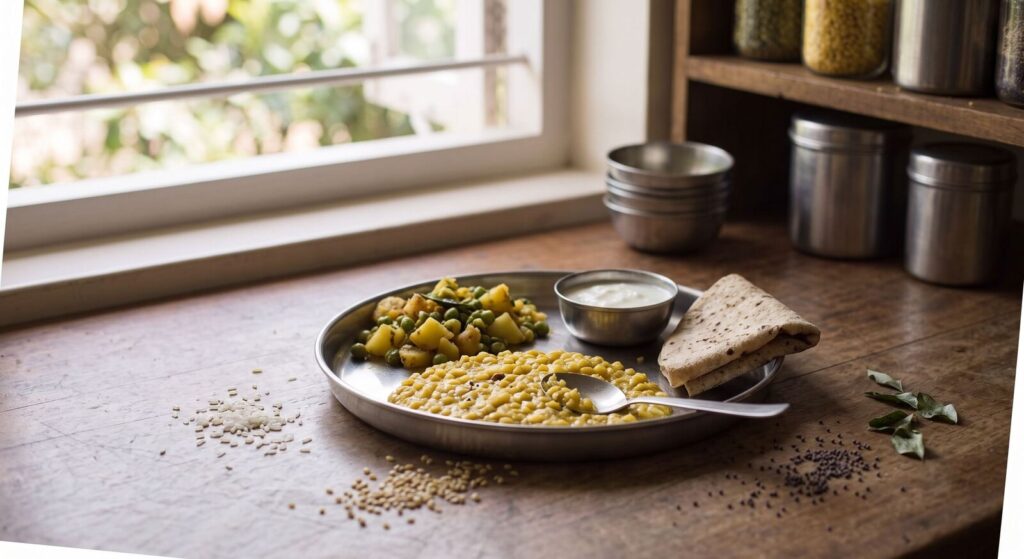
Dietary diversity matters more than any single superfood. Your gut bacteria need a range of fibres to thrive, the fibre in dal is different from the fibre in sabzi is different from the fibre in whole wheat roti. Eating across food groups feeds different bacterial populations. Traditional Indian thalis, when they include multiple vegetables, legumes, grains, and fermented elements like dahi or pickle, are actually well-designed for microbial diversity.
Fermented foods provide live bacteria and their metabolic by-products. Homemade dahi, fermented rice (like South Indian fermented batter for idli and dosa), kanji, and traditional pickles fermented in brine (not vinegar) are all sources of beneficial microbes. A 2021 Stanford study found that a high-fermented-food diet increased microbial diversity and reduced inflammatory markers more effectively than a high-fibre diet alone.
Antibiotic stewardship during and after pregnancy is worth discussing with your doctor. Sometimes antibiotics are absolutely necessary, for Group B Strep prophylaxis during labour, for postpartum infections, for mastitis. But the casual antibiotics that Indian medical practice sometimes defaults to ("just in case" prescriptions after uncomplicated deliveries) are worth questioning. Each course of antibiotics during this sensitive period reshapes both the mother’s microbiome and, through breast milk, the infant’s.
Sleep and stress management, while easier said than done with a newborn, directly affect gut microbial composition. Cortisol alters intestinal permeability and shifts microbial populations. Even small improvements, a 20-minute nap when the baby sleeps, accepting help so you can eat a proper meal, have biological effects on your gut.
And finally, know that postpartum recovery takes time. Your gut microbiome won’t bounce back in two weeks, and that’s normal. If digestive symptoms persist beyond three to four months postpartum, or if you’re experiencing mood symptoms that aren’t improving, it’s worth investigating whether gut dysbiosis is a contributing factor rather than just waiting it out.
If you want to understand what’s actually happening in your gut during or after pregnancy, BioMeBar’s personalised approach can help you see beyond symptoms and into the microbial shifts that are driving them, so your recovery plan is based on your biology, not generic advice.
“But do I really need to test my gut?”
Not everyone does. But if you have been chasing the same symptoms for months — bloating, low energy, mood dips, stubborn weight — guessing gets expensive and slow. Seeing your actual microbiome composition turns trial-and-error into a targeted plan.
Stop guessing. See what is actually in your gut.
BioMeBar profiles your unique microbiome and personalises recommendations to what is genuinely there, because with trillions of organisms running your biology, one-size-fits-all does not make sense.