
Anyone who’s travelled knows the feeling. You’re two days into a trip and your stomach decides to go on strike. Maybe it’s full-blown traveller’s diarrhoea. Maybe it’s stubborn constipation. Maybe it’s just a vague, unsettled feeling where nothing seems to digest properly. You blame the water, or the food, or the stress of travel. And you’re partially right about all three, but there’s more going on than that.
Your gut microbiome is a creature of habit. It has adapted to your regular diet, your regular water supply, your sleep schedule, and even your stress patterns. When you travel, you disrupt all of these simultaneously. And your gut bacteria respond to this disruption in ways that explain most of the digestive misery travellers experience.
What actually happens to your gut when you travel

The popular understanding of travel-related stomach problems is pretty simple: you eat or drink something contaminated, you get sick. And yes, exposure to unfamiliar waterborne or foodborne pathogens is a real concern, E. coli (particularly the enterotoxigenic strains), Campylobacter, Salmonella, and Giardia are common culprits. Travellers’ diarrhoea affects up to 40% of people visiting developing regions, depending on destination.
But pathogen exposure is only part of the picture. Even travellers who are careful about water and food hygiene often experience digestive changes. That’s because travel disrupts your microbiome through at least three other mechanisms that have nothing to do with contamination.
Circadian disruption. Your gut bacteria have daily rhythms. The composition of your microbiome actually fluctuates across the day, different species are more active at different times, synchronised with your eating and sleeping schedule. When you cross time zones, these microbial rhythms get thrown off, much like your own jet lag. Research published in Cell showed that jet lag in mice caused measurable shifts in microbial composition, with an expansion of species associated with metabolic dysfunction. Even domestic travel within India (say, flying from Mumbai to the Northeast) where you’re not crossing many time zones, involves disrupted meal timing and sleep patterns that affect microbial rhythms.
Stress-induced permeability. Travel is stressful, even when it’s fun. Flight anxiety, disrupted routines, unfamiliar environments, dehydration from flying, the physical stress of long journeys by train or bus. Psychological and physical stress triggers the release of cortisol and other stress hormones that directly affect the gut. Cortisol increases intestinal permeability, those tight junctions between gut lining cells loosen slightly, allowing bacterial products and food particles to interact with the immune system in ways they normally wouldn’t. This is one reason why food sensitivities seem to appear or worsen during travel.
Dietary shift. When you travel, your diet changes abruptly. If you usually eat dal-rice and sabzi at home, and you’re suddenly eating continental breakfast buffets, unfamiliar cuisines, or packaged convenience food because you’re in transit, your gut bacteria face a sudden substrate change. The bacteria that thrived on your regular diet don’t have their usual food. Populations shift. The ones adapted to your home diet decline; others that can handle the new inputs expand. This ecological reshuffling takes time, and during the transition, digestion is suboptimal.
These three mechanisms (circadian disruption, stress-induced permeability, and dietary shift) happen to every traveller, regardless of whether they encounter a single pathogen. They explain why even people who travel domestically and eat at clean restaurants still feel "off" for days after arriving somewhere new.
Before you travel: preparation matters
You can meaningfully reduce travel-related gut disruption by preparing in the weeks before a trip. This isn’t about packing Imodium (though having it handy for emergencies is fine). It’s about strengthening your gut’s baseline resilience.
Build up your SCFA-producing bacteria. In the 2-3 weeks before travel, increase your intake of diverse plant fibres, different dals, whole grains, seasonal vegetables, nuts, and seeds. This feeds the Faecalibacterium, Roseburia, and Bifidobacterium populations that produce butyrate and other SCFAs, which strengthen your gut barrier. A stronger barrier means better defence against both stress-induced permeability and pathogen exposure.
Increase fermented food intake. Daily dahi, but termilk, idli, dosa, whatever fermented foods are part of your normal diet, eat them more consistently in the pre-travel weeks. This boosts your baseline population of beneficial lactic acid bacteria, giving your gut a more resilient starting point.
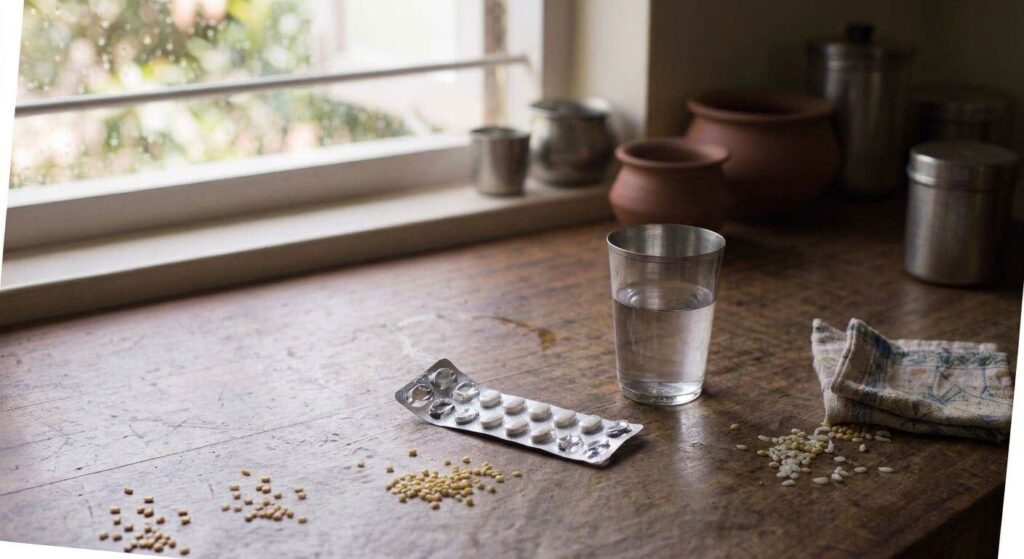
Consider a targeted probiotic. If you’re travelling to a region with higher infection risk, starting a probiotic 1-2 weeks before departure can help. Saccharomyces boulardii has specific evidence for preventing traveller’s diarrhoea, a meta-analysis of clinical trials found it reduced the risk by about 15-20%. Lactobacillus rhamnosus GG also has supportive data for travel-related gut protection.
You can meaningfully reduce travel-related gut disruption by preparing in the weeks before a trip.
During the trip: maintenance mode
The goal during travel isn’t perfection. It’s damage limitation.
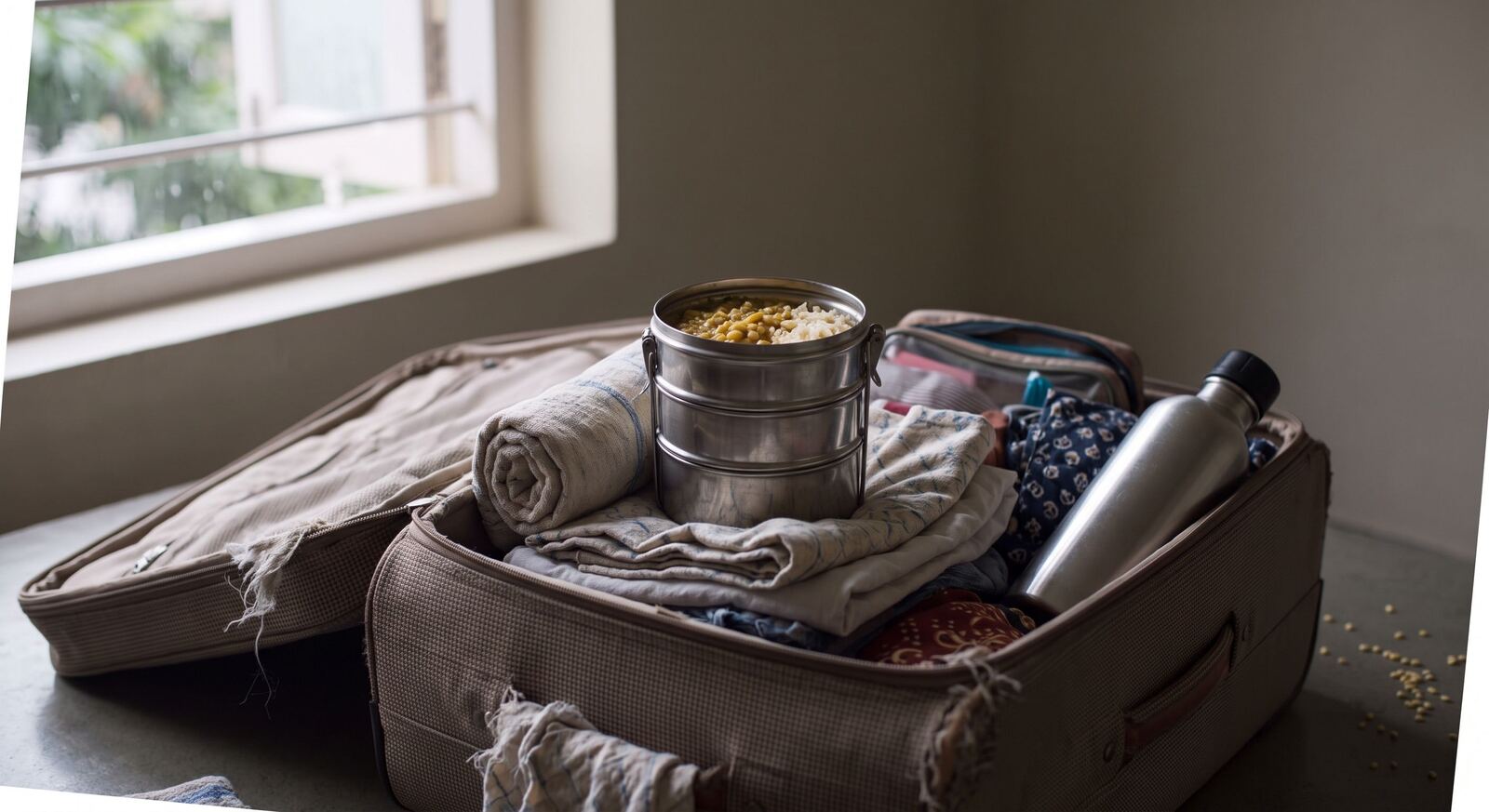
Maintain some dietary continuity where possible. If you’re travelling within India, this is easier, find dahi, eat dal, have rice. If you’re abroad, carry packets of khakhra, roasted chana, or makhana for when local options are all unfamiliar. Even one familiar food per day gives your regular gut bacteria something to work with.
Stay hydrated, seriously. Dehydration is one of the most underrated gut disruptors during travel. Flights are dehydrating (cabin humidity is typically around 10-20%). Long train journeys in Indian summers are dehydrating. Dehydration slows gut motility, thickens the mucus layer in unhelpful ways, and concentrates bile acids. Carry a water bottle and drink consistently. Coconut water, nimbu paani (with safe water), and buttermilk are all excellent choices.
Don’t skip meals or eat at wildly irregular times. Your gut bacteria rely on consistent feeding schedules to maintain their circadian rhythms. If you’re crossing time zones, shift your meal timing gradually toward the destination schedule. Even on domestic trips, try to eat at roughly consistent intervals rather than going long stretches without food and then overeating.
The water and food hygiene basics. You’ve heard these before, but they bear repeating: drink bottled or boiled water, avoid ice from uncertain sources, eat cooked food served hot, be cautious with raw salads and cut fruit from street vendors. These precautions genuinely reduce pathogen exposure. They don’t eliminate risk entirely, but they meaningfully lower it.
Want to know what your own gut actually needs? Take the BioMeBar gut assessment →
After you return: recovery
Most people assume that travel gut problems end when the trip does. But your microbiome doesn’t snap back to its pre-travel state the moment you walk through your front door. Recovery happens, but it takes deliberate support.
Return to your regular diet as quickly as possible. Your gut bacteria have been dealing with unfamiliar inputs for the duration of your trip. Getting back to your usual dal, sabzi, dahi, and home-cooked meals signals your resident bacteria that normal service has resumed. They’ll recover faster when they have their preferred substrates.
Expect a 1-2 week adjustment period. Even after returning to your normal diet, some digestive irregularity is normal for 1-2 weeks. Your microbial community is re-establishing its pre-travel equilibrium. During this window, eat simply and consistently: this isn’t the time to experiment with new restaurants or unusual cuisines.
If you took antibiotics during travel, follow a recovery protocol. Antibiotics prescribed for traveller’s diarrhoea or other infections create their own set of microbial disruptions that require deliberate rebuilding. Gradual fibre reintroduction, daily fermented foods, and potentially targeted probiotic supplementation for 4-6 weeks after the antibiotic course.
Watch for persistent changes. If your digestion hasn’t normalised within 3-4 weeks of returning home, pay attention. Post-infectious IBS (where travel-acquired infections trigger lasting functional gut changes) affects an estimated 5-10% of people who experience traveller’s diarrhoea. Persistent bloating, altered bowel habits, or new food sensitivities that last beyond a month deserve investigation rather than dismissal.
Travel doesn’t have to mean gut misery. Understanding the mechanisms of travel-related microbial disruption gives you practical tools to prepare, protect, and recover. And if you’re someone whose gut never quite seems to settle after trips, or who consistently gets hit harder than your travel companions, it might be worth understanding your specific microbiome composition. BioMeBar’s personalised approach can identify where your gut’s vulnerabilities lie and help you build the targeted resilience that makes travel something you enjoy, not something your stomach dreads.
“But do I really need to test my gut?”
Not everyone does. But if you have been chasing the same symptoms for months — bloating, low energy, mood dips, stubborn weight — guessing gets expensive and slow. Seeing your actual microbiome composition turns trial-and-error into a targeted plan.
Stop guessing. See what is actually in your gut.
BioMeBar profiles your unique microbiome and personalises recommendations to what is genuinely there, because with trillions of organisms running your biology, one-size-fits-all does not make sense.