Every year, like clockwork, the monsoon arrives and half of India collectively starts dealing with stomach problems. Loose motions, food poisoning, mysterious stomach cramps, that weird nausea that comes and goes. Your WhatsApp family group starts sharing home remedies. Your neighbourhood chemist sees a run on Norflox-TZ. And somewhere in between, your gut microbiome takes a beating that lasts much longer than the rainy season itself.
The monsoon gut problem is real and measurable. Hospital admissions for gastrointestinal infections spike 30-40% during the monsoon months across India. But the story isn’t just about contaminated water and dodgy street food. It’s about what happens to the trillions of bacteria in your gut when pathogens invade, when you take antibiotics to fight them off, and when you repeat this cycle year after year.
Why the monsoon is so hard on your gut
The basics are straightforward: warm, humid conditions are paradise for pathogenic bacteria. Escherichia coli, Salmonella, Vibrio cholerae, Shigella, these organisms multiply rapidly in the temperature and moisture conditions the monsoon provides. They get into water supplies through flooding and sewage overflow. They thrive on food that’s been sitting out in humid air. They contaminate fresh produce washed with untreated water.
But there’s a less obvious mechanism at work too. During the monsoon, the microbial load of everything around you increases: the air, the soil, the water, the surfaces you touch. Your gut is constantly encountering a higher burden of environmental microbes than it does during drier months. Even if none of these organisms are overtly pathogenic, this increased microbial exposure puts your gut’s immune defences under sustained low-grade pressure.
Your gut lining acts as a selective barrier: it lets nutrients through while keeping harmful organisms out. This barrier is maintained partly by your resident gut bacteria, particularly species like Faecalibacterium prausnitzii and Akkermansia muciniphila that produce short-chain fatty acids (SCFAs) to fuel the cells lining your intestine. When this barrier is under stress from increased pathogen exposure, its integrity can start to slip. Small gaps appear between cells, inflammatory signals increase, and organisms that would normally be blocked start getting through.
This is why some people seem to get one stomach infection after another during the monsoon. It’s not just bad luck or poor hygiene. It’s a compromised gut barrier that’s letting pathogens through more easily.
The antibiotic spiral
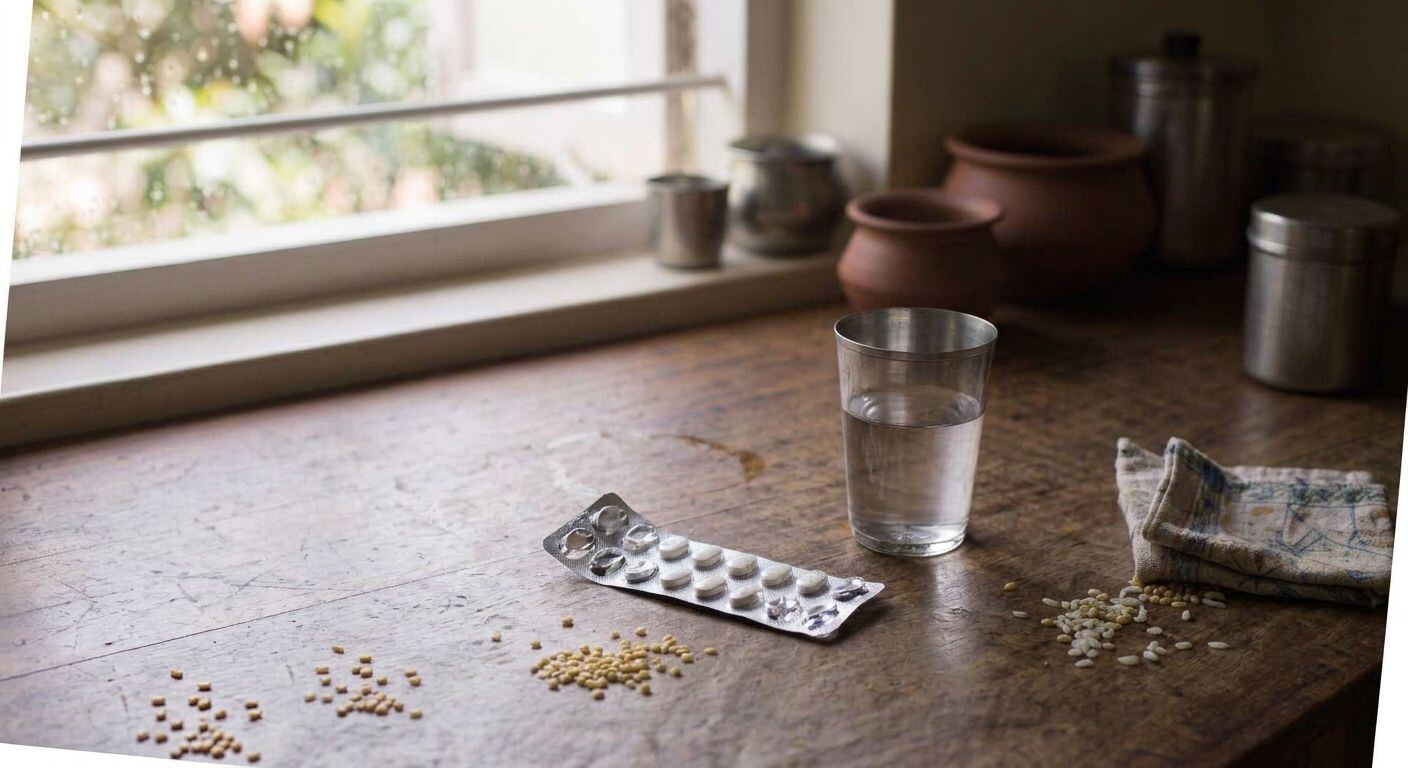
This is where the real damage starts. You get a stomach infection. You go to the doctor (or, more commonly in India, to the chemist directly). You get antibiotics, often broad-spectrum ones like ciprofloxacin, metronidazole, or the ubiquitous ofloxacin-ornidazole combination. The infection clears up. You feel better.
But the antibiotic has just done significant collateral damage to your resident gut bacteria. Diversity drops. Keystone species that were maintaining your gut barrier (those same Faecalibacterium and Bifidobacterium populations) get decimated. The gut barrier, already stressed from monsoon pathogen exposure, weakens further. Which makes you more susceptible to the next infection. Which leads to another round of antibiotics.
Data from Indian pharmacies shows that antibiotic sales spike 20-25% during monsoon months. Many of these are sold without prescription. Many are taken for conditions that don’t require antibiotics at all, viral gastroenteritis, for example, which is self-limiting and doesn’t respond to antibiotics anyway.
The cumulative effect across multiple monsoon seasons is a progressive erosion of gut microbial diversity. If you’re someone who’s taken 2-3 courses of antibiotics every rainy season for several years, the damage adds up. Some species, once lost, don’t return on their own without deliberate effort.
You get antibiotics, often broad-spectrum ones like ciprofloxacin, metronidazole, or the ubiquitous ofloxacin-ornidazole combination.
Building monsoon resilience (before, during, and after)
The good news is that you can prepare your gut for the monsoon, protect it during the season, and recover it afterward. And no, the answer isn’t just "boil your water and avoid street food" (though those basics still matter).
Before the monsoon (April-May): This is the time to build up your gut’s baseline resilience. Focus on microbial diversity, eat a wide variety of plant fibres from different types of dal, seasonal vegetables, whole grains, and nuts. Increase your fermented food intake: daily dahi (homemade if possible), fermented rice, idli-dosa batter, kanji. These foods support SCFA production, which strengthens your gut barrier before the monsoon assault begins. You’re reinforcing the house before the storms hit.
During the monsoon: The hygiene basics are non-negotiable: drink boiled or filtered water, avoid raw salads from outside, be cautious with street food, wash produce thoroughly. But beyond hygiene, continue feeding your gut bacteria consistently. Don’t skip meals or drastically change your eating patterns. Cooked, warm, fibre-rich meals (khichdi with vegetables, dal-rice, sabzi with roti) keep your resident bacteria fed and functioning. Fresh homemade dahi (not flavoured packaged yogurt) continues to introduce beneficial lactic acid bacteria.
If you do get an infection that genuinely requires antibiotics, take Saccharomyces boulardii alongside (spaced 2-3 hours from the antibiotic dose). It’s a yeast-based probiotic that antibiotics won’t kill, and it’s one of the best-studied interventions for preventing antibiotic-associated diarrhoea.
After the monsoon (October-November): This is recovery time, and most people skip it entirely. If you’ve taken even one course of antibiotics during the monsoon, your gut needs active rebuilding. Gradually increase fibre diversity, introduce different types of dal, seasonal vegetables, seeds like flax and sesame, and whole grains you might not eat regularly. Reintroduce fermented foods if you’d reduced them during illness. Give your gut 6-8 weeks of consistent, diverse, fibre-rich eating to rebuild populations that were lost.
Want to know what your own gut actually needs? Take the BioMeBar gut assessment →
The bigger picture
Monsoon gut problems aren’t isolated events. They’re annual disruptions to a biological ecosystem that takes time to recover. When recovery doesn’t happen, because of repeated antibiotic courses, because of poor dietary habits, because nobody told you recovery was necessary, the effects accumulate. That persistent bloating you feel, those food sensitivities that developed over the years, that general sense that your digestion "isn’t what it used to be", some of that is cumulative monsoon damage that was never properly repaired.
Understanding your own gut’s current state: which species are thriving, which are depleted, how strong your barrier function is, gives you a much better starting point for seasonal protection. BioMeBar’s personalised synbiotic approach can help you understand your specific microbiome profile and provide targeted support to build the kind of resilience that gets you through the monsoon without the annual cycle of infection, antibiotics, and slow deterioration. Because the goal isn’t just surviving the rains: it’s coming through them with your gut ecosystem intact.
“But do I really need to test my gut?”
Not everyone does. But if you have been chasing the same symptoms for months — bloating, low energy, mood dips, stubborn weight — guessing gets expensive and slow. Seeing your actual microbiome composition turns trial-and-error into a targeted plan.
Stop guessing. See what is actually in your gut.
BioMeBar profiles your unique microbiome and personalises recommendations to what is genuinely there, because with trillions of organisms running your biology, one-size-fits-all does not make sense.